
There isn't one single "best" whole house water filtration system for everyone. The right choice for your home is a system designed to fix your specific water problems—whether that's the "pool water" taste from the city supply or the chalky scale buildup ruining your fixtures. The most effective solutions combine different filtration methods to deliver genuinely clean, safe water to every tap, shower, and appliance in your house.
Your Guide to Choosing a Whole House Water Filter
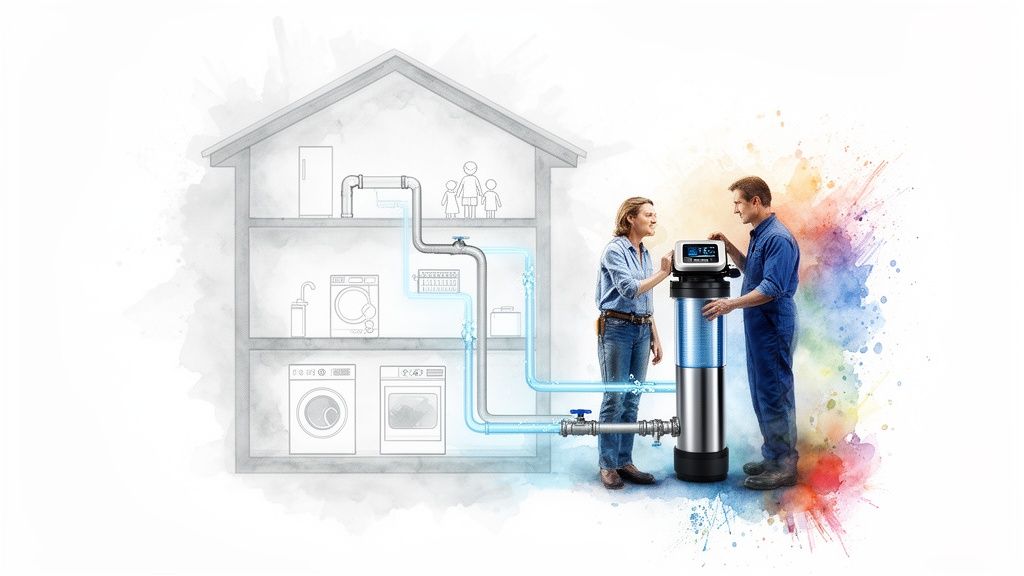
Choosing the right water filter is one of the smartest investments you can make for your home and family. While small faucet filters seem like a quick fix, a point-of-entry (POE), or whole house, system offers a complete solution by treating all the water right as it enters your home.
This means every drop is purified—from the water you drink and cook with to the water running through your dishwasher, washing machine, and showers. The value is immediate: you protect expensive appliances from damaging scale and ensure your family isn't bathing in chlorinated water.
Why Every Faucet Matters
Think about the daily impact of untreated water. Hard water, common across Los Angeles, leaves those frustrating white spots on your dishes and shower doors. That same mineral buildup, called limescale, is also quietly damaging your water heater and plumbing from the inside out, leading to costly repairs and lower efficiency.
Likewise, the chlorine used by cities to treat water can dry out your skin and hair and gives tap water that unpleasant "pool water" taste.
A whole house system is the only way to solve these problems completely. It's a proactive investment that protects your home's major systems and improves your family's daily comfort.
It’s no surprise that point-of-entry (POE) whole-house systems are becoming more popular. The market, valued at USD 13.98 billion in 2024, is growing as public awareness of contaminants like lead—detected in 20% of US systems—continues to rise.
Before you commit to a system, it's a good idea to think about all aspects of home maintenance. For instance, knowing how to prepare for a home inspection can be invaluable, as water quality and plumbing are always key checkpoints.
Whole House Filtration Benefits at a Glance
A whole house filtration system delivers tangible benefits you'll notice every day. From better-tasting coffee to longer-lasting appliances, the value is clear.
| Benefit Category | Impact on Your Home and Family | Practical Example |
|---|---|---|
| Health & Wellness | Reduces exposure to chlorine, chemicals, and sediment in every shower, bath, and glass of water. | Skin feels softer and hair is less brittle after showering; coffee and tea taste clean and pure, without a chemical aftertaste. |
| Appliance Protection | Prevents limescale buildup in water heaters, dishwashers, and washing machines, extending their lifespan. | Your water heater runs more efficiently and can last years longer because mineral scale isn't clogging its heating elements. |
| Financial Savings | Cuts spending on bottled water, reduces the need for appliance repairs, and uses less soap and detergent. | A family of four can save hundreds of dollars each year on bottled water costs while also cutting down on plastic waste. |
Ultimately, investing in a whole house system is about improving your quality of life while protecting your home.
A Closer Look at Water Filtration Technologies
Choosing the right whole-house water filter starts with understanding the tools. Each filtration technology solves a specific problem, which is why the best systems combine several methods. Think of it like assembling a team of specialists—each one brings a unique skill to the job.
This multi-stage approach ensures that everything from large sediment particles to invisible chemical contaminants is removed before the water reaches your tap. Once you know what each component does, you can make a smarter decision for your home.
Sediment Filters: Your First Line of Defense
A sediment filter acts as the gatekeeper for your home’s plumbing. Its single job is to block physical debris like sand, silt, rust, and dirt from getting inside.
These particles don't just make water cloudy; they clog faucet aerators, showerheads, and wear down the delicate parts inside your appliances. That's why a sediment pre-filter is almost always the first stage in any quality filtration setup—it protects the more sensitive and expensive filters that follow.
Actionable Tip: If your water ever looks cloudy or you find tiny bits of grit in your glass, a sediment filter is essential. It's an inexpensive way to protect your entire system.
Activated Carbon: The Taste and Odor Specialist
If your tap water smells like a public pool or has a strong chlorine taste, an activated carbon filter is the solution. This is what improves the way your water tastes, smells, and feels.
Carbon works through a process called adsorption, where chemical contaminants stick to the carbon's highly porous surface. It acts like a chemical magnet, grabbing onto:
- Chlorine and Chloramines: Disinfectants used by cities that can dry out skin and hair and ruin the taste of your water.
- Volatile Organic Compounds (VOCs): Industrial chemicals and solvents that can sometimes enter the water supply.
- Pesticides and Herbicides: Runoff from agriculture is a common source of these in many water systems.
By removing these compounds, a carbon filter completely transforms your water, making it refreshing to drink and cook with.
Water Softeners: The Hardness Busters
Hard water is a major issue for many households, especially in Los Angeles. It’s caused by high levels of dissolved calcium and magnesium, which create crusty, white limescale buildup. A water softener tackles this problem directly using a process called ion exchange.
Here’s the simple version: the system contains resin beads that grab the "hard" calcium and magnesium ions and trade them for "soft" sodium ions. This exchange stops scale from forming in your pipes, water heater, and dishwasher, helping them run more efficiently and last much longer.
The results are immediate. Water feels silkier, soaps lather easily, and your dishes come out of the dishwasher spotless.
UV Purifiers: The Microbiological Guardian
While city water is treated to be microbiologically safe, those with a private well or who want ultimate peace of mind should consider an Ultraviolet (UV) purifier. This technology is your final, chemical-free defense against living organisms.
A UV purifier uses powerful UV-C light to disrupt the DNA of bacteria, viruses, and protozoa like Giardia. This makes it impossible for them to reproduce and neutralizes any threat without adding chemicals to your water.
Getting a handle on the mechanics is key, and you can dive deeper into how water filtration works in our detailed guide. It’s interesting to see how the goal of removing contaminants is shared across different fields; for instance, many of the same principles apply to the best home purification technologies for allergies that clean your air. The mission is always the same: create a healthier home by cleaning up the essentials your family relies on every day.
Comparing the Top Whole House Filtration Systems
Picking the right whole-house water filtration system isn't about finding a single "best" product. It's about identifying your water's specific problems and choosing the right technology to solve them. A one-size-fits-all approach simply doesn't work. The ideal setup for a family tired of hard water scale will be completely different from what's needed to remove the chlorine smell from tap water.
To make a smart choice, you have to look beyond marketing and compare systems based on real-world needs. Focus on three key things: how well it removes your specific contaminants, the long-term maintenance costs, and whether it will reduce your home's water pressure. A clear analysis is the only way to find a system that will truly make a difference.
This decision tree gives you a great visual of how a typical filtration strategy is built, starting with the most common water issues.
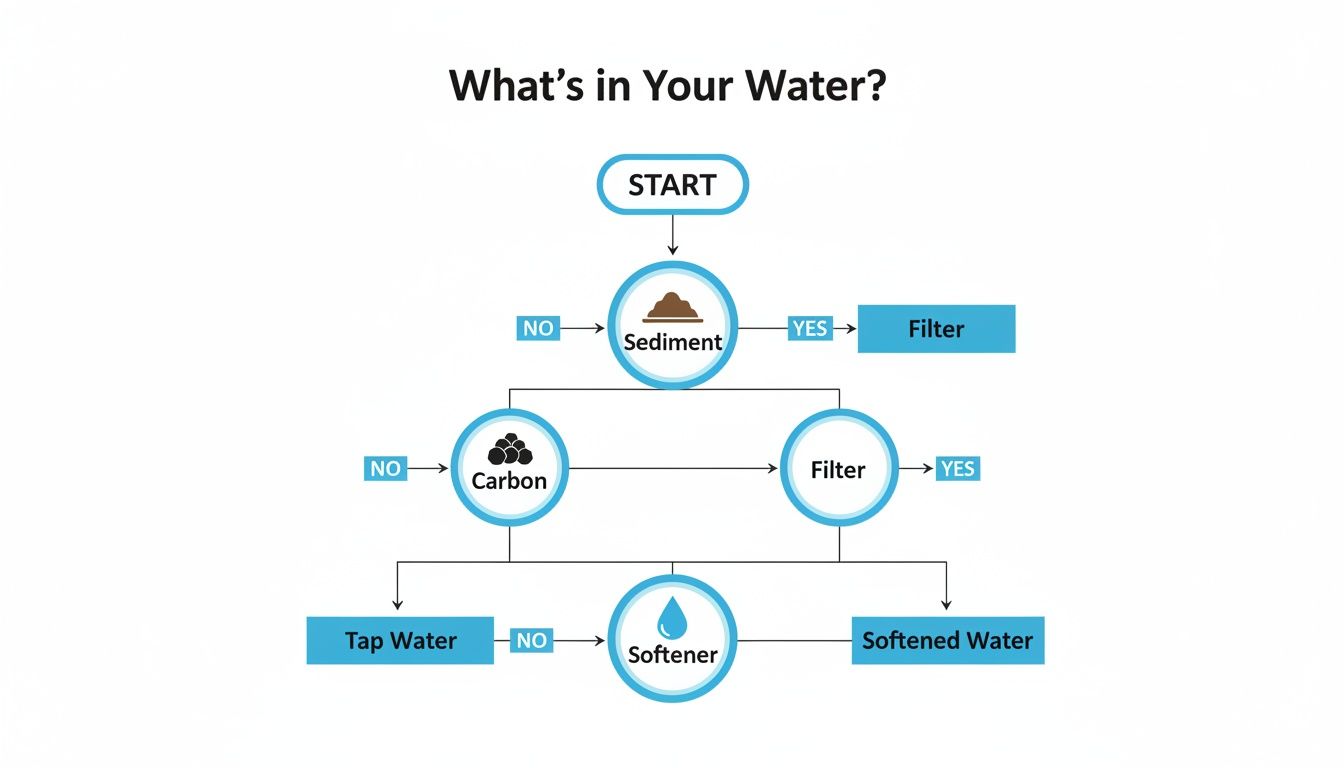
As you can see, you almost always start by tackling sediment first. From there, you move on to taste and odor with carbon, and finally, address mineral issues with a softener. It’s a logical, layered approach that works.
Single-Tank Carbon Filters
For many homes on city water, a single-tank carbon filter is the perfect starting point. Its main job is simple but important: remove the chlorine, chloramines, and other chemicals that make water taste and smell bad.
Practical Example: A family in a newer home has good plumbing but can't stand the strong chlorine smell from their tap. They want better-tasting water throughout the house without a complex system.
For them, a single-tank carbon filter is a great, cost-effective solution. It targets the chlorine problem directly, making water more pleasant to drink and less irritating on the skin during showers. Just remember, it won't solve hard water or heavy sediment issues.
Multi-Stage Filtration Systems
When you need more complete protection, a multi-stage system is the answer. These units combine several technologies, usually starting with a sediment pre-filter followed by a large carbon tank.
Practical Example: A household is worried not just about chlorine but also about occasional cloudiness in their water and potential industrial byproducts like VOCs. They want total peace of mind.
This is where a multi-stage system proves its value. The sediment filter protects the other stages, while the larger carbon tank gives water more "contact time" for more thorough chemical removal. It’s a significant upgrade in filtration power.
The real value of a multi-stage system is its layered defense. Each stage is optimized for a specific job, boosting overall performance and extending the life of the more expensive filter components.
Softener and Filter Combinations
For a huge number of homes, especially in Los Angeles, the biggest water problems are a combination of hardness and chemical disinfectants. A softener and filter combo is designed to solve both problems at once.
Practical Example: A homeowner is tired of scrubbing hard water stains from shower doors and has noticed their expensive appliances are failing too soon. On top of that, they hate the chemical taste of their tap water.
This situation requires a dual approach. A water softener uses ion exchange to remove the calcium and magnesium that cause scale buildup. At the same time, a separate carbon filter removes the chlorine. This setup provides the most complete solution for common city water issues, protecting your home and improving water quality at every faucet.
To help you visualize the options, this table breaks down how each system stacks up against common water problems.
Filtration System Comparison for Common Water Issues
| System Type | Best for Solving | Typical Maintenance Needs | Ideal for LA Water? | Praz Pure Water Solution |
|---|---|---|---|---|
| Single-Tank Carbon Filter | Chlorine taste and odor; minor chemical contaminants. | Media replacement every 5-10 years, depending on usage. | Good, for taste/odor issues only. | High-capacity coconut shell carbon filters. |
| Multi-Stage System | Chlorine, sediment, VOCs, pesticides, and other chemicals. | Sediment pre-filter changes every 6-12 months; media every 5-10 years. | Very Good, offers broader chemical protection. | Multi-stage systems with sediment pre-filters. |
| Softener/Filter Combo | Hard water scale, chlorine taste/odor, and dry skin/hair. | Regular salt refills for the softener; media replacement every 5-10 years. | Excellent, addresses the two most common issues. | Combo packages with softener and carbon filter. |
At the end of the day, choosing the best whole-house system is all about matching the right tool to the job. By understanding your home's unique water issues and these practical applications, you can confidently invest in a solution that provides clean, safe, and great-tasting water for years.
Designing a System for Los Angeles Water
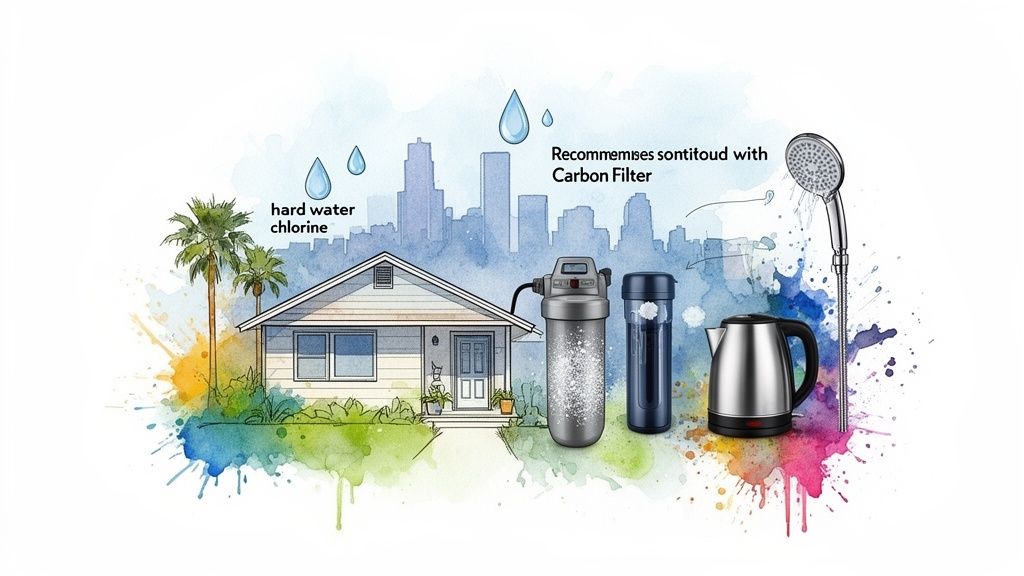
When choosing a whole-house water filtration system, local knowledge is critical. Water chemistry varies by region, so what works in one state might not solve the unique challenges we face in Southern California. To get it right for an LA home, you need a system designed specifically for our local water.
Here in Los Angeles, our water is known for three things: it's very hard, it contains chemical disinfectants, and it often has high levels of Total Dissolved Solids (TDS). Each of these problems requires a specific solution to get truly clean and soft water.
Tackling Hard Water Head-On
Hardness is the number one water complaint from LA residents. Caused by dissolved minerals like calcium and magnesium, it’s the reason for stubborn limescale on faucets, chalky film on dishes, and the premature failure of expensive appliances.
To combat this, a high-efficiency water softener is essential. It uses ion exchange to physically remove hard minerals from the water, stopping scale before it can form. This is the only way to protect your plumbing and appliances from the inside out.
For homeowners in places like the San Fernando Valley, where hardness levels are very high, combining a softener with other filters is key. You can dive deeper into the benefits of a whole house water softener system to see exactly how this technology protects your home.
Neutralizing Chlorine and Chloramine
Next are the disinfectants used by municipal suppliers—chlorine and its more persistent cousin, chloramine. They keep water safe on its journey to your home but are also responsible for the "pool water" smell, unpleasant taste, and dry skin and hair.
An activated carbon filter is the perfect tool for this job. Its highly porous surface acts like a sponge, adsorbing these chemicals and removing them from the water. This single step makes a huge difference in the taste, smell, and overall quality of your water.
Actionable Insight: If your city uses chloramine (which is harder to remove than chlorine), look for a system with catalytic carbon. It’s a higher-grade material that is much more effective at removing that lingering chemical.
Recommended System Configurations for LA Homes
The best way to treat LA's water is with a multi-stage system where each component has a specific job. This layered approach ensures every issue is handled in the right order, which improves performance and extends the life of the system.
A powerful and popular setup we often install includes:
- Sediment Pre-Filter: The first line of defense. It catches dirt and rust to protect the more specialized filters that follow.
- Water Softener: The workhorse. This removes the calcium and magnesium that cause damaging limescale buildup.
- Carbon Filter: The final polish. It removes chlorine and chloramine, leaving you with great-tasting, odor-free water.
Los Angeles is a perfect example of why this system is so necessary. Hard water affects 85% of homes here, contributing to $2.5 billion in annual appliance repairs nationwide. A properly designed system can reduce scale buildup by up to 95%. At Praz Pure Water, we’ve spent more than 20 years perfecting these setups for LA homeowners.
This combination is the key to creating the best whole house water filtration system for Southern California. By tackling hardness and chemicals together, you get a complete solution that protects your home and improves your daily life.
Calculating the True Cost and Long-Term Value
When looking at a whole house water filtration system, the initial price is just part of the story. To understand the full investment, you need to consider the total cost of ownership. This includes the purchase price, professional installation, and ongoing maintenance costs.
Think of a quality system as a smart home upgrade, not just an expense. It's an investment that can save you a significant amount of money over time by protecting your plumbing and appliances.
Breaking Down the Investment
The upfront cost of a whole house system depends on the technology. A simple single-tank carbon filter will be less expensive than a complex setup with a softener and multiple filtration stages.
Don't forget to factor in ongoing costs. These are the recurring expenses that keep your system running at peak performance:
- Filter Replacements: Sediment pre-filters are the first line of defense and typically need to be changed every 6 to 12 months. The main carbon media can last anywhere from 5 to 10 years.
- Salt for Softeners: If you have a salt-based water softener, you'll need to refill the brine tank with salt regularly.
- Professional Servicing: An occasional professional check-up ensures your system is working efficiently and helps you avoid larger, more expensive problems later.
The global home water filtration market is expected to hit USD 50.89 billion by 2033. Homeowners are tired of dealing with issues like hard water—a problem for over 70% of households in Los Angeles that leads to thousands in appliance repair costs each year. Here at Praz, our proactive bi-monthly checkups are designed to prevent the 30-50% efficiency loss we often see in neglected filters. You can read more about this growing market on Grand View Research.
The Long-Term Return on Your Investment
The true value of a whole house system becomes clear when you add up the savings. By eliminating hard water scale and harsh chemicals, you actively protect some of the most expensive equipment in your home.
Practical Example: Consider a new, high-efficiency water heater. In a home with untreated hard water, mineral scale quickly builds up on the heating elements. This forces the unit to work harder, reducing its efficiency by up to 40% and often shortening its lifespan by years, leading to a premature and expensive replacement.
A good filtration system prevents that damage. Your water heater, dishwasher, washing machine, and even your coffee maker will all run better and last longer. When you add in the money you'll save on bottled water, the financial benefits really start to add up.
Value-Driven Options for Every Budget
At Praz Pure Water, we believe clean water should be accessible. We offer value-driven options that position your system as a home upgrade. Our flexible rental programs, for instance, provide all the benefits of a premium system for a low monthly payment that includes all maintenance and service.
Many of our customers also want the purest drinking water. Adding a point-of-use reverse osmosis (RO) system under the kitchen sink is a fantastic solution. We provide all the facts upfront, including a clear breakdown of the installation costs for reverse osmosis systems.
Combining whole-house protection with targeted drinking water purification gives you the best of both worlds.
Answering Your Water Filtration Questions
Even after researching the options, you probably still have a few questions. That's normal. Investing in a whole-house filtration system is a big decision, so let's address the most common questions we hear from homeowners.
How Do I Know What Size System I Need?
This is a great question, and the answer isn't about your home's square footage. It's about your water usage and flow rate, measured in gallons per minute (GPM). If your system is too small, you'll notice a frustrating drop in water pressure when the shower is running at the same time as the dishwasher.
Actionable Tip: Think about your busiest water usage moments, like a typical morning when a shower, washing machine, and faucet might all be running. A professional will calculate your household's peak GPM to ensure the system can handle your needs without any pressure loss.
Will a Filtration System Remove Healthy Minerals?
The answer depends on the type of filter. A standard carbon filter is great at removing chemicals like chlorine but leaves healthy minerals like calcium and magnesium in the water.
A water softener is different—its job is to remove those "hard" minerals to stop scale, but it doesn't remove other beneficial minerals. The only system that removes nearly everything is Reverse Osmosis (RO), which is why it's typically installed at a single faucet for drinking water, not for the entire house.
A well-designed whole-house system is about precision—taking out the bad while leaving the good. The goal is cleaner, safer water, not sterile water.
How Long Do the Filters Actually Last?
Filter life varies based on the filter type and the quality of your incoming water. Here’s a realistic breakdown of what to expect:
- Sediment Pre-Filters: These catch physical debris and usually need to be replaced every 6-12 months.
- Carbon Media: The main carbon tank that removes chemicals is built to last. A high-quality catalytic carbon media can perform for 5 to 10 years or more.
- Softener Resin: The resin beads in a water softener are extremely durable and often last 10 to 15 years before needing replacement.
Simple, consistent maintenance is the key to keeping your system running smoothly and extending its life.
Ready to get a system designed specifically for your home's unique water profile? The experts at Praz Pure Water, Inc. provide personalized consultations and professional installations to ensure you get clean, soft, and great-tasting water from every tap. Explore our whole-house water solutions to learn more.