
If you're in Los Angeles, understanding what's in your tap water is the first step toward making it taste and feel better. When comparing chloramine vs chlorine, the key difference boils down to this: chlorine is a fast-acting disinfectant that vanishes quickly, while chloramine is built for endurance, staying in your water much longer.
Which disinfectant your local utility uses directly impacts the type of water filter you need. This guide will give you clear, actionable insights to choose the right solution for your home or business.
Your Quick Guide to Chloramine vs Chlorine in LA Water
Both chlorine and chloramine are used to kill harmful bacteria and keep our water safe, but they behave very differently on the journey from the treatment plant to your glass. To really get it, you have to understand the properties of elemental chlorine (UN1017), which is the foundation for both disinfection methods.
Think of it as a tale of two athletes. Chlorine is the sprinter—powerfully fast at the start, but it runs out of steam quickly. This makes it great for the initial kill-off of germs but unreliable for the long journey through miles of pipes.
Chloramine, however, is the marathon runner. It's a compound made by mixing chlorine with a small amount of ammonia, which makes it far more stable. It works a bit slower, but its staying power ensures the water remains protected all the way to homes and businesses across the sprawling LA metroplex.

Key Differences at a Glance
That long-lasting stability is exactly why the Metropolitan Water District (MWD) and other local suppliers use chloramine. It's the most practical way to keep disinfectant levels consistent across a massive, complex water system.
But here's the catch: that same persistence is why your average off-the-shelf water filter can't get rid of it. This leads to that chemical taste and odor so many of us notice.
The core takeaway for homeowners is this: Chloramine’s stability is great for the city's water safety but creates a bigger challenge for your home’s water quality. The benefit is you can solve this with the right filtration system.
To make it even clearer, let’s put the two side-by-side. This table breaks down the essential differences from the perspective of a homeowner or business owner in Los Angeles.
At-a-Glance Comparison: Chloramine vs Chlorine
| Attribute | Chlorine (Free Chlorine) | Chloramine (Monochloramine) |
|---|---|---|
| Chemical Stability | Low. It's volatile and dissipates quickly. | High. It's designed to stay in the water much longer. |
| Taste & Odor | That classic "pool smell." Strong but airs out easily. | A milder, but more persistent, chemical or flat taste. |
| Filtration Difficulty | Easy. A standard activated carbon filter does the job. | Difficult. Requires specialized media like catalytic carbon or RO. |
| Disinfection Speed | Fast-acting. Kills pathogens almost instantly. | Slower. Takes more time to disinfect but provides lasting protection. |
Actionable Insight: The sprinter (chlorine) is easy to outrun with a simple filter, while the marathon runner (chloramine) requires a more advanced strategy to remove from your water once it reaches your property.
Why Los Angeles Water Is Treated With Chloramine
Ever noticed a distinct taste in your LA tap water that even a basic water pitcher can't seem to fix? The reason often comes down to a deliberate choice made by your local water utility: using chloramine instead of the more traditional chlorine. This wasn't a random decision; it's a calculated move to meet federal safety standards while delivering water across a massive, complex region.
The main reason for this shift is the U.S. Environmental Protection Agency (EPA) and its strict regulations on Disinfection Byproducts (DBPs). These are potentially harmful compounds that form when a disinfectant, like chlorine, reacts with natural organic material—think decaying leaves and soil—present in the water source.
The Problem with Disinfection Byproducts
Chlorine is a fantastic disinfectant precisely because it's so reactive. It kills pathogens quickly and effectively. But that same reactivity becomes a problem when it encounters organic matter, leading to the formation of DBPs. The two major culprits are trihalomethanes (THMs) and haloacetic acids (HAAs), which have been linked to long-term health risks.
Los Angeles gets its water from distant sources like the Colorado River and Northern California. By the time this water reaches us, it has traveled a long way and picked up plenty of the organic material that fuels DBP formation. If a massive utility like the Metropolitan Water District (MWD) used only chlorine, keeping DBP levels below the EPA's legal limits would be a constant battle.
The switch to chloramine is a public health decision driven by federal regulations. For utilities serving LA, minimizing the formation of potentially carcinogenic DBPs is the top priority. The stability of chloramine makes it a much safer bet for compliance.
This isn't just an LA thing; it's a trend across the country. Today, more than one in five Americans drink water treated with chloramines, a number that continues to grow as utilities adapt to tougher EPA standards. You can get more details directly from the EPA's overview on chloramines in drinking water to see why it's become so common.
Chloramine: A Strategic Solution
So, how does chloramine solve this problem? By adding a small amount of ammonia to chlorine, water suppliers create a far more stable, less reactive disinfectant. This chemical stability is the key—it means chloramine produces significantly fewer DBPs when it mixes with organic matter in the water.
Practical Example: For a restaurant owner in Downtown LA or a family in the San Fernando Valley, this means the water flowing from their tap is compliant with federal health standards aimed at reducing long-term chemical exposure. However, this solution creates its own set of issues. The very stability that makes chloramine great for the city's pipes makes it a tough contaminant to remove in your home or business, which is why so many people struggle with that persistent "off" taste and odor.
Comparing Chemical Behavior in Your Pipes
Once water leaves the treatment plant, its journey through miles of pipes is where the real differences between chloramine and chlorine come to light. This isn't just a technicality—it directly impacts the safety, taste, and overall quality of the water that flows from your tap. How these two disinfectants behave in Los Angeles's massive distribution network is precisely why your water tastes and feels the way it does.
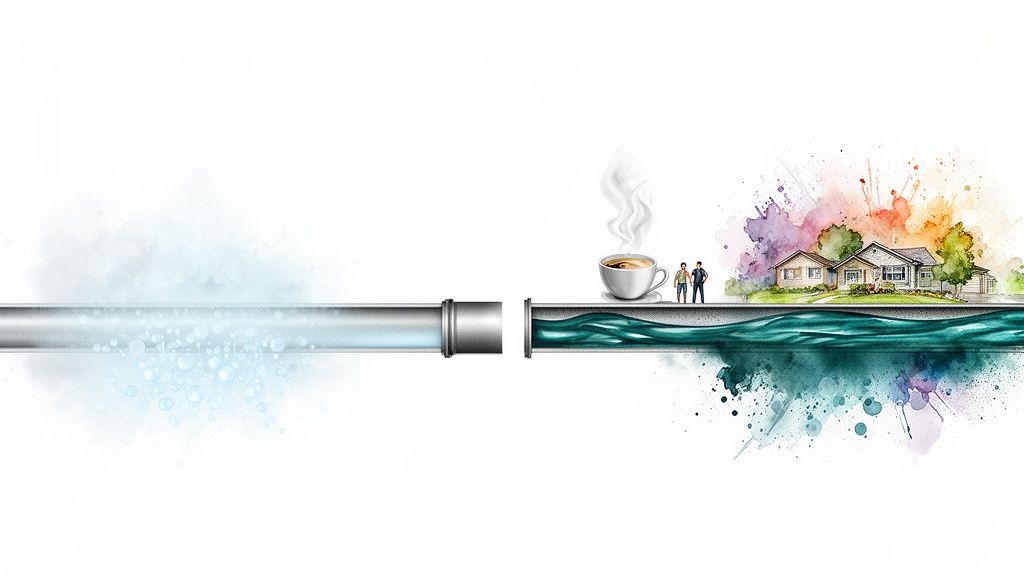
Chloramine’s main advantage from a municipal perspective is its incredible stability. Unlike chlorine, which is highly reactive and tends to break down relatively quickly, chloramine is engineered for the long haul. This persistence is a huge deal for a sprawling system like LA's, where water might travel for days just to reach the furthest neighborhoods.
Staying Power Under Pressure
Practical Example: Picture a water main break in a distant suburb. At that moment, the disinfectant’s ability to maintain a protective residual is critical to stop contaminants from getting into the system.
- Chlorine in Action: Free chlorine is powerful initially, but its strength can diminish significantly before the water even reaches the site of the break. This can create a dangerous window of vulnerability where bacteria could flourish.
- Chloramine in Action: Chloramine’s slow-and-steady approach ensures a protective barrier remains intact. Its lasting residual keeps the water safe all the way to the end of the line, offering a much more reliable defense against unexpected contamination.
This difference in longevity is stark. While free chlorine loses half its concentration in just 1.8 hours, chloramine takes an impressive 26.6 hours to dissipate by the same amount. Research shows chlorine is often used up before water reaches the farthest taps, but chloramine keeps its disinfectant shield strong throughout the entire system. You can read more about chloramine’s impact on the foodservice industry and its remarkable staying power.
This lasting chemical presence is a double-edged sword. While it’s great for the city’s infrastructure, it means a more stubborn chemical is flowing into your home or business—one that requires a much more targeted removal strategy.
The Taste Test at Home and Work
The very stability that protects our water supply is what creates headaches with taste and odor. Because chloramine is far less volatile than chlorine, it doesn't "gas off" or evaporate from the water easily. This has practical consequences you can taste and smell every day.
Practical Example: A local coffee shop in Burbank uses water as its main ingredient. If their water is treated with chloramine, that persistent chemical compound isn't going anywhere during the heating and brewing process. The result? A cup of coffee with a distinct "off" or flat taste that can completely overpower the delicate flavors of their expensive beans.
It's the same for a homeowner who fills a pitcher of water and leaves it on the counter, hoping to "air out" the chemical taste. That trick might work for chlorine, but chloramine will linger, continuing to affect the taste of everything from a simple glass of water to the pasta you boil for dinner.
Actionable Insight: The chemical behavior of chloramine renders most standard water filters useless against it. The strong bond between chlorine and ammonia is simply too tough for a basic activated carbon filter to break. To get truly clean, great-tasting water, you need a system specifically designed to tackle the unique, resilient nature of chloramine.
Health and Taste Implications for Your Home and Business
The choice between chloramine and chlorine isn't just a technical detail for water utilities. It has a real, tangible impact on your daily life—from the coffee you brew to the shower you take. While both disinfectants are essential for preventing waterborne diseases, their presence in your tap water can create noticeable problems with taste, smell, and even your family's or customers' comfort.
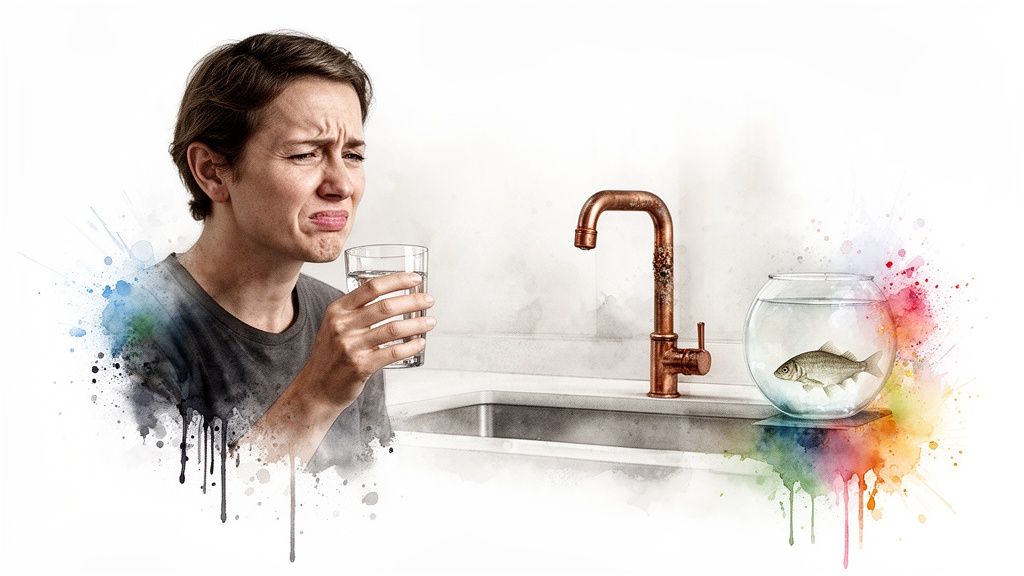
The most frequent complaint we hear is about the taste and odor. Many people are familiar with the "pool smell" of chlorine, which tends to dissipate if you let the water sit for a bit. Chloramine is different. It's more stubborn, creating a persistent chemical or sometimes flat taste that doesn't just air out. This can ruin the flavor of everything it touches.
Beyond Just Bad Taste
The issues can go well beyond an unpleasant glass of water. Here in Los Angeles, we often hear from residents who experience physical reactions to the city's chloraminated water. Since chloramine is a compound of chlorine and ammonia, it can be tougher on both surfaces and people.
Common experiences we hear about include:
- Dry Skin and Hair: Many people report that their skin feels itchy, tight, or irritated after showering. Their hair can also feel brittle and stripped of its natural oils.
- Respiratory Issues: For those with asthma or other respiratory sensitivities, the chloramine that gets aerosolized in a hot shower can sometimes act as an irritant.
It’s also absolutely critical to know that chloramine is extremely toxic to fish and other aquatic life. If you have an aquarium or a backyard pond, you cannot use LA tap water without first treating it with a special conditioner to neutralize the chloramine. Failure to do so can be fatal for your aquatic pets.
The Invisible Risk: What Chloramine Does to Your Pipes
Perhaps the most serious concern with chloramine is its interaction with plumbing, especially in a city like Los Angeles with its mix of old and new buildings.
Chloramine is known to be more corrosive than chlorine. When it travels through older pipes—think lead service lines, copper pipes with lead solder, or old brass fittings—it can speed up the process of leaching heavy metals directly into your water. This is a silent threat you can’t see, smell, or taste.
Practical Example: A family in a classic 1950s Los Angeles home might notice their water tastes a bit metallic and their skin feels dry. It's easy to blame the chloramine itself. But the real culprit could be the chloramine corroding their old plumbing, allowing lead to seep into their drinking water every time they turn on the tap.
This isn't just theory. One GIS-based study in North Carolina revealed that children in homes with chloramine-treated water had significantly higher blood lead levels (4.93 μg/dL) than those in areas with chlorinated water (4.19 μg/dL). The link was strongest in older homes, pointing directly to the disinfectant's role in lead exposure. You can dig into the full study on chloramine and lead levels to see the data for yourself.
What Los Angeles Residents Can Do
Actionable Insight: Knowing what’s at stake is the first step. The issues, from taste to potential contamination, are complex, which is why a single, off-the-shelf filter often isn't enough. If you’ve noticed an off-taste, it’s a good sign to look deeper. Sometimes other issues are at play, like when water might taste salty due to a softener problem.
Given these variables, the only way to be sure about your water is to have it professionally assessed. This helps identify the specific concentration of chloramine, along with hardness, heavy metals, and other contaminants. From there, you can choose a targeted solution that ensures the water in your home or business is not just safe, but genuinely pure and pleasant to drink.
How to Actually Get Chloramine Out of Your Water
Realizing your Los Angeles tap water is treated with chloramine is one thing, but getting it out is another challenge entirely. When you're dealing with chloramine, the removal game is completely different from chlorine. The same chemical stability that makes it such a persistent, long-lasting disinfectant for the city also makes it incredibly stubborn when you try to filter it.
Many people reach for a basic pitcher filter, but those are really only designed to handle the easy stuff: chlorine. They use standard activated carbon, which works by adsorption—think of it as a porous sponge that traps contaminants. Chlorine molecules get caught easily, but the tough chemical bond in chloramine (a combination of chlorine and ammonia) lets it zip right past, leaving you with that distinct chemical taste and smell.
Why Standard Activated Carbon Just Doesn't Cut It
Practical Example: Imagine trying to catch minnows with a net made for sharks. That's what happens with standard activated carbon and chloramine. The carbon's pores are great for grabbing the larger, less stable chlorine molecules, but the smaller, tightly-bound chloramine molecules slip right through. This is exactly why you can run your LA tap water through a typical filter and still get that unpleasant "off" taste in your morning coffee.
To truly fix the problem, you need a filtration media that was specifically built to break that stubborn chloramine bond.
Catalytic Carbon: The Right Tool for a Tough Job
By far, the most effective way to target chloramine is with catalytic carbon filtration. This isn't your average carbon. Its surface has been specially treated to act as a catalyst, meaning it doesn't just passively trap contaminants—it actively forces a chemical reaction that rips the chloramine molecule apart.
Here's a helpful analogy: Chloramine is a locked padlock. A standard carbon filter is like a random key that just won't fit. Catalytic carbon is the master key, designed to slide in, turn the mechanism, and break the lock open, neutralizing both the chlorine and the ammonia it was bound to.
Once that bond is broken, the separate components are easily adsorbed by the carbon, leaving you with nothing but clean, great-tasting water. The value here is clear: whole-home catalytic carbon systems are the gold standard for LA residents who want to get chloramine out of every single tap. To really get into the weeds, you can learn more about how water filtration works and see why the specific media makes all the difference.
Reverse Osmosis: The Final Word in Purity
If you’re after the absolute highest level of purity, especially for the water you drink and cook with, a Reverse Osmosis (RO) system is the ultimate solution. While catalytic carbon is a sharpshooter for chloramine, RO takes a much broader approach, removing up to 99% of just about every dissolved solid in your water.
An RO system works by pushing water through a microscopic, semipermeable membrane. This process is incredibly effective at filtering out:
- Chloramine and chlorine
- Heavy metals like lead and arsenic
- Dissolved salts and minerals
- Pesticides and herbicides
- Fluoride
One of the most proven and effective methods for removing chloramine involves using activated carbon filters, and this is especially true when they're part of a multi-stage system like RO. The best RO systems use a catalytic carbon pre-filter to first dismantle the chloramine, which not only removes it but also protects the delicate RO membrane from getting damaged.
Choosing the System That Makes Sense for You
The best strategy is the one that solves your specific problem. It's all about matching the solution to your needs.
Actionable Insights & Scenarios:
- Living in an apartment? An under-sink RO system is perfect. It provides incredibly pure water for drinking and cooking right at the kitchen tap without needing to modify the building's plumbing. It’s a targeted, high-impact fix.
- Own a home in Los Angeles? A whole-house catalytic carbon system is a game-changer. It gets chloramine out of every shower, faucet, and appliance, which is better for your skin, hair, and plumbing. For the best of both worlds, pair it with an under-sink RO in the kitchen for drinking water.
- Running a restaurant or coffee shop? A commercial-grade RO system is essential. It guarantees that every drink tastes exactly as it should, protects your expensive espresso machines and ice makers from scale and corrosion, and delivers the quality your customers expect.
Once you understand these strategies, you can stop wasting money on pitcher filters that don't work and invest in a real solution that’s truly built for LA's unique water challenges.
Designing Your Custom Water Solution
Knowing the difference between chloramine and chlorine is one thing, but putting that knowledge to work is what really counts. When it comes to Los Angeles water, a generic, one-size-fits-all filter just isn't going to cut it. The right system for you depends entirely on who you are and what you need—whether you're looking out for your family, your customers, or your tenants.
The first step is to move from a general problem to a specific, well-designed solution. That means engineering a system that directly targets not only the chemical disinfectant in your pipes but also other common issues, like LA's notoriously hard water.
Solutions for Los Angeles Homeowners
For homeowners, the goal is total protection for your family and your property. The most effective strategy is a combination of a whole-home catalytic carbon system and a high-efficiency water softener.
The catalytic carbon is the heavy lifter, breaking down that stubborn chloramine molecule right where your water line enters the house. This makes every shower free from irritating chemicals and ensures every glass of water from the tap is clean. Following it up with a water softener is the perfect one-two punch against LA's hard water, stopping the scale buildup that ruins appliances and leaves spots on your glassware. The value is clear: softer skin, cleaner laundry, and protected plumbing.
Essential Systems for Restaurants and Offices
In a restaurant, water is a critical ingredient where consistency is everything. For this, a commercial-grade Reverse Osmosis (RO) system is the undisputed champion. It's the only way to guarantee beverage quality and protect thousands of dollars in equipment. An RO system essentially strips the water down to pure H₂O, removing chloramine, minerals, and other dissolved solids. This ensures your coffee, soda, and ice taste exactly as they should, every single time.
This isn't just about taste; it's about protecting your investment in high-end espresso machines and ice makers from costly scale damage. For offices, a similar bottleless RO cooler gives employees access to premium drinking water—a fantastic perk that also cuts out plastic bottle waste.
This guide breaks down the two main paths for getting chloramine out of your water, from a great starting point to the highest level of purification available.
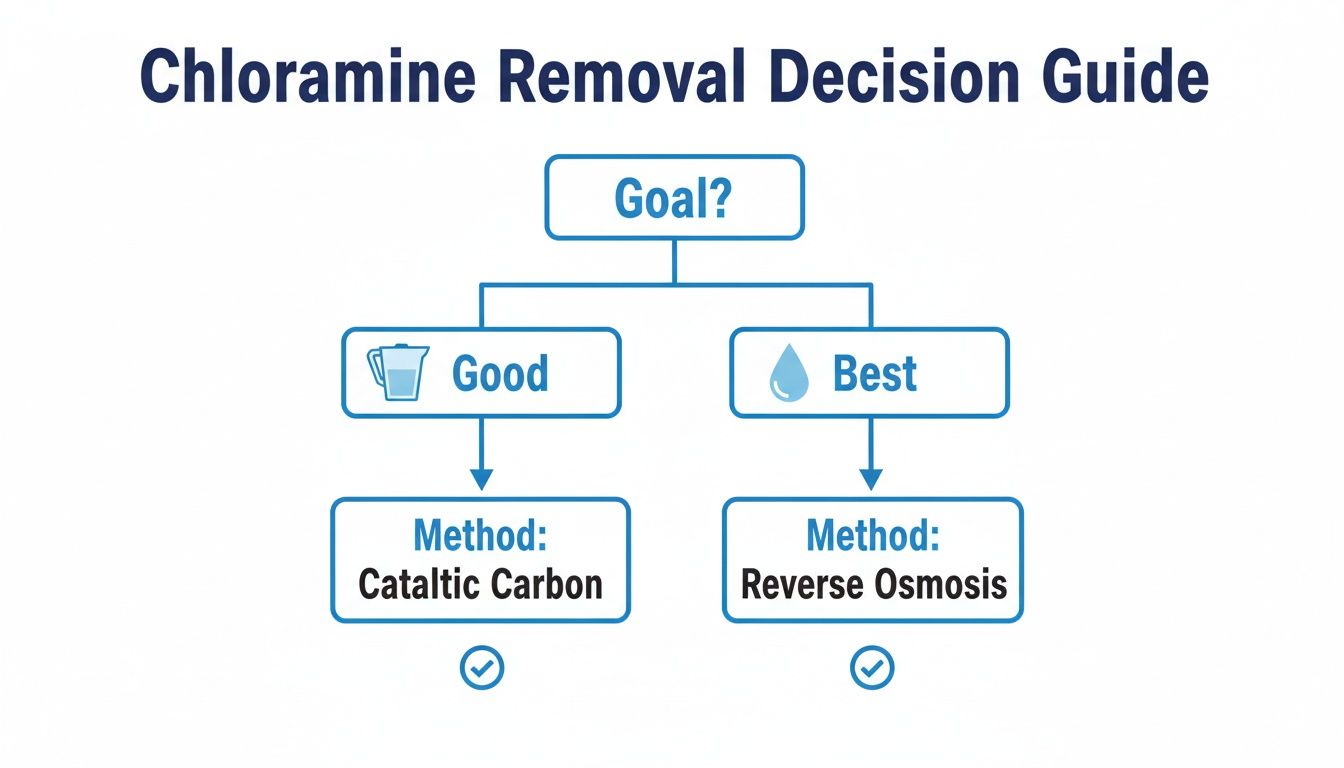
As you can see, catalytic carbon is an excellent solution for general, whole-home use, but Reverse Osmosis provides the ultimate purity for anything you drink or cook with. You can dive deeper into a full water filtration systems comparison to see how these technologies perform for different needs.
Scalable Solutions for Property Managers
For property managers overseeing multi-family buildings, the game is all about scale and reliability. A centralized, professionally maintained filtration and softening system is a powerful amenity that not only attracts new tenants but helps keep them. A properly sized catalytic carbon and softener combo can serve an entire building, giving every resident the benefits of pure, soft water while protecting the property’s plumbing from the corrosive one-two punch of chloramine and scale.
Actionable Insight: Your water situation is unique. The only way to design the right solution is to start with hard data. A professional water assessment tells us exactly what’s in your water, which allows for a truly personalized recommendation.
Ultimately, the goal is to move past temporary fixes and install a permanent solution. When you work with a Praz Pure Water expert, you get a system designed for your specific needs, based on real-world testing. Contact us today for a free water assessment and get a crystal-clear picture of your water quality and a tailored plan to perfect it.
Your Questions, Answered
When it comes to your water, it's natural to have questions. Here are clear, straightforward answers to some of the most common things we're asked by Los Angeles home and business owners about chloramine and chlorine.
Can I Just Boil My Water to Get Rid of Chloramine?
Unfortunately, that trick only works for chlorine. Boiling water allows the volatile chlorine gas to evaporate, which is why it helps get rid of that "pool smell." But chloramine is a much more stable chemical.
Boiling won't remove it. In fact, it might even make the concentration slightly higher as the water evaporates. To truly get rid of chloramine, you need a filtration method designed to break its strong chemical bond, like catalytic carbon or a Reverse Osmosis system.
What About My Brita or Other Pitcher Filter? Will That Work?
Most standard water pitcher filters just aren't up to the task. They typically use a basic form of activated carbon that does a decent job on chlorine but can’t effectively tackle the more stubborn chloramine molecule.
You might notice a slight improvement in taste because the filter removes some free chlorine, but the chloramine itself will remain. This is a common frustration for people in LA who buy these filters hoping for a real solution and end up disappointed.
For effective removal, you really need to step up to a more robust system, like an under-sink or whole-home filter that uses specialized catalytic carbon.
How Can I Tell if My Water Has Chlorine or Chloramine?
Actionable Insight: The most reliable way is to check your local water utility's annual quality report. If you live in Los Angeles, the Los Angeles Department of Water and Power (LADWP) and other water districts publish these reports on their websites.
These documents will tell you exactly which disinfectant they use. If you want a more detailed picture of what’s in your tap water, including precise levels and other potential contaminants, a professional water test is your best bet.
Is Chloramine Actually Safe to Drink?
Public health agencies like the EPA state that the levels of chloramine in municipal water are safe for drinking, cooking, and bathing.
However, there’s a big difference between "safe" and "ideal." Many people choose to remove it simply because they can't stand the chemical taste and odor, or they notice it dries out their skin and hair. It's also critical to know that chloramine is extremely toxic to fish and other aquatic life, so it absolutely must be removed from water used in aquariums or ponds.
Ready to finally solve your water quality issues? The experts at Praz Pure Water, Inc. can provide a free, no-obligation water assessment to identify exactly what's in your water and design a system perfect for your home or business. Schedule your free consultation today!