
Effective chlorine removal starts with a simple question: why does my tap water smell like a swimming pool? While that smell can be a little jarring first thing in the morning, it’s actually a sign that your city’s water provider is doing its job. They add disinfectants like chlorine or chloramine to keep the water safe on its journey to you. The value in knowing this is that you can take simple, effective steps to remove it right at home.
This guide will provide clear, actionable insights into why chlorine is there, the problems it can cause, and most importantly, how to get rid of it for good.
Why Your Los Angeles Tap Water Smells Like a Pool
If you've ever turned on a faucet in L.A. and been hit with that unmistakable swimming pool smell, you're not imagining things. That scent is chlorine, a powerful disinfectant used to kill off harmful germs and bacteria in the public water supply.
Think of it as a bodyguard for your water. Its purpose is to make sure nothing dangerous grows in the water as it travels from the treatment facility, through miles of pipes, and finally out of your tap. It's a critical part of public health, but that doesn't mean you have to live with the taste and smell at home. The benefit of removing it is enjoying pure, clean-tasting water every day.
Chlorine vs. Chloramine: The Two Disinfectants in Your Water
When we talk about removing "chlorine," it's important to know exactly what's in your water. Many suppliers here in Los Angeles and across Southern California have started using chloramine instead of the more traditional free chlorine.
What's the difference? Chloramine is a compound made by mixing chlorine with a small amount of ammonia. This makes it much more stable. For water districts, that's a good thing—it means the disinfectant lasts longer in the pipes. For you, the homeowner, its stability makes it a bit tougher to filter out. This is a crucial piece of information for choosing the right filter.
The use of chlorine has been one of the greatest public health achievements of the last century, virtually wiping out diseases like cholera and typhoid. But as we've learned more about the side effects, particularly disinfection byproducts (DBPs), the demand for high-quality home filtration has skyrocketed.
The Problem with Chlorine Byproducts
Beyond just the taste and smell, there’s another big reason people want chlorine out of their water: disinfection byproducts (DBPs).
When chlorine interacts with tiny bits of organic matter (like decaying leaves) naturally found in source water, it can create new compounds like trihalomethanes (THMs). The Praz Pure Water keeps a close watch on DBP levels, but many of us would rather not have them in our water at all.
Knowing what's in your water is the first step. Filtering out these disinfectants not only brings back the clean, crisp taste water is supposed to have but also gets rid of that chemical odor. And if your home has other stubborn smells beyond the tap, you might find it helpful to learn about solutions like professional odor removal services.
Ultimately, taking control of your water filtration is about making sure the water you and your family drink, cook with, and bathe in is as pure and refreshing as it can possibly be.
Your Guide to Effective Chlorine Removal Methods
Ready to get that swimming pool taste out of your tap water? We've talked about why chlorine is there, but now let's get into the practical side of things: how to get it out. Removing chlorine from water effectively comes down to a few key technologies, and each one has its own particular strengths. Figuring out how they work is the first actionable step toward picking the right one for your home.
Think of these methods not as complicated science, but as different tools for a specific job. Some are like super-fine nets, catching unwanted particles, while others act more like powerful chemical magnets. The best choice really hinges on what, exactly, you need to remove and where you need it removed.
Activated Carbon: The Chemical Sponge
The most common and trusted method for getting rid of chlorine is an activated carbon filter. The best way to picture it is like a sponge, but on a microscopic level. Activated carbon is incredibly porous, which gives it a massive internal surface area where contaminants get trapped.
But this isn't just a simple filter that blocks particles like a screen door stopping flies. Instead, it uses a process called adsorption. As chlorinated water flows through the carbon, the chlorine and other organic compounds literally stick to its surface—almost like static cling—while the clean water passes right on through.
Practical Example: A family in Burbank installs an under-sink activated carbon filter. Actionable Insight: They immediately notice their morning coffee tastes richer and the water they drink is free from any chemical taste. This small change elevates their daily routines.
Catalytic Carbon: The Chloramine Specialist
While standard activated carbon is a champion at removing free chlorine, it has a much harder time with the more stubborn compound, chloramine. Since many Los Angeles water suppliers use chloramine, this is a critical distinction to make. This is where catalytic carbon steps in.
Catalytic carbon is a specially processed version of activated carbon that’s been given a "boost." This enhanced material acts as a catalyst, speeding up the chemical reaction needed to break the stable bond between chlorine and ammonia in chloramine. It doesn't just trap the compound; it actively takes it apart.
Practical Example: A homeowner in Pasadena invests in a whole-house catalytic carbon system. Actionable Insight: They no longer experience dry, itchy skin after showering and their clothes stop fading in the laundry, extending the life of their wardrobe and improving their personal comfort.
Reverse Osmosis: The Purification Powerhouse
If you're looking for the absolute highest level of purification for your drinking water, Reverse Osmosis (RO) is the gold standard. Think of it as an extremely fine, molecular-level strainer. An RO system uses pressure to force water through a semipermeable membrane.
This membrane is so fine that it lets water molecules pass through but blocks a massive range of contaminants—including chlorine, chloramine, heavy metals, salts, and DBPs. Most quality RO systems also include activated carbon pre-filters and post-filters to protect the delicate membrane and "polish" the final taste of the water. This one-two punch is exceptionally effective for thorough chlorine removal from water. Our detailed guide on how to purify tap water offers more insights into this and other methods.
Key Takeaway: The effectiveness of each method is measurable and significant. Granular activated carbon (GAC) filters typically remove over 90% of free chlorine, while catalytic carbon is engineered to tackle more stable compounds like chloramine. A well-designed Reverse Osmosis (RO) system can remove 95–99% of dissolved chemical contaminants, making it a top-tier solution.
Vitamin C Filtration: The Shower Solution
Here’s one you might not have heard of, but it’s surprisingly effective for a specific purpose: Vitamin C filtration. Ascorbic acid (which is just Vitamin C) is fantastic at neutralizing both chlorine and chloramine on contact. The reaction is almost instantaneous, converting these disinfectants into harmless compounds.
Because it's so effective and perfectly safe, Vitamin C is an ideal choice for showerhead filters. It helps protect your skin and hair from the drying, damaging effects of chlorine without introducing any new chemicals into the water.
Practical Example: Someone with sensitive skin or color-treated hair in Los Angeles installs a Vitamin C shower filter. Actionable Insight: This small, simple step can lead to noticeable improvements, reducing skin irritation and helping hair color last longer by neutralizing the harsh disinfectants right before they hit your body.
Comparing Methods for Chlorine Removal From Water
To help you see the differences at a glance, here’s a straightforward breakdown of the most common technologies used to remove chlorine and chloramines from your household water.
| Method | Effective On | Pros | Cons | Best For |
|---|---|---|---|---|
| Activated Carbon | Chlorine, Taste, Odor | Affordable, widely available, effective for chlorine. | Less effective on chloramine, nitrates, and minerals. | Point-of-use drinking water filters, refrigerator filters. |
| Catalytic Carbon | Chlorine & Chloramine | Excellent for chloramine, long-lasting media. | More expensive than standard activated carbon. | Whole-house filtration systems in chloramine-treated areas. |
| Reverse Osmosis | Chlorine, Chloramine, Salts, Metals, DBPs | Highest level of purification, removes a wide range of contaminants. | Wastes some water, slower process, typically point-of-use. | Ultimate purity for drinking and cooking water at the kitchen sink. |
| Vitamin C | Chlorine & Chloramine | Extremely fast and effective neutralization, safe for skin. | Consumable media needs regular replacement. | Showerhead filters to protect skin and hair. |
Each of these methods offers a clear path toward better, cleaner water. By understanding these core technologies, you're now equipped to make an informed decision about which solution best fits what you and your family need.
Choosing the Right Water Filter for Your Home
Figuring out which water filter is right for your home can feel like a maze of technical jargon. But really, it all comes down to one simple question: Are you trying to fix the water at a specific tap, or for your entire house?
Your answer to that question puts you at a fork in the road, leading to two very different types of filtration systems. Once you understand the difference, you'll be well on your way to making a confident choice for your family and achieving effective chlorine removal from water.
This diagram breaks down the most common technologies for getting chlorine out of your water. It shows how different methods, like activated carbon and reverse osmosis, get the job done.
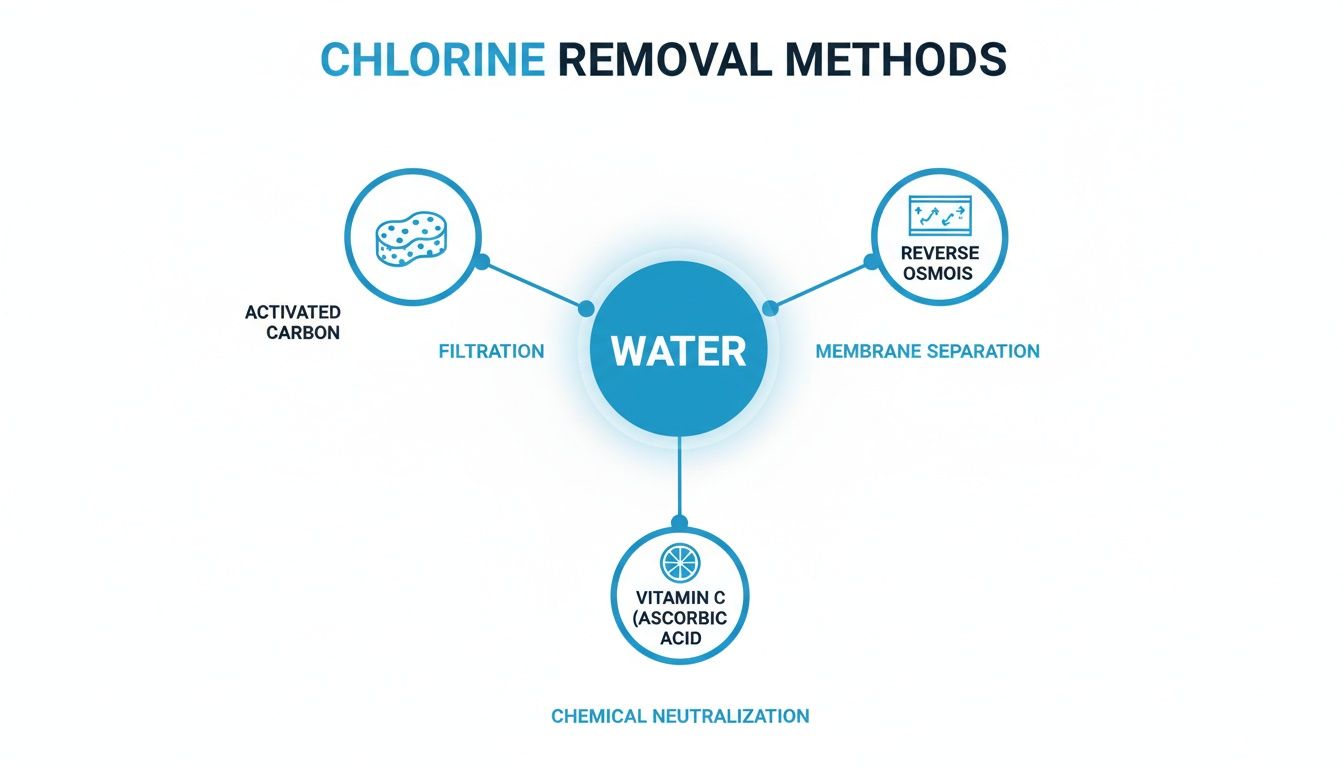
Think of each path as a different strategy. The best one for you depends entirely on what you're trying to remove from your water.
Point-of-Use Filters for Targeted Purity
Point-of-Use (POU) systems are specialists. They treat water at a single spot—right where you use it. This category covers everything from simple water pitchers and filters you screw onto your faucet to more robust systems installed right under your kitchen sink.
These solutions are perfect when you have a specific goal, like making sure your drinking water and morning coffee taste fantastic. They’re generally more affordable upfront and much easier to get up and running, which makes them a great starting point for many people.
Practical Example: A renter in a Santa Monica apartment who is tired of buying bottled water installs an under-sink Reverse Osmosis system. Actionable Insight: This is a perfect POU solution because it delivers incredibly pure water for drinking and cooking without requiring major, permanent changes to the plumbing.
Point-of-Entry Systems for Whole-House Protection
On the flip side, you have Point-of-Entry (POE) systems. We usually call these whole-house filters because they're installed right where the main water line enters your home. Think of a POE system as a gatekeeper, treating every single drop of water that comes inside.
This is the all-in-one approach. If you’re dealing with dry skin from showers, seeing your clothes fade in the laundry, and worrying about your appliances, a POE system is what you need. It sends clean, chlorine-free water to every faucet, showerhead, and appliance in the house.
Practical Example: A family in the suburbs notices their new clothes are fading fast and the dishwasher is leaving a chalky film on everything. Actionable Insight: A whole-house catalytic carbon filter is an excellent investment. It doesn't just improve their drinking water—it protects their skin, hair, laundry, and expensive appliances from disinfectant damage.
Key Factors to Guide Your Decision
Picking between POU and POE isn't just about the size of the system; it’s about matching the tool to your actual goals. Here’s what you need to think about:
- Your Main Goal: Is your only concern better-tasting drinking water (POU)? Or do you want to protect your skin, hair, and home from chlorine everywhere (POE)?
- Your Living Situation: If you're renting, the simplicity and portability of a POU system often make the most sense. Homeowners, however, tend to see the long-term value in a comprehensive POE system.
- Budget: POU filters have a lower initial price tag, but a POE system can deliver much greater value over time by helping your appliances and plumbing last longer.
Actionable Insight: To make the best decision, you need to know what’s in your water. That’s where professional water testing services come in. A proper test takes out all the guesswork, showing you exactly what contaminants you’re dealing with so you can invest in a filter that actually solves your problem.
The Los Angeles Water Factor: Chloramine
Here in Los Angeles, there’s one more crucial detail you have to consider. Most water utilities in our area, including the LADWP, don’t just use chlorine. They use chloramine. As we covered earlier, chloramine is a tougher, more stubborn disinfectant.
This is a big deal because a standard activated carbon filter—which works great on chlorine—will struggle to remove chloramine effectively.
For true whole-house filtration in L.A., you need a system with catalytic carbon. This is a special type of filter media specifically engineered to break the tough chemical bond in chloramine. It’s what ensures the water coming out of every tap is truly free from that disinfectant taste, smell, and all its side effects. To get a better sense of the science behind it, you can learn more about how water filtration systems work and what sPraz Pure Waterrates different filter media.
At the end of the day, picking the right filter is about aligning your needs with the right technology. Once you know your goals and the chemistry of your local water, you can choose a system that delivers pure, refreshing water exactly where you need it most.
Discover the Unexpected Benefits of Chlorine-Free Water
Getting the chlorine out of your water is about so much more than just making it taste and smell better. It's a genuine upgrade to your daily life, with real, tangible benefits you can see and feel all over your home. The value here is in improving your health, protecting your home, and enhancing your daily experiences.
It all starts with your personal care routine. When you shower, that chlorinated water doesn't just clean you—it also strips away the natural, protective oils from your skin and hair. This often leads to that familiar dry, itchy, and tight feeling long after you’ve stepped out of the bathroom.

Softer Skin and Healthier Hair
Once you filter out the chlorine before it even gets to your showerhead, you’re letting your body’s natural moisture do its job. The results are often immediate and impressive.
- Softer, More Hydrated Skin: People with sensitive skin or conditions like eczema often tell us they see a huge drop in redness and irritation.
- Vibrant, Healthier Hair: Your hair feels softer and looks shinier because its natural oils are protected. If you color your hair, you'll likely find the color lasts longer and doesn't fade as quickly.
Practical Example: A family with young kids installs a whole-house filter. Actionable Insight: They quickly find that their children’s persistent dry skin patches disappear, making bath time more comfortable and reducing the need for expensive lotions.
Protect Your Appliances and Plumbing
The benefits don't stop at the bathroom door. Chlorine-free water is a huge plus for your home's pipes and expensive appliances. At its core, chlorine is a corrosive chemical. Over years of constant exposure, it slowly eats away at the rubber seals, gaskets, and metal parts inside your most important machines.
Investing in chlorine removal isn't just about buying better water; it's an investment in protecting your home's assets. A whole-house filter acts like a shield, potentially adding years to the life of your water heater, dishwasher, and washing machine.
This kind of proactive maintenance means fewer surprise rPraz Pure Waterir bills and a much longer, more efficient lifespan from the appliances you depend on. It’s a smart move that pays for itself over time. Even your clothes will thank you, as fabrics are less likely to fade or wear out with each wash.
Elevate Your Culinary Experience
The difference in the kitchen can be truly profound. Chlorine and its byproducts have a way of masking or altering the subtle flavors in your food and drinks. When you take them out of the equation, you unleash the true taste of everything you make.
- Better-Tasting Coffee and Tea: Without that chemical background note, the rich, complex flavors of your favorite coffee beans or tea leaves really come to life.
- More Flavorful Cooking: Everything from boiled pasta and steamed vegetables to soups and homemade bread will have a cleaner, purer taste. People often say even something as simple as rice comes out fluffier.
Ultimately, choosing to filter your water is choosing to enhance almost every part of your day. It's an investment in your comfort, your home's longevity, and the simple pleasure of enjoying food and drink the way they were meant to be.
Getting Your Filtration System Installed and Maintained
A good water filter is a fantastic investment in your home and your health, but it’s only as good as its installation and upkeep. To get that chlorine out of your water effectively, the system needs to be set up right from the start and then looked after properly. Here are the actionable steps to ensure you enjoy pure, clean water for years to come.
Professional vs. DIY Installation
The first big question is always, "Can I install this myself?" It really boils down to the type of system you've chosen and how comfortable you are with a little plumbing work.
-
Under-Sink Systems (POU): If you've got an under-sink Reverse Osmosis or carbon filter, chances are you can handle the installation. These kits usually come with good instructions and just require you to tap into your cold water line and maybe drill a hole for a small, sPraz Pure Waterrate faucet. If you know your way around a drill and a wrench, it's a solid weekend project.
-
Whole-House Systems (POE): Now, this is a different ballgame. Installing a whole-house filter means cutting directly into your home's main water line. It's a high-stakes job where a small mistake can quickly turn into a big leak and some serious water damage. For this reason, we strongly recommend professional installation for any Point-of-Entry system. A pro will make sure it’s installed to code, works perfectly, and won’t cause you any headaches down the road. Our guide on the best water filtration system for your whole house can help you explore your options here.
A Simple Maintenance Schedule is Your Best Friend
Once your system is up and running, a little routine maintenance is all it takes to keep it performing at its best. A filter is a hardworking tool, and if you neglect it, its ability to pull chlorine and other gunk out of your water will slowly fade.
Don’t let the thought of "maintenance" scare you off. For most systems, it’s really just about changing out the filter cartridges on a predictable schedule. Think of it like changing the oil in your car—it’s a simple task that prevents much bigger, more expensive problems later.
Protect Your Investment: A quality filtration system can easily last 10-15 years or more, but that lifespan depends entirely on replacing the filters on time. Sticking to the schedule is the most important thing you can do to protect your investment and ensure your water stays pure.
Telltale Signs Your Filter Needs a Change
Your system will usually give you a few hints when a filter is on its last legs. If you know what to look for, you can stay on top of maintenance before your water quality starts to suffer.
Here are three classic signs to watch out for:
- A Drop in Water Pressure: Is the flow from your faucet or shower head getting weaker? That’s a telltale sign the filter is getting clogged with all the sediment and contaminants it has been catching.
- That Old Taste and Smell Returns: This is the most obvious one. If you start to notice that faint chlorine taste or "pool" smell coming back, it means the carbon in your filter is saturated and can't absorb any more.
- Cloudy Water or Visible Particles: If your water starts looking murky or you can see little specks floating around, your sediment pre-filter is definitely overwhelmed and needs to be replaced right away.
By setting up a simple schedule and keeping an eye out for these signs, you’ll find that maintaining your filtration system is a breeze. It's a small price to pay for the peace of mind that comes with clean, chlorine-free water for your family.
Ready for Better Water? Here's What to Do Next.
We've covered a lot of ground together, from why chlorine ends up in your tap water to the best ways to get it out. While your city's treatment plant does the heavy lifting to make water safe on its journey to you, the final, most important step happens right inside your home. It's up to you to decide the quality of water you and your family will actually use.
Getting rid of chlorine is about so much more than just fixing a bad taste. The difference is something you’ll notice every single day.
Your Path to Purer Water
Imagine turning on any faucet and getting crisp, clean water without that chemical smell. Think about stepping out of the shower with softer skin and healthier hair, not feeling dried out by disinfectants. This change also helps protect the appliances you rely on—like your dishwasher and washing machine—from the slow, corrosive damage chlorine can cause.
You don't have to just imagine it. You can make it happen.
Actionable Takeaway: Take the first easy step toward a healthier home. Your family deserves water that’s not just safe, but truly pure and enjoyable for everything from drinking and cooking to bathing.
Give us a call at Praz Pure Water. We offer a completely free, no-pressure water quality assessment for homes and businesses anywhere in the greater Los Angeles area. Our experts will come to you, figure out exactly what’s in your water, and help you find the right filtration system for your needs and budget.
Let's get you started on the path to the pure, refreshing water you deserve. There’s no better time to invest in your home and your family's well-being.
Common Questions We Hear About Chlorine Removal
When you start looking into water filtration, a lot of the same questions tend to pop up. Here are the straightforward answers to the questions we hear most often from our clients here in Los Angeles.
Will Boiling My Water Get Rid of Chlorine and Chloramine?
Yes and no. Boiling water will help remove free chlorine—the heat makes it evaporate as a gas. But it's a completely different story for chloramine, which is what many municipalities, including parts of LA, use because it's more stable.
To even begin to break down chloramine, you'd have to keep a pot of water at a rolling boil for 20 minutes or more. It's just not a practical solution for your daily drinking, cooking, or bathing water. A catalytic carbon filter is a much more realistic and effective way to handle chloramine consistently.
How Do I Know if I Have Chlorine or Chloramine?
The most reliable way is to go straight to the source. Your local water supplier, like the Los Angeles DPraz Pure Waterrtment of Water and Power (LADWP), publishes an annual water quality report. A quick look at their website will tell you exactly which disinfectant they're using in your area.
Actionable Tip: If you want to test it yourself, grab a water test kit that measures both "free chlorine" and "total chlorine." If the total chlorine number is significantly higher than the free chlorine number, that's a clear sign that chloramine is in your tap water.
Is a Simple Shower Filter Good Enough for My Skin and Hair?
A good shower filter is a fantastic starting point. The best ones use media like Vitamin C or KDF to neutralize chlorine and chloramine right where you need it most, preventing that dry, itchy feeling on your skin and keeping your hair from getting brittle.
It's a great "point-of-use" fix for the bathroom, but that’s all it is—a fix for one spot. It won’t improve the taste of your drinking water, give you purer water for cooking, or protect your dishwasher and washing machine from chemical exposure. For that, a whole-house system is really the only way to cover all your bases.
Ready to enjoy pure, refreshing water from every tap in your home? The experts at Praz Pure Water, Inc. are here to help. Schedule your complimentary water assessment in the Los Angeles area today and discover the perfect filtration solution for your family. Visit us at https://prazpurewater.com to get started.