
Getting rid of hard water stains is much simpler when you know you’re fighting mineral deposits. When water evaporates, it leaves behind calcium and magnesium that build up. The key to breaking them down is a mild acid, like vinegar or lemon juice, which dissolves the crust without damaging the surface. It's simple chemistry, and it's the foundation of every effective removal method.
Why Hard Water Stains Everything It Touches
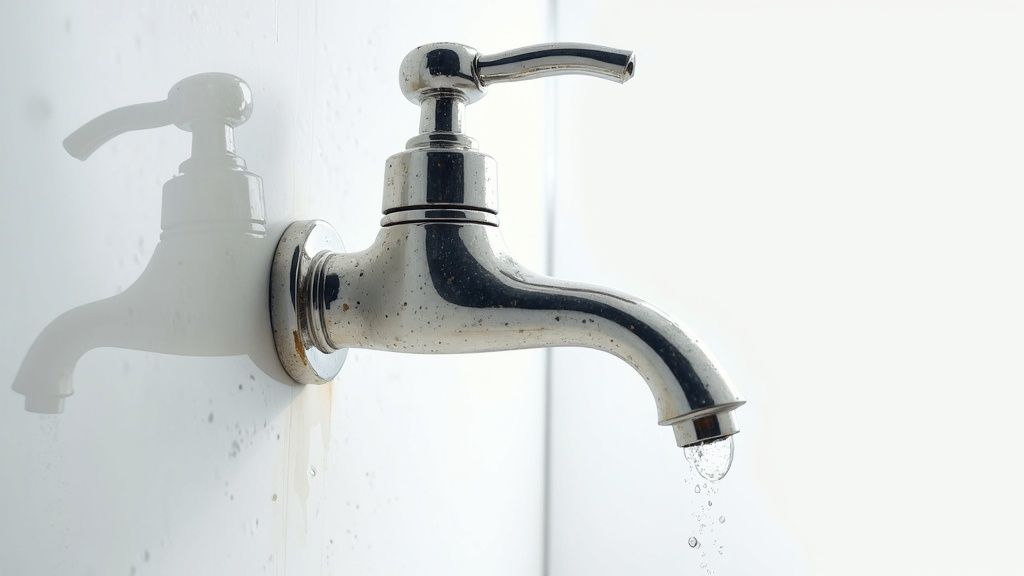
If you've spent an afternoon scrubbing that chalky, white film off your faucets or shower doors, you already know about hard water. This term simply means your water has a high concentration of dissolved minerals—mostly calcium and magnesium. While safe to drink, they create a real headache when the water dries.
Practical Example: Think about what happens after a hot shower. As water droplets on the glass evaporate, they leave those minerals behind. That’s how you get limescale, the official name for that stubborn, cloudy residue that doesn't budge with regular soap and water. The process is like making rock candy; the liquid disappears, and the mineral crystals are left to stick to any available surface.
The Science Behind the Stains
So, what makes these spots so tough? It's their chemical structure. Limescale is primarily calcium carbonate, which doesn't dissolve in plain water. It forms a tight bond with surfaces, creating a crusty layer that thickens over time. This is why a quick wipe-down rarely works.
You're not alone in this. The problem is so common that it has created a huge market for cleaning products. The global hard water stain remover market was valued at around $1.5 billion in 2025 and is expected to climb to $2.3 billion by 2033. This growth isn't surprising when you consider that over 85% of homes in North America deal with some level of hard water.
Why Your Location Matters
How bad your hard water problem is depends on where you live. Water hardness is measured in grains per gallon (GPG), and levels vary dramatically by region.
- Soft Water (0-3 GPG): People in these areas rarely worry about limescale.
- Moderately Hard (3-7 GPG): You’ll see spots on dishes and a light film on fixtures.
- Hard to Very Hard (7+ GPG): Stains are a constant battle, and buildup can even reduce appliance efficiency.
For instance, if your town's water comes from an underground aquifer running through limestone, your water will be much harder than a city that sources from a river. Knowing your local GPG helps you prepare. If you're constantly fighting serious buildup, it might be time to stop treating the symptoms and fix the source. Learning how to choose a water softener can provide a permanent solution and save you hours of cleaning.
Your DIY Toolkit for Conquering Mineral Buildup
Forget the aisle of expensive, harsh chemicals. You don't need a special trip to the store to get rid of hard water stains. You can defeat most mineral buildup with a few simple, powerful items from your kitchen.
First, gather the right tools. Having these ready will make the process smoother.
- Spray Bottles: Essential for applying homemade solutions evenly.
- Microfiber Cloths: Their tiny fibers grab and hold dissolved minerals, wiping them away without leaving lint or streaks.
- Scrub Brushes: A set of non-abrasive brushes is key. An old toothbrush is your secret weapon for tight corners around faucets.
With your tools ready, it's time for the solutions that do the heavy lifting. The real heroes are simple household acids that break down the alkaline mineral deposits we call limescale.
The Power of Pantry Acids
The secret to dissolving stubborn calcium and magnesium isn't a complex chemical formula; it's a mild acid. Everyday ingredients like vinegar and lemon juice create a chemical reaction that loosens the minerals' bond, so you can just wipe them away. This approach is not only effective but also much safer for your home than potent commercial cleaners.
Actionable Insight: A simple vinegar solution is incredibly versatile. White distilled vinegar contains acetic acid, which is strong enough to dissolve limescale but gentle enough for most non-porous surfaces like glass and ceramic tile. The citric acid in lemon juice offers the same mineral-busting power with a fresh, clean scent.
A Word of Caution: Never use acidic cleaners like vinegar or lemon juice on natural stone like marble, granite, or travertine. The acid will react with the stone and cause permanent etching and dull spots. Always use pH-neutral cleaners made for stone.
DIY Hard Water Stain Remover Recipes
Making your own cleaners is easy and effective. These are my go-to recipes that work as well as store-bought products. Each one is designed for a specific job, from a general-purpose spray to a thick paste for tricky vertical surfaces.
| Solution Name | Ingredients | Best For | Mixing Instructions |
|---|---|---|---|
| All-Purpose Vinegar Spray | 1 part white vinegar, 1 part distilled water | Glass, chrome, ceramic, showerheads, faucets | Combine in a spray bottle and shake. Using distilled water prevents adding more minerals back onto the surface you're cleaning. |
| Lemon Juice Grime Buster | Juice from 1-2 fresh lemons | Faucet bases, sink drains, light soap scum | Squeeze fresh lemon juice directly onto the stain. For larger areas, mix it with a bit of water in a spray bottle. |
| Baking Soda Paste | Baking soda, small amount of water | Vertical surfaces, stubborn rings, tile grout | Mix baking soda with just enough water to form a thick paste, aiming for the consistency of toothpaste. |
This small collection of tools and recipes is all you need for almost any hard water stain. Understanding that the acid in vinegar and lemon juice counteracts the alkaline limescale gives you the confidence to tackle the problem. The baking soda paste provides gentle scrubbing power when needed, without damaging surfaces.
Tackling Hard Water Stains on Every Surface in Your Home
A one-size-fits-all approach to hard water stains can lead to frustration and damage. The vinegar spray that works magic on your glass shower door could permanently etch a marble countertop. The secret is matching the right cleaning agent and technique to the specific surface.
We're getting into the details of restoring a cloudy shower enclosure and erasing those stubborn white rings from your stainless steel sink. Each surface has its own quirks and requires a different touch.
This decision tree illustrates your primary DIY options for breaking down mineral buildup.
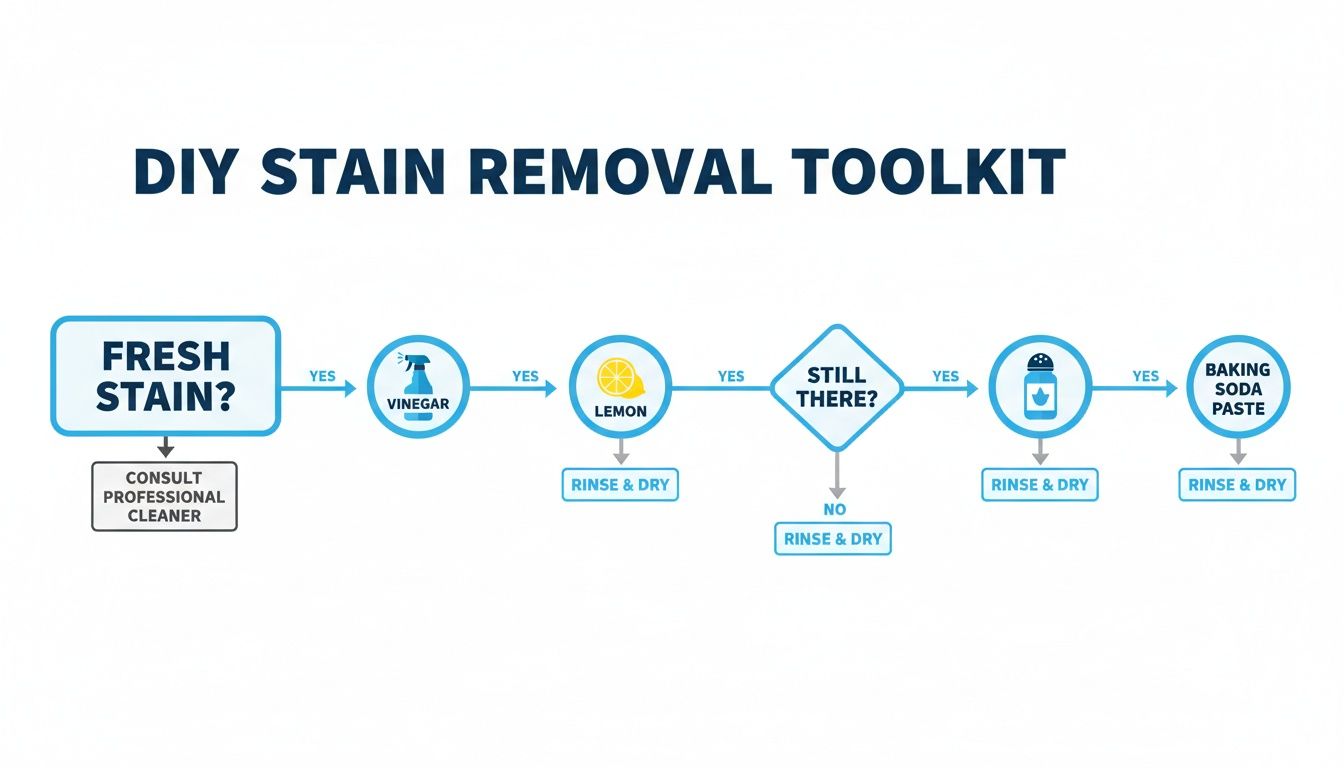
As you can see, vinegar, lemon juice, and baking soda each play a distinct role, whether you need a quick spray or a heavy-duty paste.
Restoring Shine to Glass and Chrome
Glass shower doors, windows, and chrome fixtures are magnets for mineral spots, quickly turning a sparkling bathroom into a dull mess. Since these surfaces are non-porous and durable, they can handle the acidic punch of a vinegar spray.
Let's Walk Through a Practical Example
Imagine your shower door is so coated in a white film you can barely see through it. Grab your 1:1 vinegar and distilled water solution and spray the glass liberally. The key here is patience. Don't just spray and wipe. Let the acid sit for at least 15-20 minutes to dissolve the mineral bonds.
Actionable Insight: For stubborn, layered buildup, soak paper towels in the vinegar solution and stick them directly onto the glass. This keeps the acid concentrated where you need it most. After it works, use a non-scratch sponge to gently loosen the deposits, then squeegee it clean or wipe with a microfiber cloth.
My Go-To Pro Tip: For a truly streak-free finish on glass and chrome, always follow up with a fresh, dry microfiber cloth. This final buff grabs any lingering moisture and mineral traces, leaving nothing but a brilliant shine.
For a deeper dive, this guide on how to remove hard water stains from glass offers fantastic step-by-step visuals.
Cleaning Ceramic Tile and Grout
While ceramic and porcelain tiles are tough enough for acidic cleaners, grout is a different story. Grout is porous and vulnerable. Repeated vinegar soaks can weaken the seal and leach out the color.
A safer, more effective method is a two-pronged attack:
- For the Tiles: Spray your vinegar solution, let it sit for about 10 minutes, then scrub with a medium-bristle brush before rinsing.
- For the Grout: Mix a thick baking soda paste and apply it directly into the grout lines. An old toothbrush is the perfect tool for scrubbing. Rinse it all away. This provides gentle abrasion without risking acid damage.
The Gentle Approach for Natural Stone
This is critical: put the vinegar bottle away. Surfaces like marble, granite, travertine, and limestone contain calcium carbonate—the very mineral you're trying to remove.
Using an acidic cleaner on natural stone will trigger a chemical reaction that permanently etches the surface, leaving dull spots that require a professional to repair.
For hard water stains on natural stone, your only safe bet is a pH-neutral cleaner formulated for that material. For light buildup, you can sometimes use a paste of baking soda and water, applied gently with a soft cloth. Always test any cleaner on a small, hidden spot first.
Tackling Toilets and Porcelain Sinks
The toilet bowl often has the most stubborn hard water stains, which can turn brown or rust-colored. Your secret weapon here is citric acid, which you can find in powdered form.
Here's an actionable plan to get your toilet bowl sparkling:
- Shut off the water valve to the toilet and flush to drain the bowl.
- Sprinkle a few tablespoons of citric acid powder directly onto the wet porcelain, focusing on the stain rings.
- Walk away. Let it sit for several hours or overnight. No scrubbing needed—the acid will dissolve the minerals on its own.
- The next morning, a quick scrub with a toilet brush is all you need before turning the water back on and flushing. The stains should lift right off.
This method also works wonders on porcelain sinks and bathtubs, restoring a bright white finish without harsh chemicals.
The battle against hard water is common. The residential sector makes up 70% of the global hard water stain remover market, with an estimated 85 million households in the U.S. using these products. While acid-based commercial products still hold a 40% market share, eco-friendly alternatives are quickly closing the gap.
Tackling Limescale That's Been There for Decades
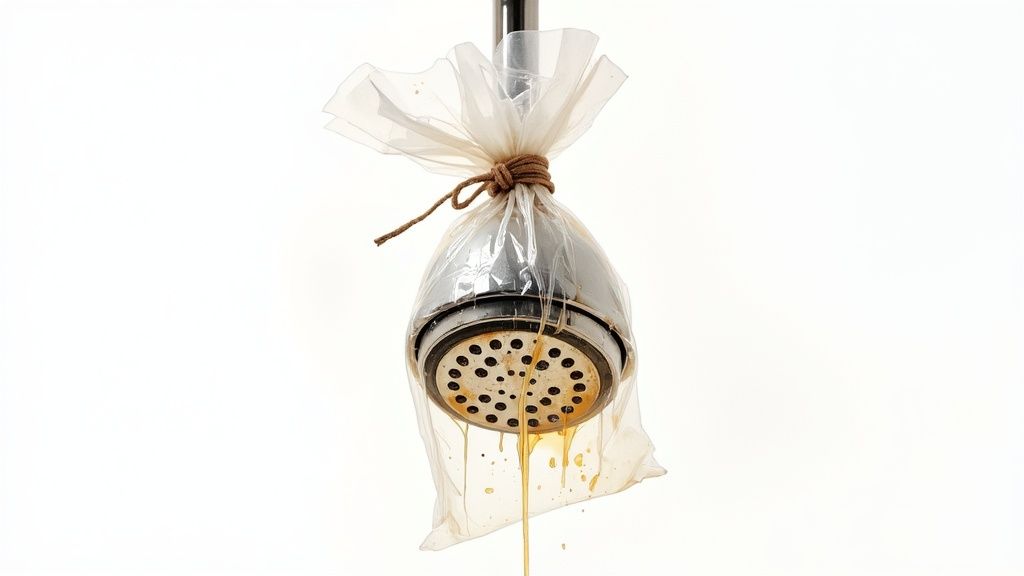
Sometimes, you're not just dealing with soap scum; you’re up against years of mineral buildup. This is the thick, crusty limescale fused to old showerheads or faucet bases. A simple spray-and-wipe won't work.
When facing this challenge, it’s no longer about a quick clean; it's about a patient, intensive treatment. The secret isn't more scrubbing—it's giving your solution more time to work. Longer contact allows mild acids to slowly dissolve rock-hard mineral layers.
The Game-Changing Vinegar Soak
For fixtures like clogged showerheads or faucet aerators, the overnight vinegar soak is a total game-changer. This is the best method when limescale is deep inside the tiny water passages.
Practical Example: Let’s say your showerhead is sputtering water in every direction. That’s a classic sign of internal mineral blockage. Here’s an actionable fix:
- Grab a sturdy plastic bag and fill it halfway with undiluted white vinegar.
- Slip the bag over the showerhead until it's completely submerged.
- Use a rubber band or zip tie to secure the bag tightly around the shower arm.
- Let it soak for a few hours, or overnight for severe cases.
When you remove the bag, run hot water for a minute to flush out the debris. Use an old toothbrush to scrub away any lingering bits, and your shower’s spray pattern will be back to normal.
A Clinging Paste for Vertical Surfaces
What about stubborn scale on vertical surfaces, like shower doors or tiled walls? Liquid cleaners run right off. A thick baking soda paste is your best friend here. It clings where you need it, giving it time to break down layered mineral stains.
Actionable Insight: Mix baking soda with a little water until you have a thick paste. For an extra punch, swap some water for lemon juice. Slather the paste on the stained areas and let it sit for at least 30-60 minutes. As it dries, it lifts the minerals. Spritz with water and wipe everything away.
For the most stubborn cases, apply the paste, then cover it with plastic wrap to keep it from drying out. Leaving it overnight can dissolve even the toughest limescale without harsh chemicals.
When to Reach for a Commercial Cleaner
If homemade solutions aren't enough, it might be time for a commercial cleaner. Be smart about it. Choosing the wrong product can cause permanent damage.
Look for cleaners with mild acids like sulfamic acid or hydroxyacetic acid. Avoid harsh ingredients like hydrochloric acid unless you're experienced.
And always put safety first:
- Wear protective gloves.
- Ensure good ventilation by opening a window.
- Never mix different cleaners. This can create toxic fumes.
- Do a spot test on a hidden area first.
With these intensive strategies, you can confidently tackle even the most daunting hard water buildup.
Winning the Long Game: How to Prevent Stains from Returning
Cleaning up hard water stains is a victory, but the real win is preventing them from returning. The secret is shifting from reactive cleaning to proactive prevention. This is the only way to save yourself future scrubbing and extend the life of your appliances.
Your best defense starts with simple, consistent habits. This isn't about more deep cleaning; it's about quick daily maintenance that stops minerals from building up.
Small Habits That Make a Big Difference
You don’t need much time to keep limescale at bay. A few small tasks can dramatically cut down on intensive hard water stain removal sessions.
- Squeegee Your Shower: This is the big one. After every shower, take 30 seconds to squeegee the glass doors and tile. This whisks away water droplets before they evaporate.
- Wipe Down Fixtures: Keep a microfiber cloth under the sink. After using the faucet, give it a quick wipe. No water, no spots.
- Use a Rinsing Agent: A rinse aid in your dishwasher helps water sheet off dishes, preventing cloudy films on glassware.
These minor adjustments disrupt the cycle of buildup, keeping your surfaces looking pristine.
The battle against hard water is common. North America leads the hard water stain remover market, as hard water affects over 60% of U.S. households. In states like California and Texas, where water hardness can top 180 mg/L, regular maintenance is a part of life. While chemical cleaners account for 50-60% of sales, the demand for eco-friendly alternatives is surging by 12% annually.
Investing in a Long-Term Fix
For homes with very hard water, daily habits can feel like a losing battle. If new spots appear the day after you clean, it’s time for a whole-house solution.
A water softener is the most effective long-term strategy. These systems use ion exchange to physically remove calcium and magnesium ions and replace them with sodium ions. You can learn more by understanding how a water softener works. This doesn't just stop future stains; it protects your plumbing and appliances from scale buildup.
Installing a water softener is a valuable investment. You’ll use less soap and detergent, your clothes will feel softer, and appliances like your water heater and dishwasher will run more efficiently and last years longer.
Preventing hard water stains is about finding the right strategy for your home. By combining smart daily habits with an investment like a whole-house water softener system, you can win the war against limescale for good.
Common Questions About Hard Water Stain Removal
Even with the right cleaners and techniques, questions can pop up. Let's tackle some of the most common ones.
Can I Really Use Vinegar on Everything?
No, you definitely can't. White vinegar is a miracle worker on surfaces that can handle its acidity—like glass, chrome, and most ceramic tile.
But using vinegar on natural stone is a recipe for disaster. Its acid will permanently etch materials like marble, granite, or travertine, leaving dull, faded spots. For these delicate surfaces, you must stick with a pH-neutral cleaner made for stone.
A cautionary tale: I once knew a homeowner who used a vinegar spray on their new marble vanity. The water spots vanished, but in their place were dull, whitish rings that looked even worse. That kind of damage requires professional stone restoration to fix. When in doubt, always test your cleaner on a small, hidden spot first.
How Long Will It Take to Get Rid of Really Bad Stains?
This depends on how old and thick the mineral buildup is. A light film might wipe away in a minute. But a thick, crusty ring of limescale that's been building for years is a different story.
For severe scale, patience is key. You need to give your cleaning solution serious time to work.
- Clogged Showerheads: An overnight soak in vinegar is usually what it takes to dissolve the gunk.
- Thick Rings and Crust: A thick paste of baking soda and water might need to sit for several hours. Sometimes, covering it with plastic wrap to keep it moist helps it keep working.
Don't get discouraged if a stubborn stain doesn't disappear on the first try. Heavily layered scale may need two or three applications.
Will Hard Water Stains Eventually Just Go Away?
Unfortunately, hard water stains will never disappear on their own. It's the opposite. As mineral deposits left by evaporated water, they will only get worse, building up layer by layer.
A small spot today will become a thick, ugly patch of limescale in a few months. This buildup isn't just an eyesore—it can permanently damage surfaces and clog plumbing. The only way to win is with consistent cleaning and a good prevention strategy.
When Is It Time to Throw in the Towel and Call a Professional?
DIY methods are great for maintenance, but sometimes calling a pro is the smarter move. If you're in a constant battle and stains return almost immediately, you're dealing with a water problem that cleaning alone can't solve.
Here’s when to get expert help:
- You Want a Permanent Fix: If you're tired of the endless cleaning cycle, talk to a water treatment specialist. They can test your water and recommend a whole-house water softening system, which solves the problem at its source. After installation, some people notice their water might taste salty with a water softener, which is often a sign the system is working.
- You're Dealing with Delicate or Antique Fixtures: If you have a valuable surface, like an antique marble tabletop, don't risk it. A professional has the experience and specialty products to clean it safely without causing irreversible damage.
At Praz Pure Water, Inc., we specialize in creating custom water treatment solutions that stop hard water problems at the source. If you're ready to say goodbye to endless scrubbing and protect your home from limescale damage, visit us at https://prazpurewater.com to schedule a free water assessment.