
Making your own alkaline drinking water at home is a simple process of raising its pH level above 7.0. You have several methods at your disposal, from adding a pinch of baking soda to installing a complete filtration system. The goal is to understand your options and choose the one that best fits your lifestyle and wellness goals.
What's the Value of Alkaline Water?
Before diving into the "how-to," let's clarify what alkaline water is and why it's a popular wellness trend. It all relates to the pH scale, which measures acidity or alkalinity from 0 to 14.
Pure, neutral water has a pH of 7. Anything below is acidic (like coffee), and anything above is alkaline. When we discuss alkaline drinking water, the target is usually a pH between 8 and 9.5.
This isn't a minor trend. The global alkaline water market, valued at $1.1 billion, is projected to reach $2.9 billion by 2034, growing at an annual rate of 10.2%. This growth reflects a rising interest in proactive health management and a desire to create high-quality water at home instead of buying expensive bottled brands. For a detailed breakdown, you can review the full alkaline water market report.
Why Do People Choose to Drink It?
Many people turn to alkaline water for its potential to help balance the body's acidity. While our bodies are incredibly efficient at maintaining a stable internal pH of around 7.4, some believe that modern diets, often high in acidic foods, can challenge this natural balance.
Here are a few benefits that users report:
- Neutralizing Acid: Some studies suggest alkaline water can offer relief. For instance, research found that water with a pH of 8.8 could deactivate pepsin, the enzyme primarily responsible for acid reflux.
- Improved Hydration: While scientific consensus is still forming, many individuals report feeling more effectively hydrated when drinking alkaline water compared to standard tap water.
- Antioxidant Properties: Ionized alkaline water carries a negative oxidation-reduction potential (ORP). In simple terms, this means it may possess antioxidant qualities that help protect your cells from damage.
Key Insight: While many users experience positive effects, the scientific community continues to explore the full spectrum of benefits. My aim here is to provide you with the practical knowledge to select a method that aligns with your personal health objectives.
This flowchart offers a clear visual of the different methods available, from quick, simple adjustments to more significant, long-term investments in your water quality.
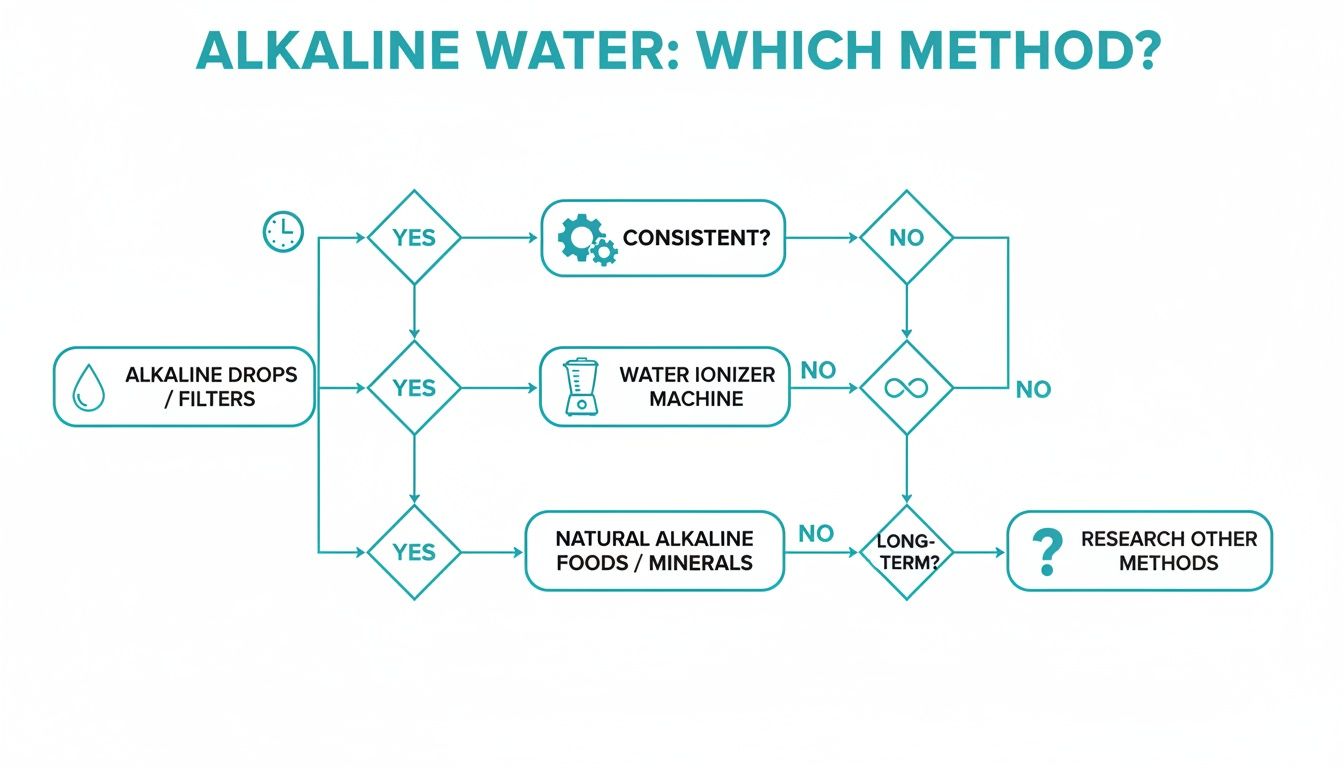
As you can see, your choice depends on the level of convenience you want and the results you're aiming for. It’s about finding a sustainable way to make alkaline water that fits seamlessly into your life.
Simple DIY Methods You Can Try Today
If you're curious about alkaline water but not ready to purchase special equipment, you're in luck. Some of the most accessible methods use common kitchen ingredients. These are perfect for testing the waters, so to speak, before committing to a more advanced setup.
The secret to getting the best results with any DIY method is starting with clean, purified water. While you can use tap water, filtering it first removes common contaminants like chlorine and heavy metals, ensuring you're only adding beneficial ingredients. For a deeper dive, learn more about how to purify tap water in our guide.
The Baking Soda Method
Adding a small amount of baking soda (sodium bicarbonate) is a classic way to raise water's pH. This household staple is naturally alkaline and dissolves quickly, providing an immediate pH increase.
The process is incredibly simple. Add 1/8 teaspoon of baking soda to an 8-ounce glass of purified water. Stir until it dissolves completely, and your alkaline water is ready.
- Practical Example: After a strenuous workout, instead of reaching for a sugary sports drink, you can prepare a glass of baking soda water in seconds. The alkalinity may help your body rebalance after intense exercise, acting as a simple, homemade recovery beverage.
Be aware that this method adds a small amount of sodium to your diet. While this is negligible for most people, it's something to consider if you monitor your sodium intake. Some people also notice a slightly salty taste, which might make it less ideal for all-day hydration.
Using Lemon Juice to Alkalize Water
This next method might seem counterintuitive. How can an acidic lemon make water alkaline? The magic lies in your body's metabolism. While lemons contain citric acid, they are metabolized to produce alkaline byproducts inside your body. This is what's known as the "alkalizing effect."
So, this method doesn't change the pH of the water in the glass but instead influences your body's internal environment after consumption.
Actionable Insight: The lemon juice method isn't about altering the water's chemistry directly. It's about providing your body with ingredients that promote an alkaline-forming response.
Here's a simple recipe:
- Take an 8-ounce glass of purified water (cool or room temperature).
- Squeeze in the juice from half of a fresh lemon.
- Stir and enjoy, preferably first thing in the morning on an empty stomach to kick-start your day.
Real-World Scenario: Many people incorporate this into their morning routine. For added convenience, prepare a pitcher of lemon water the night before and store it in the refrigerator. It's a refreshing way to hydrate, get a dose of vitamin C, and support your body’s internal pH balance.
Both of these DIY methods offer a low-cost, low-commitment way to explore the benefits of alkaline hydration. Try one for a week to see how your body responds and determine if it's the right approach for you.
Moving Beyond Basic DIY: Filters and Drops for Consistent Alkalinity
While baking soda and lemon juice are great for occasional use, you'll likely want a more reliable and automated method for daily alkaline water. This is where you transition from manually adjusting each glass to having a consistent supply ready whenever you need it.
Specialized filters and mineral drops are the logical next step. They provide consistency and often add beneficial minerals, transforming ordinary water into a more functional beverage.
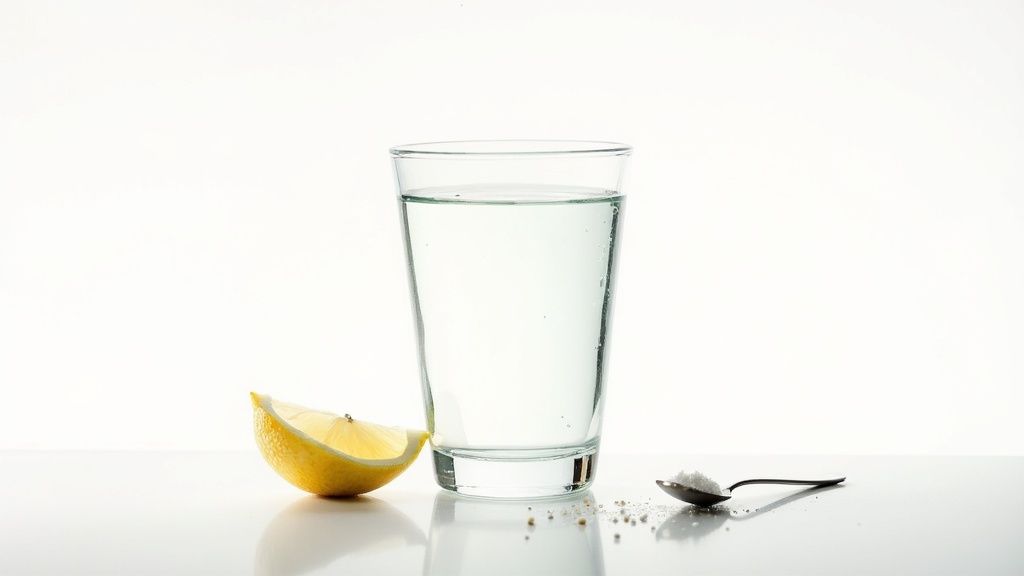
These methods are ideal for anyone looking to make alkaline water a daily habit without the hassle of measuring and mixing.
Let Alkaline Water Filters Do the Work
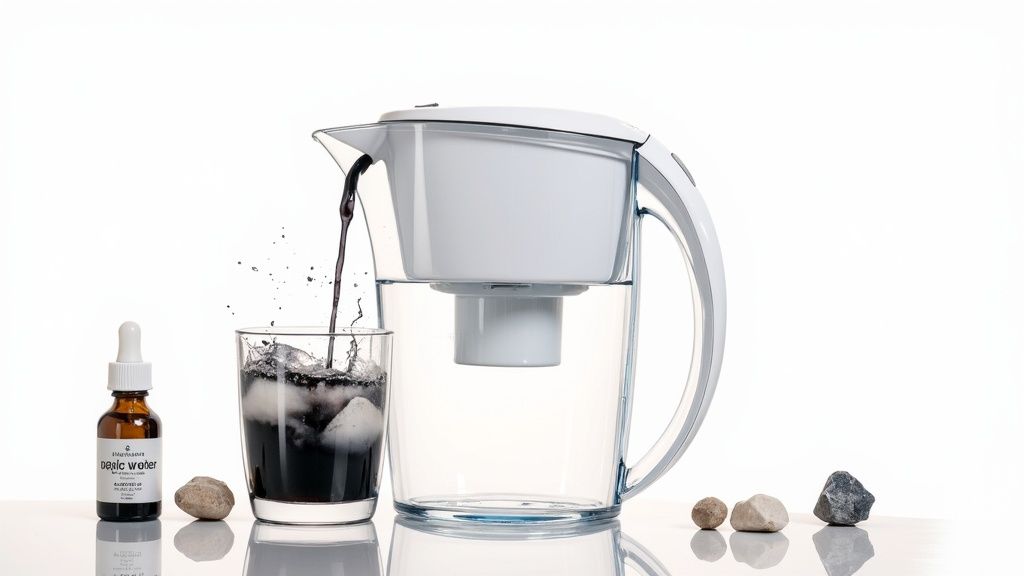
Alkaline water pitchers and faucet-mounted filters are extremely popular because they perform two functions simultaneously: they filter out impurities and then raise the water's pH. Unlike standard filters, these contain multi-stage cartridges specifically designed to enhance the water. To better understand this process, it's helpful to see how water filtration works in general.
The technology is in the filter cartridge, which typically contains a blend of materials:
-
Mineral Stones: These are small ceramic beads infused with minerals like calcium, magnesium, and potassium. As water passes through, it picks up these minerals, which naturally increases the pH.
-
Tourmaline: This semi-precious mineral is often included for its ability to emit negative ions, which can subtly alter the water's structure.
-
Activated Carbon: This is the primary filtration agent. It effectively removes chlorine, odors, and other organic compounds, ensuring the water is clean and pure before the alkalinization process begins.
-
Practical Example: An office worker can fill an alkaline pitcher once in the morning and have access to fresh, high-pH water all day. Every glass they pour is already filtered, mineral-rich, and at a consistent pH (typically between 8.5 and 9.5), making healthy hydration effortless.
Get Precise with pH and Mineral Drops
For a portable and precise solution, pH drops are an excellent choice. These are concentrated alkaline minerals that you add directly to your water. A small bottle can easily fit in a gym bag or purse, making them perfect for on-the-go use.
Just a few drops can significantly increase the pH of a glass of water. It's important to follow the instructions on the bottle, as concentrations vary by brand. Start with the minimum recommended dose, test the water, and adjust as needed to reach your desired pH.
Actionable Tip: Always add pH drops to water that has already been filtered. Adding them to unfiltered tap water will concentrate any existing contaminants, defeating the purpose of creating healthier drinking water.
Make Your Own 'Black Water' with Fulvic Acid
You may have seen "black water" in stores, marketed for its high mineral and antioxidant content. The distinctive dark color comes from fulvic acid, a natural compound derived from decomposed plant matter. The good news is you can make it yourself without paying a premium.
Adding a few drops of food-grade fulvic acid to filtered water will raise its alkalinity and enrich it with trace minerals and electrolytes. This is part of a larger trend toward premium hydration; the black alkaline water market grew from $1.32 billion to $1.55 billion in one year, fueled by studies suggesting fulvic acid can improve mineral absorption by 20-30%.
By using more advanced methods like filters and drops, you gain greater control and consistency, making it easy to integrate alkaline water into your daily routine.
Investing in a Long-Term Alkaline Water System
If you are committed to long-term alkaline hydration, daily DIY methods can become tedious. A permanent, automated solution is the next logical step. Advanced systems like water ionizers and specialized reverse osmosis units provide a reliable source of high-quality alkaline water directly from your tap. This is an investment in both convenience and your health.
To appreciate the technology behind home units, you can Understand how commercial alkaline water systems work and see how professional-grade systems operate.
The Power of Water Ionizers
For the dedicated alkaline water consumer, a water ionizer is the top-tier solution. These machines connect directly to your water line and use a process called electrolysis to separate water into alkaline and acidic streams.
The primary benefit of an ionizer is the precise control it offers. You can select the exact pH level you want, with different settings for drinking, cooking, or even producing acidic water for cleaning. Most ionizers can produce water with a pH between 8 and 10. This market has grown to $2,152.5 million globally, as many families find that an ionizer helps them reduce plastic bottle waste by up to 90%.
Ionizers are available in two main types:
- Countertop Models: These are the most common and sit on your counter, connecting to the faucet via a diverter valve. Installation is typically simple, making them a great choice for renters or those who prefer a non-permanent setup.
- Under-Sink Models: For a sleek, integrated look, this model is ideal. The main unit is installed under the sink, with a dedicated faucet on the countertop. This requires a more involved installation but keeps your counter space clear.
Actionable Insight: Calculate Your Breakeven Point
Let's analyze the cost. If a family of four consumes one gallon of bottled alkaline water daily at $3 per gallon, the annual cost is $1,095. A quality countertop ionizer may cost $1,500 upfront. In this scenario, the machine pays for itself in just over 16 months. Afterward, you get on-demand alkaline water for a fraction of the cost, saving over $1,000 annually.
Upgrading Reverse Osmosis with Remineralization
A standard reverse osmosis (RO) system is highly effective at purification, removing nearly all contaminants and dissolved solids. However, this process also strips out beneficial minerals, resulting in slightly acidic water with a pH below 7.0.
A remineralization filter solves this problem. This add-on cartridge is installed after the main RO membrane to re-introduce healthy alkaline minerals like calcium and magnesium into the purified water.
This simple upgrade accomplishes two things: it raises the pH to a healthy alkaline range and significantly improves the taste, giving the water a crisp, refreshing quality. This setup provides the best of both worlds: superior purification and healthy alkalinity. You can explore this further in our guide on reverse osmosis vs. alkaline water systems.
Investing in a long-term system like an ionizer or an RO with remineralization is a significant decision, but it transforms your daily hydration routine. It eliminates the hassle and makes healthy water an effortless part of your home.
How to Test Your Water's pH Level
Once you've made your alkaline water, how can you be sure it's actually alkaline? You can't determine pH by sight, taste, or smell. Testing is the only way to confirm that your efforts—whether a squeeze of lemon or a high-tech ionizer—are effective. It provides the confidence that you're drinking what you intended to create.
Fortunately, you don't need a chemistry lab to get a reliable pH reading. There are several straightforward methods you can use at home, each with different levels of accuracy, cost, and ease of use.
pH Test Strips: The Quick and Easy Check-Up
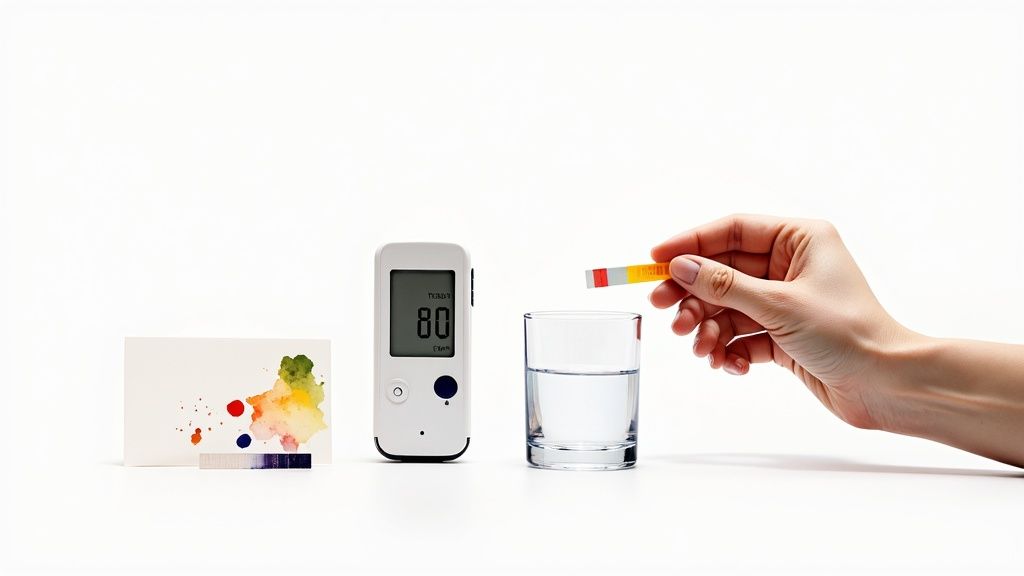
For a fast and affordable way to check your water's pH, test strips are an excellent option. These paper strips are coated with a dye that changes color based on the water's pH. Simply dip a strip in the water, wait a few seconds, and compare its color to the included chart.
- How they work: The color corresponds to a specific pH level, providing an immediate and easy-to-read result.
- Best for: Quick daily checks or verifying the effect of adding pH drops or baking soda.
Keep in mind that strips provide a pH range, not a precise number. For example, if you're aiming for a pH of 8.5, the strip might show a color between 8 and 9. For most users, this level of accuracy is sufficient.
Liquid Reagent Drops: A Step Up in Clarity
For slightly more precision, liquid reagent drops are a great alternative. The process is similar to using strips: add a few drops of the testing solution to a small water sample. The water will change color instantly, and you match it against a reference chart.
The advantage of this method is that the entire sample changes color, which many people find easier to read than a small paper strip. The color transitions are often more distinct, giving you greater confidence in the result. This is a popular method for checking the effectiveness of an alkaline pitcher filter over time.
Digital pH Meters: For When Accuracy Is Everything
When you need a precise reading, a digital pH meter is the best tool. These handheld devices provide an exact measurement, often to one or two decimal places (e.g., 8.75). This level of detail is ideal for users with a water ionizer or those who need to maintain a specific pH for health reasons.
Actionable Tip: The most common mistake with digital meters is forgetting to calibrate them. Use buffer solutions regularly to ensure accuracy. Without calibration, your meter may be less reliable than a simple test strip.
For example, an individual managing acid reflux might need their water to be consistently above a pH of 8.8 to help neutralize pepsin. A digital meter removes all guesswork, confirming they have reached their target. While it's a larger initial investment, a quality meter is worthwhile for anyone serious about their alkaline water routine.
Comparison Of Water pH Testing Methods
Choosing the right testing method depends on your needs. Are you simply curious, or do you need to achieve a specific pH for a particular reason? This table summarizes the key differences to help you decide.
| Testing Method | Accuracy Level | Average Cost | How It Works |
|---|---|---|---|
| pH Test Strips | Good (Provides a range) | $5 – $15 | Dip a strip in water and match its color to a pH chart. |
| Liquid Reagent Drops | Better (Clearer color) | $10 – $20 | Add drops to a water sample and match the liquid's color to a chart. |
| Digital pH Meter | Excellent (Precise number) | $15 – $100+ | Insert the meter's electrode into the water for an exact digital reading. |
Ultimately, testing your water empowers you. It turns an abstract concept into a tangible result, ensuring every glass you drink supports your wellness goals.
Common Questions About Making Alkaline Water
As you begin making your own alkaline drinking water, it's natural to have questions. Understanding the details will help you feel more confident and safe as you incorporate it into your daily life. Here are clear answers to some of the most common inquiries.
Is It Safe to Drink Alkaline Water Every Day?
For most healthy people, drinking alkaline water daily is generally considered safe. The key is moderation. Your body is excellent at maintaining its internal pH, so there's no need to consume excessive amounts. The best approach is to start slowly and pay attention to how your body feels.
However, if you have kidney conditions or are on medication that affects your body's pH, it is essential to consult your doctor first. A good pH range for drinking water is typically between 8 and 9.5. Exceeding this may interfere with your stomach's natural acidity, which is crucial for proper digestion.
What Is the Difference Between Alkaline and Alkalized Water?
These terms are often used interchangeably, but there is a subtle technical distinction based on how the water achieves its higher pH.
- Alkaline Water: This term usually refers to water that is naturally alkaline. It becomes alkaline by flowing over rocks and through soil, where it picks up minerals like calcium and magnesium that raise its pH.
- Alkalized Water: This is water that has been treated to increase its pH. Common methods include using a water ionizer (electrolysis) or adding alkaline substances like mineral drops or baking soda.
Should I Use Tap Water to Make Alkaline Water?
While you can use tap water, it is highly recommended that you filter it first. Starting with unfiltered tap water means you might be concentrating any chlorine, heavy metals, or other contaminants present.
Using a carbon filter, a reverse osmosis system, or a quality pitcher filter provides a clean base. When you start with purified water, you ensure that you are only adding beneficial substances, resulting in healthier and better-tasting alkaline water.
Key Takeaway: Always begin with the purest water possible. Filtering out contaminants first is a simple step that significantly improves the quality and effectiveness of your homemade alkaline water.
How Long Does Homemade Alkaline Water Stay Alkaline?
The stability of your alkaline water depends on the method used to make it. Water from an ionizer tends to lose its alkalinity relatively quickly, as the electrical charge that raises the pH can dissipate within 24-48 hours, especially when exposed to air and light.
Water made alkaline by adding minerals or baking soda is much more stable. Since the pH change is due to dissolved solids, it will maintain its alkalinity for several days if stored properly. When considering storage, it's also a great time to explore alternatives to plastic water bottles to reduce waste. For the best quality and freshness, it's always recommended to make a new batch daily.
If you're in the Los Angeles area and considering a professional, long-term solution, Praz Pure Water, Inc. offers expert installation of advanced alkaline and reverse osmosis systems. Get a personalized assessment to ensure your home has the purest, best-tasting water on tap. https://prazpurewater.com