
Yes, when it comes to drinking water, reverse osmosis water is considered one of the safest options you can get. The process is incredibly thorough at stripping away a huge list of potential contaminants—everything from heavy metals like lead to dissolved salts and chemicals. The immediate value for you is exceptionally pure water, free from the common worries associated with tap water.
How Reverse Osmosis Makes Your Water Safe
Think of a reverse osmosis (RO) system as an exclusive gatekeeper for your water supply. Its only job is to let pure water molecules pass through while blocking almost everything else. It doesn't use chemicals; instead, it uses your home's own water pressure to force tap water through a special, tightly-wound semipermeable membrane.
This membrane is the core of the system. It's engineered with microscopic pores, measuring about 0.0001 microns wide. To put that into perspective, if a water molecule were the size of a marble, a lead particle would be the size of a basketball. The membrane's pores are small enough to stop the basketball while letting the marble pass through.
This is a great visual of how that simple, powerful process works, turning regular tap water into pure, safe drinking water.
Ultimately, the RO membrane is a physical barrier. It's not a chemical reaction; it's a super-fine filter that strains out impurities before the water ever makes it to your glass.
The Science Behind The Purity
The science here is both simple and brilliant. In nature, water tends to move from a less concentrated solution to a more concentrated one to find balance. Reverse osmosis does exactly what its name suggests—it reverses that natural flow. By applying pressure, it pushes water from a highly concentrated solution (your tap water, full of dissolved solids) to a very low-concentration one (pure H₂O).
This multi-stage process is why RO systems are such workhorses, capable of removing up to 99.9% of total dissolved solids (TDS). This includes things we often worry about here in Los Angeles, like heavy metals from aging pipes, chlorine from city water treatment, and even trace pharmaceuticals. To get a closer look at the mechanics, you can read our detailed guide explaining how water filtration works.
The CDC confirms that reverse osmosis is highly effective in removing common chemical contaminants, including lead, copper, chromium, sodium, and arsenic, making it a reliable solution for concerned homeowners.
What RO Removes From Your Water
So, what exactly does a reverse osmosis system target? The list is long, covering the most common and concerning contaminants found in municipal water supplies. A high-quality RO system acts as a formidable barrier against a wide array of impurities.
This table gives a clear snapshot of what you can expect an RO system to handle.
Reverse Osmosis Contaminant Removal Performance
| Contaminant Type | Examples | Typical Removal Rate |
|---|---|---|
| Heavy Metals | Lead, Arsenic, Copper, Mercury, Cadmium | 95% – 99% |
| Dissolved Solids (TDS) | Salts, Sodium, Nitrates, Fluoride, Sulfates | 90% – 99% |
| Chemicals & VOCs | Chlorine, Chloramine, Pesticides, Herbicides | 98% – 99% |
| Microorganisms | Bacteria, Protozoa (Giardia, Cryptosporidium) | 99.99%+ |
| Sediment & Particulates | Silt, Rust, Dirt, Sand | 100% |
As you can see, RO is incredibly effective across the board, providing a comprehensive defense against the things you don't want in your water.
Why That Purity Matters
The result is water that not only is clean but also tastes noticeably better. By removing chlorine and other minerals that can cause musty or metallic flavors, you get crisp, refreshing water. For a real-world example, you'll notice the difference immediately when you make coffee or tea—the true flavor comes through without any chemical aftertaste.
This commitment to purity isn't just for homes. It's crucial in commercial settings, too. For instance, you can learn more about the importance of water filtration systems in professional settings like restaurants, where the quality of the water directly impacts the taste of the food and drinks they serve.
The key takeaway is that a good reverse osmosis system tackles a massive spectrum of impurities, giving you consistent peace of mind with every single sip.
Removing Harmful Contaminants From LA Tap Water
So, you know how a reverse osmosis (RO) system works. But what exactly is it pulling out of your tap water? Think of it as an incredibly fine-meshed, microscopic bouncer for your water supply, specifically designed to stop the most common and concerning impurities found in municipal water—including right here in Los Angeles.
This is where the real value comes in. The process targets a huge range of unwanted substances, transforming standard tap water into something exceptionally pure. For anyone living in LA, that means tackling everything from that lingering chlorine taste to invisible threats that can sneak in from industrial runoff or old, corroding pipes.
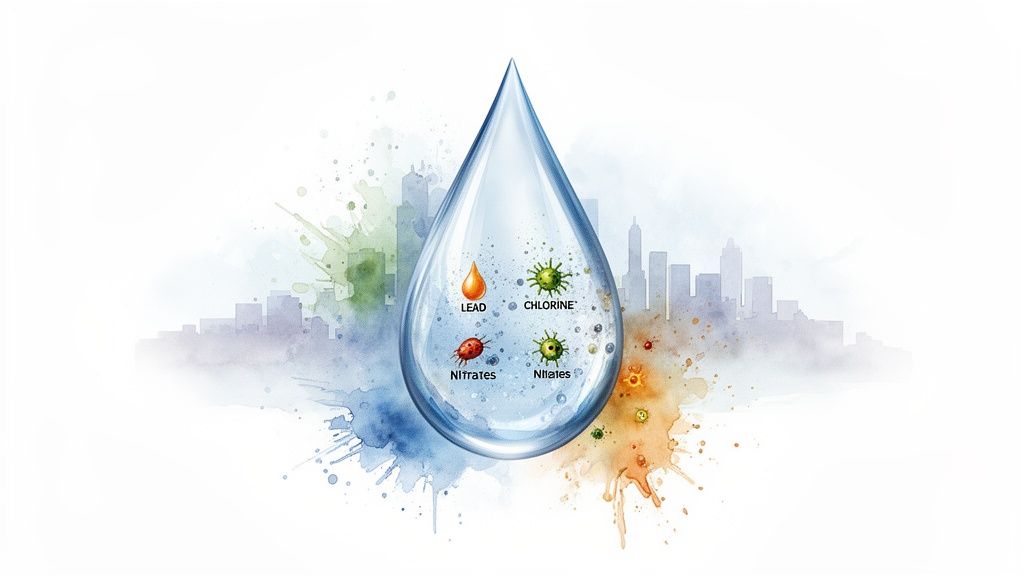
Let's break down the main culprits that an RO system gives the boot, and why it matters for our local water.
Targeting Heavy Metals and TDS
One of the biggest wins for RO is its unmatched ability to remove heavy metals. Contaminants like lead and arsenic can cause serious health problems, even in tiny amounts. As a practical example, in many of LA's older neighborhoods, lead can still leach from aging pipes and solder, silently dissolving into the water supply. It's a huge concern for families.
This is where RO systems really shine, removing up to 99% of these dangerous metals. The pores in the semipermeable membrane are just too small for heavy metal ions like lead, arsenic, copper, and chromium to squeeze through.
Beyond that, RO filtration is the gold standard for slashing Total Dissolved Solids (TDS). This is just a catch-all measurement for every inorganic salt and bit of organic matter dissolved in water. While some of these are harmless, high TDS levels can also mean things like nitrates from agricultural runoff or sulfates that ruin the taste. An RO system brings that TDS count way, way down, leaving you with water that’s incredibly clean.
By physically blocking particles larger than a water molecule, a reverse osmosis system acts as a reliable final barrier against heavy metals and dissolved solids, ensuring the water reaching your glass is clean and safe.
Eliminating Chemicals and Other Concerns
It’s not just about metals and salts. RO systems are also powerhouses against a whole host of other common contaminants that tank water quality and safety.
Ever notice a "swimming pool" taste or smell from your tap? That's chlorine or chloramine, chemicals your city uses for disinfection. They’re great for killing bacteria in the public water lines, but you don't really want them in your morning coffee. A good multi-stage RO system uses carbon pre-filters to soak up these chemicals, immediately improving taste and getting rid of their byproducts before the water even hits the RO membrane.
Here’s a quick rundown of what else gets filtered out:
- Chlorine and Chloramine: Say goodbye to that chemical taste and smell. Your water will taste crisp, clean, and refreshing.
- Fluoride: Added for dental health, but many people prefer to control their own fluoride intake. We have a full guide explaining how reverse osmosis removes fluoride.
- Nitrates and Sulfates: These often come from fertilizers and industrial waste. RO is extremely effective at removing them.
- Microbiological Threats: The pores in an RO membrane are small enough to physically block bacteria and protozoa like Giardia and Cryptosporidium, adding a vital layer of protection.
This thorough, multi-pronged approach is what makes reverse osmosis water so safe. It tackles the contaminants you can taste, the ones you can't, and the ones you can’t even see, providing a complete solution for anyone who wants total peace of mind about their tap water.
The Truth About Mineral Removal and RO Water
One of the biggest questions people have about reverse osmosis is about the minerals. If this system is powerful enough to pull out all the bad stuff, what about the good stuff? Does it strip out the beneficial minerals our bodies actually need?
It's a valid question, and the short answer is yes, it does. The same ultra-fine membrane that blocks contaminants like lead and arsenic doesn't discriminate—it also removes minerals like calcium and magnesium. This is often the central point of debate when people ask, "is reverse osmosis water really safe to drink long-term?"
But that’s not where the story ends. To get the full picture, we need to look at where our bodies get minerals in the first place.
Where Your Body Gets Minerals
Your diet is the main source of your daily mineral intake. Food is where you get the lion's share of essential nutrients, not water.
For a practical example, a single cup of yogurt or a handful of almonds will give you a much bigger and more reliable dose of calcium than several glasses of tap water ever could. Similarly, a serving of spinach provides far more magnesium.
The World Health Organization (WHO) has looked into this extensively. Their findings, along with those of other health experts, show that for the vast majority of people, water just isn't a significant source of minerals. Our bodies are built to get these nutrients from the food we eat.
This is a key takeaway. The main job of the water we drink is to hydrate us and help flush out toxins, not to serve as a mineral supplement.
The Real Impact of Mineral Removal
While the concern is understandable, the reality is that the safety benefits of removing dangerous contaminants far outweigh the downside of removing minerals. Our bodies are designed to get minerals from food. Even though an RO system strips out nearly 99% of all dissolved solids—including helpful ones like calcium and magnesium—major health organizations agree this isn't a health risk for most people.
For Los Angeles families worried about safety, getting rid of lead, arsenic, and other toxins the CDC warns about is the top priority. Removing a small amount of minerals is simply a worthwhile trade-off for eliminating things that can actually harm you. If you want to dive deeper, you can find a good discussion on how diet makes up for mineral-free water on Boroux.com.
The Modern Solution: Remineralization
The best part is that you don't even have to make that trade-off anymore. Modern RO systems offer a simple, elegant solution that turns this old concern into a non-issue: remineralization.
A remineralization filter is an optional add-on stage for an RO system. After the water is thoroughly purified, it flows through this final cartridge, which is filled with a blend of beneficial minerals.
Here’s the value this extra stage provides:
- Puts Healthy Minerals Back In: It adds controlled amounts of calcium, magnesium, and potassium right back into your pure water.
- Makes Water Taste Better: Pure RO water can sometimes taste a bit "flat" or "empty." Adding minerals gives it a crisp, clean, and more refreshing flavor that most people prefer.
- Balances the pH: The RO process can make water slightly acidic. A remineralization filter typically uses alkaline minerals to raise the pH, creating a more balanced and pleasant-tasting water.
This simple addition gives you the best of both worlds: water that's free from nasty contaminants and contains healthy minerals for better taste and your own peace of mind. It’s a perfect example of how the technology has evolved to give you a complete solution for safe, great-tasting water at home.
Keeping Your RO System Working for You
Installing a reverse osmosis system is a great step toward cleaner, better-tasting water. But it's not a "set it and forget it" appliance. Think of it like a high-performance car—it needs regular tune-ups to keep running smoothly. If you skip the oil changes, you'll eventually ruin the engine. The same logic applies here.
Over time, the filters in your RO system get clogged with all the impurities they've been pulling out of your water. When you neglect this basic upkeep, you're not just getting less water from your tap; you're potentially letting contaminants sneak back in. A saturated filter can't do its job, which means lead, chlorine, or sediment could end up right back in your glass, completely defeating the purpose of having the system.
Simply put, consistent maintenance is what ensures the answer to "is reverse osmosis water safe?" stays a firm "yes" for your family.
Your RO Maintenance Checklist
The good news is that keeping up with maintenance is pretty straightforward. It all boils down to two key parts: the filters and the membrane. Each has a specific role and a different lifespan. The secret is just to stick to a schedule. It’s the best way to protect your investment and ensure your water stays pure.
Here’s a simple schedule that works for most standard under-sink RO systems.
RO System Filter and Membrane Replacement Schedule
| Component | What It Does | Recommended Replacement |
|---|---|---|
| Sediment Pre-Filter | Catches the big stuff—dirt, rust, and sand—which protects the finer, more delicate filters down the line. | Every 6-12 months |
| Carbon Pre-Filter(s) | Takes out chlorine, chloramines, and other chemicals that can damage the RO membrane and make your water taste or smell bad. | Every 6-12 months |
| RO Membrane | This is the heart of the system. It’s what removes the vast majority of contaminants, like heavy metals and dissolved solids. | Every 2-4 years |
| Carbon Post-Filter | The final "polishing" step. It gets rid of any last traces of taste or odor before the water gets to your faucet. | Every 12 months |
Following this schedule is the single most important thing you can do for the health and performance of your system.
Actionable Steps for Peak Performance
Beyond just changing filters, a few other good habits can extend the life of your system and keep it working effectively. These are small things, but they add up.
- Actionable Tip: Set a Calendar Reminder. When your system is installed, immediately set recurring reminders on your phone or calendar for filter changes based on the schedule above. This simple action ensures you never forget.
- Sanitize the System Annually: When you do your yearly filter change, take the extra step to sanitize the whole system. This quick process prevents any potential bacteria from growing inside the filter housings or the storage tank, giving you an extra layer of confidence.
- Monitor Your Water Pressure: An RO system needs decent water pressure to force water through its super-fine membrane. If your home's pressure drops below 40 PSI, the system will struggle. You can easily check this with a simple pressure gauge from a hardware store.
- Listen for Changes: Get to know the normal sounds and flow of your system. If the water from the RO faucet suddenly slows to a trickle or you hear strange noises, it’s often an early warning that a filter is clogged or something else needs a look.
Regular maintenance isn't just about protecting your hardware; it's about upholding the promise of safe drinking water. A well-maintained RO system is a reliable system, consistently delivering the purity your family deserves.
By staying on top of these simple tasks, you ensure your reverse osmosis system remains a powerful barrier against contaminants, giving you clean, safe, and great-tasting water for years.
Comparing RO Against Other Water Filters
Once you start shopping for a water filter, the options can feel overwhelming. You’ve got everything from simple pitchers to sophisticated whole-house systems, and they all promise the same thing: cleaner, safer water. But how do they really compare to reverse osmosis? Knowing the difference is key to making a choice that actually solves your water quality problems.
The truth is, not all filters are created equal. Many common solutions are designed to make your water taste and smell better, but they don't offer the heavy-duty purification needed to get rid of the most dangerous contaminants. Let's break down how RO stacks up against the other big names in filtration so you can see what each one is really good for.
Carbon Filters Like Pitchers and Faucet Mounts
Activated carbon filters are everywhere—they’re the workhorse inside those popular water pitchers and the little filters you can screw right onto your kitchen tap. Their main job is to act like a chemical sponge, soaking up things like chlorine. That’s why water from a basic pitcher filter usually tastes so much better than what you get straight from the faucet.
But that’s pretty much where their job ends. While they’re great at improving the taste, they are not built to remove heavy metals like lead or arsenic, and they won't touch dissolved solids like nitrates or fluoride. Think of them as a good first-line defense, but they just don't offer the comprehensive protection you get from a full RO system.
A simple carbon filter is like a fishing net with big holes. It’s great for catching the big stuff, like chlorine, but the smaller, more dangerous contaminants like lead ions swim right through. An RO membrane, on the other hand, is like an ultra-fine screen that stops almost everything from passing.
Whole-House Water Softeners
Another system you see all over Los Angeles is a water softener. It’s critical to understand that a water softener is not a filtration system. Its sole purpose is to tackle hard water—that high concentration of calcium and magnesium that leaves crusty white scale all over your faucets and inside your appliances.
It works through a clever process called ion exchange, where it swaps out the "hard" mineral ions for "soft" sodium ions. This is a lifesaver for your plumbing and makes your soap actually lather, but it does absolutely nothing to filter out harmful contaminants. A water softener will not remove:
- Lead, arsenic, or other heavy metals
- Chlorine and disinfection byproducts
- Bacteria or viruses
- Total Dissolved Solids (TDS)
Actionable Insight: Many homeowners in L.A. use a two-part solution for total home protection: a whole-house water softener to protect their plumbing and appliances, paired with an under-sink RO system for pure drinking and cooking water. This strategy provides scale-free water everywhere and exceptionally clean water where it matters most.
Reverse Osmosis vs Other Filtration Methods
A comparative look at Reverse Osmosis against common alternatives like activated carbon filters and water softeners, highlighting what each system targets.
| Feature | Reverse Osmosis (RO) | Activated Carbon Filter | Water Softener |
|---|---|---|---|
| Primary Function | Purifies water by removing a wide range of contaminants. | Improves taste and odor by removing chlorine. | Reduces water hardness by removing calcium and magnesium. |
| Removes Lead | Yes, up to 99% | No | No |
| Removes TDS | Yes, up to 99% | No | No |
| Removes Chlorine | Yes (via pre-filters) | Yes | No |
| Improves Taste | Yes | Yes | No |
| Prevents Scale | No | No | Yes |
When you lay it all out, the choice becomes pretty clear. For anyone whose main goal is to make their drinking water as pure and safe as possible, reverse osmosis is the undisputed champion. It delivers a level of filtration that other common methods just can't touch.
A Practical Plan for Los Angeles Residents
Knowing that reverse osmosis water is safe is a great start. But what's next? For those of us living in Los Angeles, figuring out the right steps for our home's water doesn't have to be a headache.
You can move from simply wondering about your water to feeling confident about its purity by taking a few key actions. This simple, three-step approach is designed to turn all that information into a real-world strategy for your family.
Step 1: Get Your Water Tested
Before you buy a filter, you need to know exactly what you’re dealing with. Every home’s water is different, shaped by the local LA supply lines and even the age of your own pipes. The only way to get a truly clear picture is with a professional water test.
Actionable Step: Contact a local water quality professional to perform a test. This analysis will pinpoint specific contaminants like chlorine, heavy metals, or high levels of Total Dissolved Solids (TDS). Having this data ensures the system you choose is a perfect match for your home’s needs.
Step 2: Choose the Right System for Your Home
Once you have your water report, you can pick an RO system that makes sense for you. The right choice really comes down to your family's size, how much water you use, and your budget.
For most households, a compact under-sink RO unit is the perfect fit. It delivers purified water for all your drinking and cooking needs right from a dedicated kitchen tap. If you have a larger family or want to cover more ground, you might look into a more comprehensive solution. Taking a moment to assess your needs first will help you find a system that fits right into your daily life.
To get a better handle on the budget, you can explore our guide to understand the reverse osmosis system installation cost and see what options work for you.
Step 3: Consider System Enhancements
To get your water just right, think about adding a few enhancements to tackle common LA water issues. For instance, an alkaline filter can be added to remineralize your RO water, which not only improves the taste but also helps balance its pH.
If you're dealing with LA's notoriously hard water, pairing an RO system with a water softener is a game-changer. This combo protects your appliances and plumbing from that chalky scale buildup while giving you exceptionally pure drinking water.
While RO systems are known for delivering ultra-pure H₂O, modern units are also built for efficiency. Newer WaterSense-labeled systems are a huge improvement, producing just 2.3 gallons or less of reject water for every gallon of pure water—a big leap from the 5-10 gallons wasted by older models. This kind of efficiency can save a typical household 3,100 gallons a year, making it a smart and sustainable choice for any Los Angeles homeowner.
Your Top Questions About RO Water, Answered
Even after getting the facts, it’s normal to have a few lingering questions. Let's tackle some of the most common things people ask about reverse osmosis water, so you can feel completely confident about what’s right for your home.
How Does Reverse Osmosis Water Taste?
Straight from the RO membrane, the water can taste a bit "flat." That’s because the process is so effective it pulls out the dissolved minerals—like calcium and magnesium—that give your tap water its familiar taste. What’s left is almost pure H₂O.
But here’s the good news: that's an easy fix. Many modern RO systems include a remineralizing filter. This last step adds a healthy, balanced mix of minerals back into the water right before it hits your glass, giving it a crisp, clean, and often superior taste to both tap and bottled water.
Do Reverse Osmosis Systems Waste a Lot of Water?
You’ve probably heard this one before. Older RO systems were notorious for being inefficient, flushing several gallons of water down the drain for every single gallon they purified. Thankfully, the technology has come a long way since then.
Today’s high-efficiency systems, especially those with a WaterSense label, are engineered to be much smarter with water use. They use advanced designs to recover as much water as possible, dramatically cutting down on the wastewater. This makes them a far more sustainable and environmentally friendly choice.
Can I Install a Reverse Osmosis System Myself?
You can, but it’s a job where professional expertise really pays off. While you’ll see plenty of DIY kits at the hardware store, installing an RO system means tapping into your home’s plumbing. A small mistake can easily lead to big problems, from leaks and water damage to a system that isn't actually filtering your water correctly.
An expert installer does more than just connect the lines. They will assess your home’s specific water pressure and plumbing configuration to ensure the system is set up for optimal performance and longevity, giving you total peace of mind.
A pro will make sure every connection is sealed tight, the system is properly flushed and sanitized, and that it's working perfectly from the get-go. This investment ensures you get the clean, safe water you paid for, without the headaches and risks of a DIY project.
Ready to experience the purest, best-tasting water right from your own tap? The team at Praz Pure Water, Inc. offers expert guidance and professional installation of top-quality reverse osmosis systems tailored for Los Angeles homes. Contact us today for a free water assessment!