
What’s the real story behind the cost of a reverse osmosis water filter? Let's get straight to the point. The price tag on the box is just the beginning. To get a true, practical picture, you have to look at the system itself, the cost of professional installation, and the ongoing upkeep. For a standard under-sink system, the hardware alone can run anywhere from $200 to over $800, but the final number on your invoice will depend on your home's specific needs.
This guide provides clear, actionable insights to help you budget effectively, highlighting the value you get from investing in pure, clean water.
The True Cost of a Reverse Osmosis System
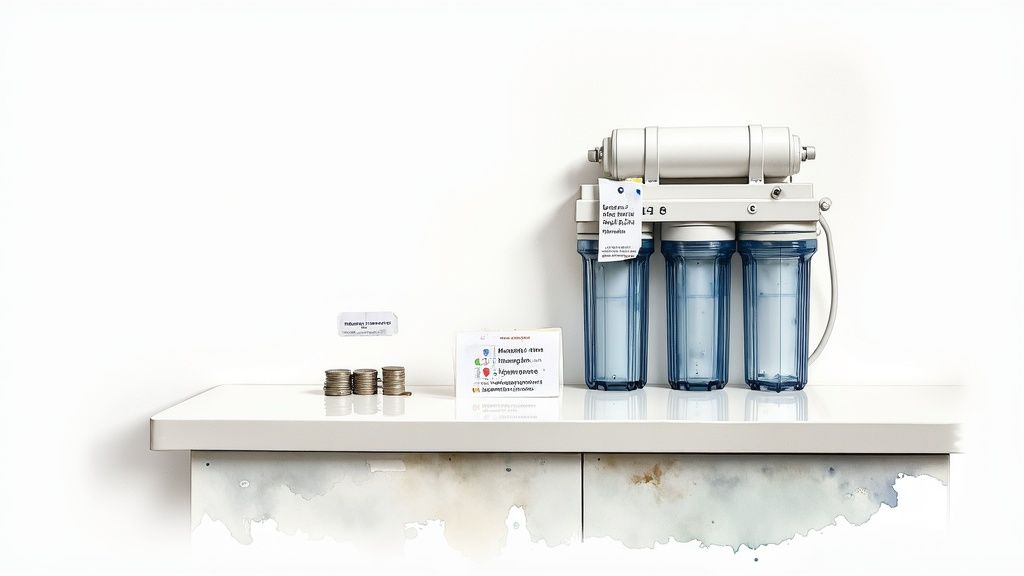
Thinking about the total cost of a reverse osmosis (RO) system is a lot like buying a car. The sticker price is one thing, but you also have to factor in the "drive-off" costs and the routine maintenance that keeps it running smoothly for years. In the same way, the full investment in pure, clean water goes beyond just the initial purchase of the equipment.
Understanding the complete picture from day one helps you avoid any surprises down the line. It's about choosing a system that not only fits your budget today but also makes long-term sense for your family's health and finances. This guide breaks down every potential expense, so you know exactly what to expect and can make a confident decision.
Core Cost Components
When we talk about the "total cost of ownership" for an RO system, we're really looking at three key pillars. Each one is essential for ensuring you get that crisp, pure water from your tap every single time.
- The Upfront System Price: This is the cost for the hardware itself—the filters, the storage tank, the dedicated faucet, and all the tubing. The price can swing quite a bit depending on the brand, how many filtration stages it has, and how much water it can produce daily.
- Professional Installation: While some people attempt a DIY approach, professional installation guarantees everything is connected properly, with no leaks, and that the system is working at peak efficiency from the get-go. This fee covers a trained technician’s time and expertise, providing immense value and peace of mind.
- Ongoing Maintenance: This is the recurring expense for replacement filters and, eventually, a new RO membrane. Just like changing the oil in your car, regular filter swaps are non-negotiable for keeping your water quality high and the system working correctly.
Actionable Insight: A common pitfall is focusing only on the initial system price. To create an accurate budget, add the estimated installation cost and the price of the first year's replacement filters to the system cost right from the start.
To get a better handle on the technology behind the price, it helps to understand the different filtration methods. You can learn more by checking out our guide on how water filtration works. This background knowledge makes it clearer why some systems and components have a higher price point.
Practical Example: A quality 5-stage under-sink system might have a $350 price tag. Add approximately $200 for professional installation and another $100 for your first year's set of filters. Your total first-year investment is around $650. A whole-house system, of course, would represent a much larger investment across all three areas.
Now, let's dive deeper into each of these costs.
Reverse Osmosis System Cost At a Glance
To make it even clearer, here’s a quick summary of the typical costs you can expect when investing in a residential RO system. This table breaks down the main expenses for a standard under-sink unit, giving you actionable data for your budget.
| Cost Component | Typical Price Range (Under-Sink) | What This Covers |
|---|---|---|
| Upfront System Cost | $200 – $800+ | The complete hardware kit: filters, membrane, tank, faucet, and tubing. |
| Professional Installation | $150 – $400 | Labor for a certified technician, specialized tools, and ensuring a leak-free setup. |
| Annual Filter Replacements | $80 – $200 | Replacement sediment and carbon pre-filters, plus a post-filter. |
| RO Membrane Replacement | $50 – $100 | The reverse osmosis membrane itself, which typically needs replacing every 2-3 years. |
Keep in mind these are general estimates. The final numbers can shift based on the complexity of the installation, local water quality, and the specific model you choose. But this gives you a solid, realistic baseline for planning your investment.
Breaking Down the Upfront System Price

When you first start shopping for a reverse osmosis system, the price range can seem wide. Why is one system $250 and another $800? It’s a lot like buying a car. You can get a reliable base model that does the job perfectly well, or you can invest in a premium version loaded with better performance and extra features.
That initial price tag is your biggest single expense, and it’s a reflection of everything from the quality of the parts inside to the sophistication of the filtration technology. Understanding what actually goes into that number helps you make a smart investment in your home's water quality and see the value behind the cost.
Filtration Stages and Component Quality
One of the biggest factors driving the price is the number of filtration stages. A standard 5-stage system, for instance, is a workhorse. It methodically strips out impurities layer by layer, starting with larger particles like sediment and chlorine before the water even hits the core RO membrane.
But you'll also see more advanced systems with extra stages. These might include special filters designed to tackle specific local contaminants or even a remineralization filter that adds beneficial minerals like calcium and magnesium back into the water for better taste. Naturally, each additional stage adds to the system's complexity and its upfront cost.
Actionable Insight: The real heart of any RO system is its semi-permeable membrane. Higher-quality membranes, often made in the USA, are more durable and effective at rejecting contaminants. They cost more initially, but they deliver superior performance and longevity, offering better long-term value.
Practical Example: A solid Praz Pure Water 5-stage system might cost around $350. A premium model that adds a remineralization stage and uses a higher-grade membrane could be closer to $550. That extra investment gets you water that tastes fantastic and a more robust, thorough filtration process.
Water Production Rate and Efficiency
Another key difference you’ll see is the system's capacity, measured in Gallons Per Day (GPD). This number tells you exactly how much purified water the system can realistically produce over a 24-hour period.
A smaller household might be perfectly happy with a 50 GPD system. But a large family that’s constantly filling water bottles, cooking, and making coffee will likely need a 75 or 100 GPD model to keep up.
- Standard Capacity (e.g., 50 GPD): More affordable and ideal for smaller households or light use.
- High Capacity (e.g., 100 GPD): Produces water much faster, meaning the storage tank refills quicker. This is the best choice for larger families or anyone who uses a lot of purified water.
Higher GPD systems require more powerful membranes and sturdier components to handle the workload, which bumps up the price. This isn't a new trend; historically, residential RO systems have always varied in price based on their technology. You can dive deeper into how market forces affect pricing by reviewing industry research.
Brand Reputation and Added Features
Finally, factors like brand reputation, warranty, and extra features play a big part in the final price. Established brands that use certified, high-quality materials will command a higher price. What you're paying for is the value of peace of mind—that premium usually comes with a better warranty and reliable customer support.
You can also customize your system with features that can affect the price:
- Designer Faucets: Want a faucet in matte black or brushed nickel to match your kitchen? That's an upgrade from the standard chrome.
- Booster Pumps: If your home has low water pressure, a booster pump is essential to make the RO system run efficiently.
- Leak Detectors: These smart devices provide an extra layer of security by automatically shutting off the water if they sense a leak.
Going with a basic system will certainly keep your initial cost down. But investing a bit more in a system with higher-quality components and features that fit your home's unique needs often provides far better value and reliability down the road.
Factoring in Professional Installation
The RO system itself might be the star of the show, but its performance is only as good as its installation. Think of it like buying a powerful engine for a classic car—if it's not mounted and connected correctly, you’ll never feel the horsepower you paid for. Professional installation is a critical part of the total cost, but it’s what guarantees your system runs perfectly from day one.
When you hire a pro, you're not just paying for a pair of hands; you're paying for expertise. A certified technician knows how to navigate your home’s unique plumbing, make secure, leak-free connections, and test everything to ensure it's operating at peak efficiency. The value of this peace of mind is priceless, especially when a botched DIY job can lead to thousands in water damage and a voided warranty.
Standard vs. Complex Installations
No two installations are exactly alike, and the complexity of the job is a major factor in the final price.
- Standard Installation: This is your basic under-the-sink setup. It usually involves connecting the RO system to a cold water line under a standard stainless steel sink and drilling a small, clean hole for the new faucet. For a trained pro, it's a straightforward process.
- Complex Installation: Things get trickier from here. Practical Example: Do you have granite, quartz, or marble countertops? That requires a special diamond-tipped drill bit and a steady hand to avoid cracking your beautiful stone. This precision work takes more time and specialized tools, which adds to the cost.
Other factors can complicate the job, too, such as old or unusual plumbing, tight cabinet spaces, or requests to run a line to a refrigerator’s icemaker. Each of these situations requires extra time and skill, which will be reflected in the installation quote.
Los Angeles Hard Water Considerations
Here in Los Angeles, our biggest local challenge is extremely hard water. It’s loaded with minerals like calcium and magnesium that are brutal on an RO system’s membrane, causing it to clog and fail years before it should.
Actionable Insight: A professional installer in a high-hardness area like L.A. does more than just connect pipes. They’ll assess your water and almost always recommend feeding the RO system with softened water. This is the single best action you can take to protect your investment and extend the system's life.
This isn't an upsell; it's a necessity for local homeowners. A Praz Pure Water technician will ensure your RO system gets softened water, creating a powerful defense against both contaminants and mineral scale. It’s the secret to getting the purest water possible for years to come. For a deeper dive into the specifics, you can see a full breakdown of the reverse osmosis system installation cost and what goes into it.
Ultimately, professional installation isn't an optional add-on—it's the foundation of your new water system. To get an accurate, no-surprises quote, be ready to discuss your home's details. Letting your technician know your countertop material, plumbing location, and whether you have a water softener will help them provide a precise estimate right from the start.
The Hidden Costs of Long-Term Maintenance
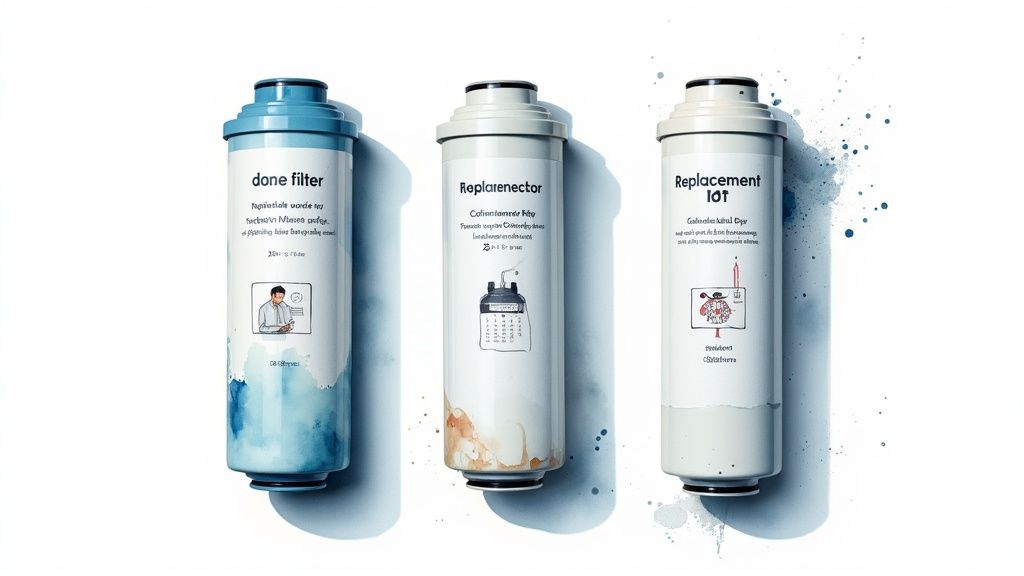
The upfront price of a reverse osmosis system is just the starting point. To truly understand the total reverse osmosis water filter cost, you must look at what it takes to keep it running perfectly over the years.
Think of it like owning a car. You don't just buy it and drive it forever without changing the oil or replacing the tires. An RO system needs the same kind of routine care to keep delivering the pure, great-tasting water you invested in it for. This ongoing maintenance primarily involves replacing the filters and the RO membrane. These parts do the heavy lifting, and eventually, they get full and need to be swapped out—a crucial part of owning the system.
The Anatomy of Filter Replacements
A typical 5-stage system isn't just one filter—it's a team of them. Each one has a specific job and a different lifespan, which is key to understanding where your maintenance money goes.
- Sediment Pre-Filter: This is the first line of defense. It stops larger particles like sand, rust, and dirt from getting in and clogging the more sensitive parts of the system.
- Carbon Pre-Filters: You’ll usually find one or two of these. They act like sponges for chemicals, absorbing chlorine and other contaminants that can damage the RO membrane and affect your water's taste.
- Reverse Osmosis Membrane: This is the heart of the operation. It’s a high-tech, semi-permeable membrane that removes the tiniest dissolved solids, including lead, arsenic, and fluoride.
- Carbon Post-Filter: Consider this the final polish. Right before the water reaches your glass, it flows through this last carbon filter to remove any lingering off-tastes or odors, ensuring every sip is crisp and clean.
This multi-stage process is what makes the system so effective. It’s no surprise that with growing concerns over water quality, the global demand for these components is rising. You can read more about the growing RO market on bccresearch.com.
Budgeting for Annual Maintenance
So, what does this actually look like for your wallet? How often you need to replace filters depends on your local water quality and how much water you use. Still, we can lay out a reliable schedule to help you budget.
Actionable Insight: For a standard Praz Pure Water system, a safe estimate for annual filter replacement costs is between $80 and $150. Set a calendar reminder every 6-12 months to check and order your filters. This simple habit protects your system and guarantees water quality.
The RO membrane is different. It's built to last and usually only needs to be replaced every two to three years. When you spread that cost out, it makes the long-term expense very predictable and easy to manage.
Typical Filter Replacement Schedule and Annual Cost
Here’s a table that breaks it all down into a clear financial roadmap. It gives you a good idea of what to expect for a standard 5-stage unit so you can plan ahead and protect your investment.
| Filter Type | Replacement Frequency | Estimated Cost Per Filter | Annualized Cost |
|---|---|---|---|
| Sediment Pre-Filter | Every 6–12 months | $10 – $25 | $20 – $50 |
| Carbon Pre-Filters | Every 6–12 months | $20 – $40 (for a set) | $40 – $80 |
| RO Membrane | Every 2–3 years | $50 – $100 | $25 – $33 |
| Carbon Post-Filter | Every 12 months | $15 – $30 | $15 – $30 |
| Total Estimated Annual Cost | $100 – $193 |
Staying on top of maintenance is the secret to a long-lasting, high-performing system. By sticking to a simple replacement schedule, you’re not just guaranteeing the purity of your water; you're also preventing bigger, more expensive problems down the road. It’s a small price to pay for the immense value of years of clean, delicious water right from your tap.
How Upgrades and Add-Ons Affect Your Final Cost
A standard reverse osmosis system provides incredibly pure water, but you don't have to stop there. Think of the base system as a great starting point, and optional add-ons as the way to customize it to perfectly fit your home and tastes. Of course, these enhancements will factor into the final reverse osmosis water filter cost.
These upgrades aren't just bells and whistles; they solve real-world problems and genuinely improve your daily experience. Let's walk through the most common options and see how they might affect your budget.
Functional System Enhancements
Some of the most popular upgrades are all about performance, helping the RO system work better in homes with specific challenges.
-
Remineralization Filters: The RO process is so effective that it strips out almost everything—including beneficial minerals like calcium and magnesium. A remineralization filter (or alkaline filter) adds those healthy minerals back in after purification. This improves the taste, giving the water a crisper, more natural flavor, and slightly raises the pH. Expect this add-on to increase the system cost by $75 to $150.
-
Booster Pumps: An RO system needs decent water pressure to work well, ideally over 40 PSI. Practical Example: If your home’s pressure is low, your storage tank will fill very slowly. A booster pump is a necessity, providing the extra push needed to force water through the RO membrane efficiently. This means your tank fills faster and you waste less water. Adding a booster pump will typically run you $100 to $200.
-
UV Purifiers: While RO membranes are fantastic at removing most contaminants, a UV light purifier provides an extra layer of security against microorganisms. It uses powerful ultraviolet light to neutralize any bacteria, viruses, or cysts. This is an especially smart choice for homes using well water. This extra protection usually adds $100 to $250 or more to the initial price.
The industry is seeing a shift toward innovations like pairing low-waste RO membranes with hybrid UV-LED systems. You can see how these advancements are shaping the market by reading more about water filter technology trends.
Aesthetic and Convenience Add-Ons
Beyond the system's core function, other upgrades focus on convenience or helping the system blend seamlessly into your kitchen's design.
For instance, most RO systems come with a standard chrome faucet. But you're not stuck with it. Many people upgrade to a designer faucet in a finish like brushed nickel, matte black, or oil-rubbed bronze to perfectly match their main kitchen faucet. This simple aesthetic upgrade can add anywhere from $50 to $150 to your total.
Other practical add-ons, like a leak detector, offer simple peace of mind. These small devices can automatically shut off the water supply if they sense a leak, preventing a potential mess. This is a small but valuable addition, usually costing an extra $30 to $60.
Calculating Your Return on Investment
It’s easy to focus on the upfront and maintenance costs, but let's step back and look at the real value. Investing in a reverse osmosis system isn't just another household expense; it's a smart financial move that pays for itself, often much faster than people realize. The clearest payback? Ending your expensive bottled water habit for good.
Figuring out your return is simple: just compare the total cost of owning an RO system against what you’re currently spending on bottled water. For most families, the savings become undeniable within the first couple of years. After that, the system has essentially paid for itself and is just putting money back in your pocket.
The Bottled Water Trap
Let's break it down with a common real-world scenario. A family of four, trying to stay hydrated, buys bottled water from a big-box store.
- Average Consumption: If each person drinks about half a gallon a day, that's 2 gallons for the whole family.
- Annual Consumption: Over a year, that adds up to a staggering 730 gallons.
- Cost of Bottled Water: Even at a conservative price of $1.00 per gallon for bulk water, the math is clear.
This family is spending $730 per year just on drinking water. That's a huge, recurring bill for a basic necessity, not to mention the environmental impact of all that plastic waste.
RO System Savings: A Clear Comparison
Now, let's see how a Praz Pure Water RO system stacks up. We’ll look at the total picture: the system itself, professional installation, and the simple annual filter changes.
Actionable Insight: By switching to a reverse osmosis system, the average family can save over $500 annually after the first year. This consistent savings transforms the system from a purchase into a powerful household investment that delivers tangible value every single day.
Here’s how the savings play out over the first couple of years:
- Year One: Your initial investment for a great system, including installation, might be around $650. While that’s close to a year's worth of bottled water, it's a one-time investment in your home's infrastructure.
- Year Two Onward: From here on, your only cost is the annual filter pack, which we'll estimate at about $120. Compared to the $730 you were spending, you’re now saving $610 every single year.
The image below shows a few popular upgrades you can add to your system, each enhancing its overall value and your experience.
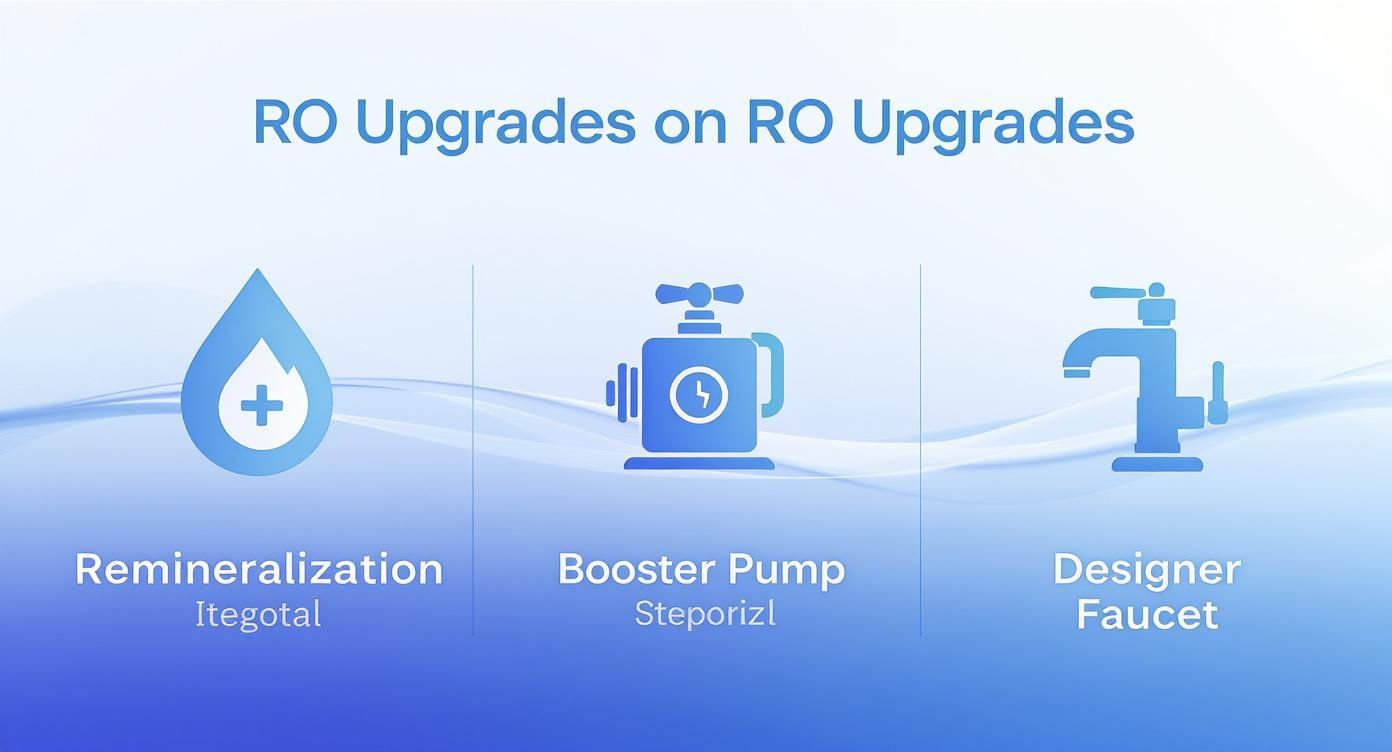
These enhancements, like adding healthy minerals back into your water or boosting water pressure, can be factored into the initial cost but also contribute to the long-term benefits you'll enjoy.
When you look at the numbers, the decision becomes crystal clear. The upfront cost is quickly erased by the significant savings you'll see. Not to mention, you get the incredible convenience of having unlimited pure, delicious water right at your tap. To see which system might be the best fit for your home, take a look at our detailed water filtration systems comparison.
Final Questions on RO System Costs
Making the jump to a reverse osmosis system is a big decision, and it’s completely normal to have some lingering questions. It's one thing to talk about equipment and another to understand how it fits into your daily life and budget. Let’s tackle some of the most common questions we get from homeowners.
Think of this as a final checklist to ensure you're confident and ready to make a decision.
Is It Cheaper to Rent or Buy an RO System?
In the long run, buying your RO system is almost always the smarter financial move. Renting can feel easier initially due to the low upfront cost, and it often includes maintenance. However, those monthly rental fees add up and will eventually cost you more than if you had purchased the system outright. When you own the system, you're investing in your home's infrastructure. It becomes your asset. We can run the numbers for you, showing a side-by-side comparison to see exactly where the break-even point is.
How Much Will an RO System Increase My Water Bill?
This is a common concern, but the reality is usually a pleasant surprise. Modern RO systems are built for efficiency. While the system uses some water to flush away removed contaminants, it’s not a significant amount. For a typical family, you're likely looking at an increase of just a few dollars per month on your water bill. When you compare that to your bottled water expenses, the savings are immediate and obvious. We always guide our customers toward water-efficient models to minimize that impact.
Can I Install an RO System Myself to Save Money?
Technically, yes—if you have significant plumbing experience. But honestly, we advise against it. An RO system isn't like installing a new showerhead. A small mistake can lead to big problems: slow leaks causing water damage, pressure issues, or a system that doesn't filter properly. Fixing those mistakes can end up costing far more than the professional installation fee.
Actionable Insight: At Praz Pure Water, our professional technicians ensure everything is connected perfectly, and we guarantee our work. This gives you the valuable peace of mind that your investment is secure and working at peak performance from day one.
Do You Offer Financing for RO Systems?
Absolutely. We believe everyone deserves access to clean, safe water, and we know that the upfront cost can be a hurdle. That's why we offer flexible financing options to spread the cost over time. During our free consultation, we can walk you through the different plans and find one that works for your budget. It’s a great way to get all the benefits of pure water right away without having to handle the entire investment at once.
Ready to stop spending on bottled water and start enjoying pure, delicious water right from your tap? The team at Praz Pure Water, Inc. is here to provide a personalized quote based on your home's specific needs. Contact us today for a free consultation and discover the perfect water solution for your family. Learn more about our custom systems at Praz Pure Water.