
Ever notice that white, chalky residue on your faucets? That's just the visible tip of the iceberg. Inside your water heater, that same residue—what we call scale buildup—is wreaking havoc.
It’s an accumulation of mineral deposits, mostly calcium and magnesium, that coats the inside of your water heater. Think of it like cholesterol for your pipes; it slowly clogs everything up, restricting flow and forcing your system to work harder than it should. For anyone living in Los Angeles, this isn't just a small annoyance—it's a problem that hits you right in the wallet.
The Hidden Costs of Hard Water in Los Angeles
If you've ever had your hot shower turn lukewarm way too fast, the culprit is almost certainly the scale buildup from LA’s notoriously hard water. It’s a silent saboteur, quietly inflating your energy bills and chipping away at the lifespan of your home's most important appliances.
The problem starts with the high mineral content in our local water. When this "hard" water gets heated, those dissolved minerals turn solid and stick to surfaces, creating a crusty, rocky layer of scale. This process is particularly aggressive inside a water heater, where the temperature is always high.
How Scale Inflates Your Utility Bills
So, how does this actually cost you money? Simple. Scale acts as an insulator. It forms a rock-hard barrier between the heating elements (or the gas burner) and the water itself.
To get your water hot, the unit first has to heat through this layer of mineral rock. It’s like trying to boil water in a pot that has a layer of cement at the bottom.
This extra effort has a serious domino effect:
- Longer Runtimes: Your water heater is forced to run longer and more often just to keep the water at the temperature you set on the thermostat.
- Increased Energy Use: All that extra work shows up directly on your SoCal Gas or Edison bills every single month.
- Reduced Appliance Lifespan: The constant overheating puts a huge strain on the heater's components, causing them to fail years before they should.
Key Insight: Dealing with scale isn't just about routine maintenance. It's a smart investment in lowering your monthly bills and protecting your home. It’s about getting the hot water you need without paying a premium for it.
The Financial Impact of Doing Nothing
The numbers don't lie. A study by Battelle Laboratories found that a typical electric water heater can accumulate about 0.4 pounds of scale every single year. You don't need much for it to cause problems; research from the Department of Energy shows even a thin layer can tank efficiency.
For the average LA homeowner with a standard 50-gallon unit, that inefficiency can easily add $100 to $200 per year to your utility costs. You can dive into the specifics by checking out the Department of Energy's research on water heater efficiency.
Here at Praz Pure Water, we specialize in real, lasting solutions to Los Angeles's hard water. We're here to protect your home, your appliances, and your budget from these hidden costs.
How Scale Buildup Quietly Damages Your Water Heater
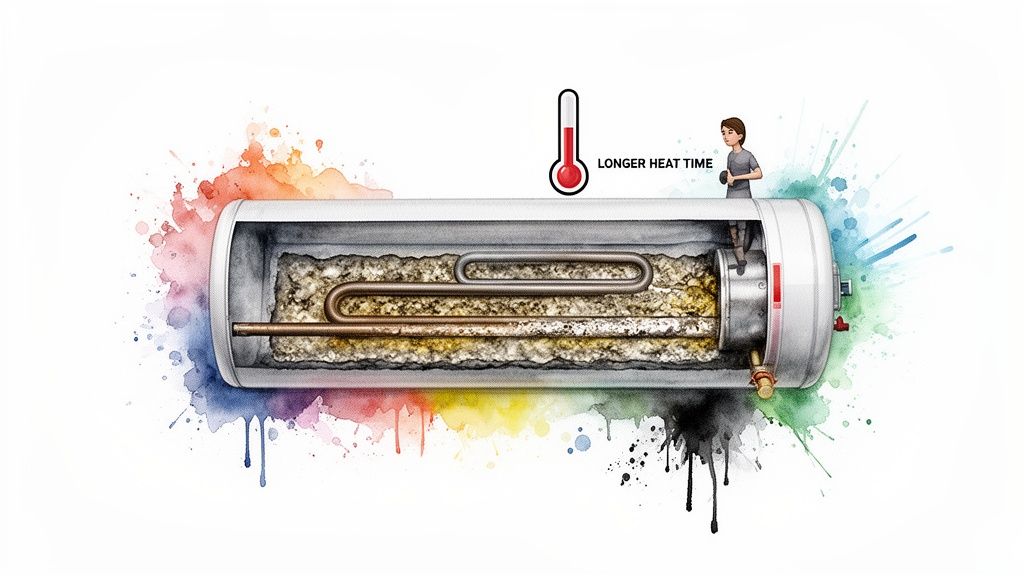
You might not think much about the hard water coming from your tap, but inside your water heater, it's a silent killer. That mineral scale doesn't look like much, but it's quietly waging war on your appliance, driving up your bills and drastically shortening its lifespan.
Think of scale as an unwanted layer of insulation. This rock-hard crust of calcium and magnesium forms directly on the most important parts of your heater—the heating elements in an electric model or the bottom of the tank in a gas unit. Now, to do its job, the heater has to burn through that mineral barrier first before it can even start warming your water.
This extra work means your water heater is forced to run longer and work harder just to hit the temperature on the thermostat. The result? A slow but steady creep in your energy bills that you'll definitely notice.
The Overheating Effect on Components
This constant struggle creates intense, trapped heat. The components are pushed far beyond their normal operating temperatures, putting an incredible strain on the entire system.
This sustained overheating is what really does the damage. It accelerates the wear and tear on everything from the heating elements to the tank's protective lining. In fact, it's the number one reason why water heaters in homes with hard water fail years ahead of schedule.
Actionable Takeaway: Scale buildup forces your water heater into a state of constant overwork. This not only wastes energy but also physically damages the appliance, turning what should be a long-term investment into a premature and costly replacement.
For a gas heater, this can create superheated spots on the tank floor, weakening the metal and leading to leaks. In an electric heater, the elements can simply burn out, leaving you with an ice-cold shower and an emergency repair bill.
This table breaks down just how quickly a seemingly small problem can spiral into a major expense.
How Scale Buildup Impacts Your Water Heater Over Time
| Scale Thickness | Estimated Energy Efficiency Loss | Annual Increase in Energy Costs (LA Average) | Risk to Appliance Lifespan |
|---|---|---|---|
| 1/16" | Up to 15% | $60 – $110 | Moderate – Increased wear on components begins. |
| 1/8" | Up to 25% | $100 – $185 | High – Overheating risk, significant strain on system. |
| 1/4" | Up to 40% | $160 – $295+ | Severe – High probability of component failure or tank leak. |
As you can see, ignoring scale isn't an option. The costs in wasted energy and premature failure add up fast.
The Ripple Effect on Your Entire Home
The problems caused by scale buildup in a water heater don't just stay in the tank. As that mineral-heavy hot water moves through your home, it leaves deposits behind, creating a whole new set of plumbing headaches.
These secondary issues can be just as frustrating and expensive to fix. You might start noticing problems that seem totally unrelated but trace right back to the scale in your heater.
- Weak Water Pressure: Flakes of scale break off and clog the aerators in your faucets and showerheads. That powerful shower you used to love is now just a weak trickle.
- Clogged Pipes: Over time, scale builds up inside your hot water lines, literally shrinking the inside of the pipe. This restricts flow everywhere and can lead to a massive repiping job down the road.
- Potential Health Concerns: While the minerals aren't dangerous to drink, the rough, flaky surface of heavy scale buildup can become a breeding ground for bacteria. A clean tank is a healthy tank.
Ignoring scale buildup is a recipe for disaster. The research is clear: even a thin layer can have a huge impact. With just 1/16th of an inch of scale, a water heater can burn up to 15% more energy. That number just gets worse as the buildup grows. You can learn more about the damaging impact of limescale on home appliances to see the bigger picture. In the end, proactive maintenance isn't just a good idea—it's the smartest investment you can make in your home.
Spotting the Early Warning Signs of Scale
Your water heater will almost always give you a heads-up before it fails. You just have to know what you’re looking for. Scale doesn't build up overnight, and it creates a trail of clues long before you're stuck with an ice-cold shower and a hefty repair bill.
Learning to spot these early warnings is the difference between a simple maintenance task and a full-blown emergency. Think of it like a check-up for your plumbing—catching the problem early saves you a ton of money, stress, and hassle down the road.
The Sounds of a Struggling Heater
One of the first and most obvious signs of scale buildup in a water heater is noise. If your once-quiet heater has started making strange sounds, it's trying to tell you something is seriously wrong.
A healthy water heater should be pretty much silent. But when a layer of mineral sediment builds up at the bottom of the tank, it traps water underneath it. When the heating element kicks on, that trapped water boils, and the steam bubbles have to force their way through the crusty sediment to escape.
That process creates some very distinct sounds you shouldn't ignore:
- Popping or Rumbling: This is the classic sound. It’s often compared to the noise a coffee pot makes or popcorn popping, and it's a direct result of water boiling under the sediment.
- Cracking or Hissing: These sounds can also point to superheated water, which puts a tremendous amount of stress on the metal of the tank.
Practical Example: A homeowner starts hearing a low rumble from their garage whenever someone takes a shower. That's not just the heater "getting old." It's the sound of sediment boiling at the bottom of the tank, a clear signal that they need to take action before the damage gets worse.
Visual and Sensory Clues You Can't Miss
Beyond the weird noises, there are other red flags that point right to a scale problem. These are things you'll notice in your daily routine, whether you're taking a shower or doing the dishes.
Keep an eye out for these tell-tale symptoms. They're proof that scale isn't just inside your heater; it's starting to affect your entire plumbing system.
- Reduced Hot Water Pressure: Is the hot water coming out of your faucets in a weak trickle, while the cold water pressure is just fine? That's a classic sign. Flakes of mineral scale break off and clog aerators and showerheads, choking off the flow.
- Lukewarm Water: Are you running out of hot water way faster than you used to? Or does it just never seem to get truly hot? The scale is acting like an insulator, blanketing the heating element and preventing it from doing its job. Your heater is burning energy but can't effectively transfer that heat to the water.
- Cloudy or Discolored Hot Water: If your hot water looks milky or you can see tiny white particles floating in it, you are literally seeing the problem. That's mineral scale coming right out of your tap, which means the buildup inside the tank is significant and breaking apart.
By paying attention to what your water heater is telling you, you can get ahead of scale buildup before it causes a major failure. Acting on these early warnings is the single best thing you can do to protect your investment and keep the hot water flowing.
Your Action Plan for Removing Mineral Buildup
Now that you know how to spot the signs of scale, it's time to take action. Getting rid of that mineral buildup isn't just about making your water heater run better; it's about stopping a potential disaster before it happens. Here are two step-by-step methods to get your heater back in shape, from a simple flush to a more powerful descaling.
This flow chart breaks down the key symptoms—weird noises, weak pressure, and lukewarm water—that should set off alarm bells.
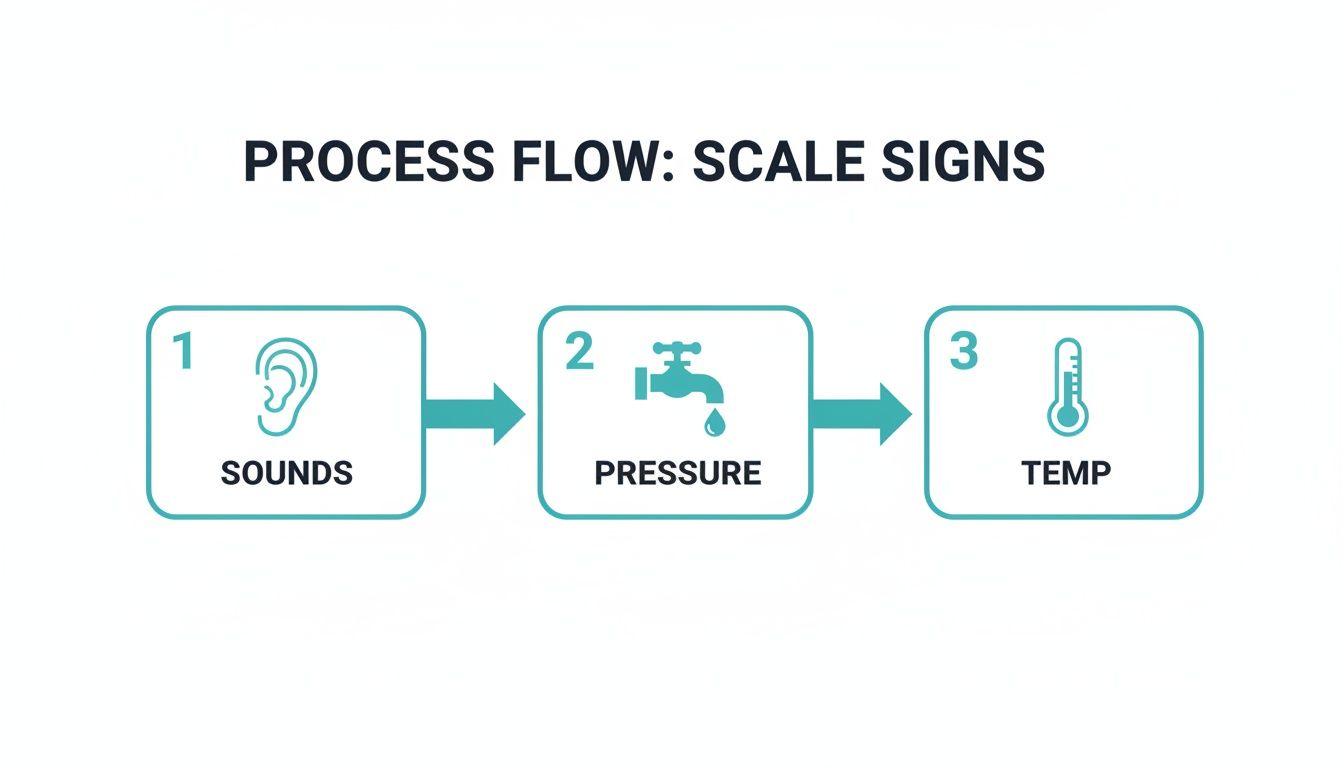
Think of these signs as your water heater’s cry for help. Each one points to an internal battle where mineral deposits are actively gumming up the works and disrupting normal operation.
Method 1: The Standard DIY Flush
For routine maintenance and lighter sediment, a basic flush can work wonders. This process clears out the loose mineral flakes that have settled at the bottom of the tank. It’s like changing the oil in your car—a straightforward but critical task to keep everything running smoothly.
Here’s a simple, no-fuss guide for a standard tank water heater:
- Safety First—Power Down: For an electric model, find the right breaker in your circuit panel and switch it off. If you have a gas heater, turn the gas control valve to "Pilot" or "Off." This is a non-negotiable safety step.
- Cut the Water Supply: Close the cold water inlet valve. This stops any new water from flowing into the tank while you’re trying to empty it.
- Hook Up a Hose: Attach a garden hose to the drain valve near the bottom of the heater. Run the other end of the hose to a floor drain or outside, making sure it’s angled downhill.
- Open a Hot Water Faucet: Turn on the hot water at a sink or tub somewhere in your house. This lets air into the tank, breaking the vacuum and helping it drain much faster.
- Drain the Tank: Carefully open the drain valve. Be warned, the water coming out will be hot! Let the tank drain completely until you see the gritty sediment start to come out.
- Flush It Out: With the drain still open, turn the cold water supply on for just a minute or two. This will stir up any stubborn sediment clinging to the bottom and flush it out. Let it drain again.
- Refill and Restart: Close the drain valve and remove the hose. Open the cold water inlet to start refilling the tank. Keep that hot water faucet running until water flows steadily to push all the air out of the lines. Once it's full, you can safely restore power or turn the gas back on.
Method 2: Descaling With Vinegar for Tougher Buildup
If a good flush doesn't fix the popping and hissing, or if you know you have very hard water, it's time for a stronger approach. White vinegar is a safe and inexpensive way to dissolve stubborn, caked-on mineral deposits.
Practical Example: Your water heater is still making that rumbling noise even after you flushed it. This is a clear sign that scale is cemented to the tank bottom and heating elements. The acetic acid in vinegar will chemically break down these stubborn calcium deposits in a way that plain water just can't.
The process is almost the same as flushing, but with one crucial extra step:
- After the tank is completely empty, close the drain valve.
- Pour 2-4 gallons of undiluted white vinegar into the tank. You can usually do this through the opening for the pressure relief valve or the hot water outlet.
- Refill the tank with water, which will mix with the vinegar.
- Let that solution sit in the tank for at least 6-8 hours. Letting it work overnight is even better, as it gives the acid plenty of time to dissolve the scale.
- Finally, drain the tank completely and then flush it thoroughly with fresh water to get rid of all the vinegar and dissolved minerals. Refill and restart just like you did before.
When to Stop and Call a Professional
DIY maintenance is smart, but knowing when to call a professional is even smarter. It can save you from a costly mistake or a dangerous situation. Following regular hot water maintenance tips is great, but some jobs are best left to an expert.
Call a licensed plumber immediately if you run into any of these scenarios:
- A Leaking Tank: If you see water pooling around the base of your heater, the tank itself might have rusted through. This is an emergency that needs a professional’s diagnosis right away.
- The Drain Valve is Stuck or Leaking: Older valves can get seized up or become brittle. If you try to force one, it could snap off, and you’ll have an uncontrollable flood on your hands.
- You Smell Gas: This is serious. If you have a gas heater and smell gas, shut off the main gas supply immediately, get everyone out of the area, and call your gas company and a plumber from a safe distance.
- Severe Corrosion: Heavy rust on the tank, pipes, or connections is a clear sign of advanced decay. An expert needs to assess the structural integrity. For those of us in LA, this often points to a bigger problem, making it essential to learn how to get rid of hard water for good.
The Best Long-Term Solution to Prevent Scale Buildup
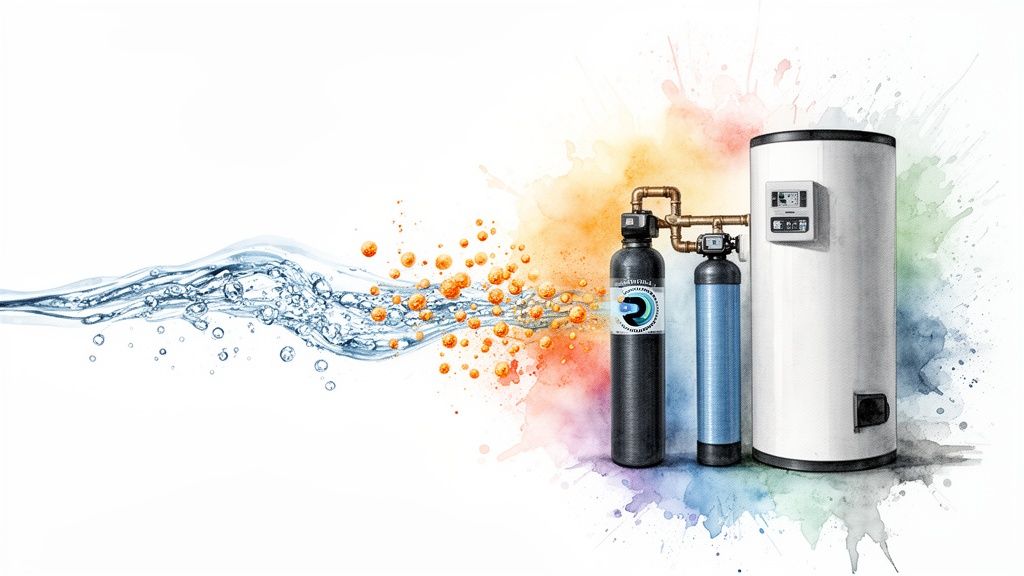
Flushing and descaling your water heater are necessary chores, but they're reactive. You're cleaning up a mess that has already formed. What if you could stop the scale buildup in water heater tanks before it ever gets a chance to start?
Instead of constantly fighting the symptoms of hard water, the smartest strategy is to tackle the root cause. This means treating the water the moment it enters your home, removing those scale-forming minerals for good. The most effective and reliable way to do this is with a whole-home water softener.
How a Water Softener Works
Think of a water softener as a security checkpoint for your water supply, designed to catch and remove mineral culprits. As water from the city main flows into the softener tank, it passes through a bed of special resin beads. These beads are loaded with sodium ions and act like magnets for the hard minerals—calcium and magnesium—that cause scaly trouble.
This process is called ion exchange, and it's both simple and effective. The resin beads snatch the calcium and magnesium right out of the water. To keep things balanced, they release a tiny, harmless amount of sodium in its place. The result? Truly softened water flows on to the rest of your home, completely free of the minerals that would otherwise build up inside your pipes and appliances.
Practical Example: A family in the San Fernando Valley had to flush their rumbling water heater every six months like clockwork. After installing a whole-home softener, the noises stopped completely and their hot water pressure returned. They went from a reactive chore to a proactive solution that protects every single appliance in their home, 24/7.
The Widespread Benefits of Soft Water
Stopping scale in your water heater is a huge victory, but it's just the beginning. When you soften all the water coming into your home, you kick off a chain reaction of benefits that improve your daily life and protect your biggest investments.
The advantages reach every pipe, every faucet, and every water-using appliance you own. It's a comprehensive upgrade that pays you back in convenience, cleanliness, and real cost savings.
Here are just a few of the improvements you’ll notice right away:
- Protects All Appliances: Your dishwasher, washing machine, coffee maker, and even your ice maker are shielded from the same scale that wrecks water heaters. This can significantly extend their lifespan.
- Uses Less Soap and Detergent: Soft water lathers up beautifully. This means you can use up to 50% less soap, laundry detergent, and dish soap to get the same or better cleaning power. The savings add up fast.
- Improves Skin and Hair Health: Hard minerals leave a film on your skin and hair, which can cause dryness, dullness, and irritation. Soft water rinses completely clean, leaving skin smoother and hair softer and more manageable.
- Eliminates Soap Scum: That chalky white film on your shower doors, tiles, and fixtures? That’s soap scum, a direct result of soap reacting with hard water minerals. With a softener, it simply doesn't form.
A smart, long-term strategy still includes proactive efforts. Following guides on proper hot water tank maintenance to flush out sediment is always a good idea. But when you pair that maintenance with a water softener, you’ve created the ultimate defense against hard water damage.
Tailored Solutions for Los Angeles Water
Here in Los Angeles, we have some of the hardest water in the entire country, and its mineral content can vary wildly from one neighborhood to the next. A generic, one-size-fits-all water softener from a big-box store often can't keep up with the specific mineral concentrations in our local supply.
A professional system, however, is designed and calibrated based on a precise analysis of your home’s water. This ensures the ion exchange process is perfectly optimized for LA's unique water chemistry, delivering genuinely soft water without compromise. Getting a system tailored to your home’s needs is an investment in a permanent solution that stops scale problems for good.
To see exactly how a whole house water softener system can be customized to solve these issues, it's worth digging a little deeper into the technology.
Calculating the ROI of a Water Softener in Los Angeles
It's easy to look at the price of a whole-home water softener and see it as just another big expense. But that's missing the bigger picture. The real financial story isn't the upfront cost; it's the slow, steady drain on your wallet caused by scale buildup in your water heater.
Let’s be honest, ignoring LA’s notoriously hard water is a choice to pay more over time. Your water heater has to fight through a growing layer of mineral scale, which drives up your energy bills. Eventually, the appliance gives up years before its time, leaving you with a sudden, expensive replacement. It’s a costly cycle.
The Cost of Doing Nothing
When you don't have a water softener, the hidden costs start piling up almost immediately. Hard water makes your appliances work much harder than they should. In fact, some studies have shown that scale can slash efficiency by as much as 25%.
Here’s a rough idea of what that "wait-and-see" approach really costs a Los Angeles homeowner:
- Skyrocketing Energy Bills: That inefficiency isn't free. It easily adds $100 to $200+ to your utility bills every single year.
- Early Appliance Death: A water heater that should last 15-20 years might only make it 7-10. That means you’re on the hook for a $1,500 to $3,000 replacement much sooner, and more often.
- Never-Ending Repairs: Think about all the little things—clogged showerheads, sputtering faucets, and service calls for your dishwasher. Those expenses add up fast.
A landmark study by the Water Quality Research Foundation painted a stark picture. It found that gas water heaters running on soft water maintained their factory efficiency rating for a 15-year lifespan. The heaters using hard water? They took a massive hit, with some losing up to 48% of their efficiency.
The Proactive Investment in Soft Water
Now, let's flip the script and look at the proactive approach: installing a water softener. Yes, there's an initial investment, typically between $3,000 and $6,000 for a quality system. But this isn't just an expense; it's an investment that starts paying you back from day one by cutting your other household costs.
Thinking about the long-term financials makes the choice even clearer. Here’s a table comparing the costs over a typical 10-year period.
Cost Comparison Scale Management vs Prevention
This financial breakdown compares the long-term costs of reactive repairs versus a proactive water softening solution for a typical Los Angeles home.
| Cost Factor | Reactive Approach (No Softener) | Proactive Approach (With Water Softener) |
|---|---|---|
| Initial Investment | $0 | ~$4,500 (one-time) |
| Energy Waste (10 Years) | ~$1,500 | $0 (maintains efficiency) |
| Water Heater Replacement | ~$2,000 (1 replacement) | $0 (extends lifespan) |
| Appliance Repairs/Replacements | ~$1,000+ | Minimal |
| Total 10-Year Cost | ~$4,500+ | ~$4,500 |
As you can see, the numbers don't lie. Over a decade, a water softener essentially pays for itself just by preventing the expensive problems hard water creates. You basically break even on the investment, all while getting the other perks of soft water—like using less soap, having healthier skin and hair, and protecting every single pipe and appliance in your home.
It’s not just another home appliance; it's a smart financial move that protects your property's most critical systems.
Frequently Asked Questions About Water Heater Scale
Even with a solid game plan, you probably still have a few questions about dealing with scale. We get it. Here are some of the most common things we hear from homeowners across Los Angeles, with straight answers to help you make the best decisions for your plumbing.
How Often Should I Flush My Water Heater In Los Angeles?
Here in LA, the water is incredibly hard. Because of that, you should really flush your tank water heater at least once a year.
If you don't have a water softener, flushing it every six months is an even better move to keep that scale buildup in your water heater from getting out of control. It's a simple task a pro can knock out during a routine maintenance visit.
Will a Water Softener Affect My Drinking Water Taste?
This is a big one we get asked all the time. A water softener swaps out those hard mineral ions for a tiny bit of sodium, and honestly, most people never even notice a change in taste. Some even prefer it.
If you're curious about the science behind it, you can dive deeper into how a water softener can sometimes cause salty tasting water under certain conditions.
Actionable Tip: The perfect setup for many homes is a whole-home softener to protect your appliances and a dedicated Reverse Osmosis (RO) system under the kitchen sink. This gives you purified, amazing-tasting water right from the tap for drinking and cooking.
Is Scale Buildup Dangerous To My Health?
The minerals themselves—calcium and magnesium—are perfectly safe to drink. The real issue is that heavy scale creates a rough, jagged surface inside your tank.
This porous environment can become a breeding ground for bacteria, including Legionella. Keeping your tank clean and scale-free isn't just about efficiency; it's the smarter, safer way to manage your home's water.
Ready to put an end to scale buildup for good? The expert team at Praz Pure Water, Inc. offers tailored solutions for Los Angeles's hard water, from high-efficiency water softeners to advanced drinking water systems. Protect your home, lower your energy bills, and enjoy the benefits of pure, soft water today. https://prazpurewater.com