
That unmistakable rotten egg smell coming from your faucet is a clear sign of one culprit: hydrogen sulfide (H₂S) gas. It’s a common—and unpleasant—problem that tells you something is going on with your water. The good news is that you can almost always trace it to either a natural source or harmless bacteria in your plumbing, and fixing it is straightforward. The value in tackling this is clear: you'll get rid of a frustrating odor and ensure your water is truly clean.
The Simple Reason Your Water Smells Like Rotten Eggs
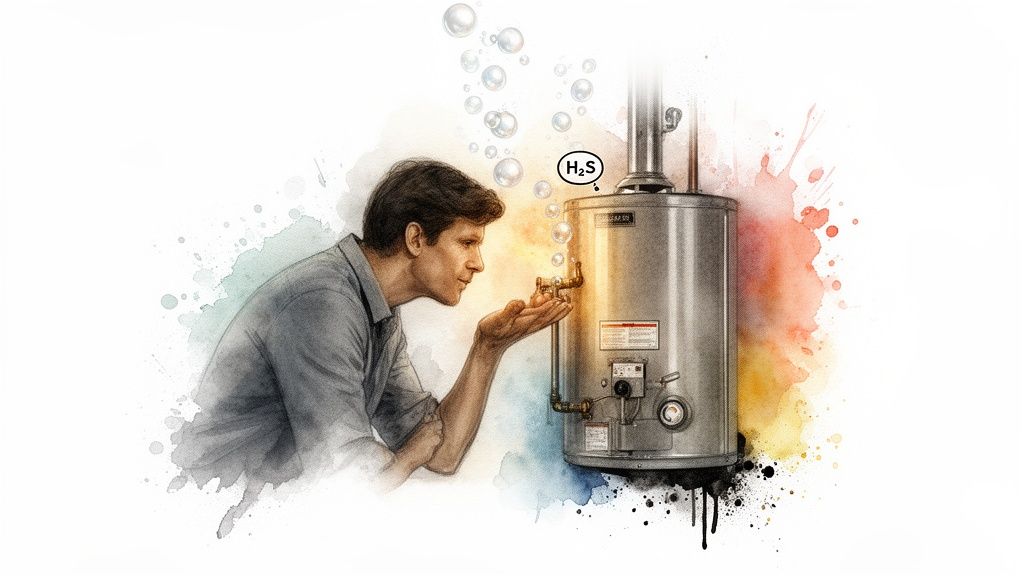
While the smell might make you worried, it’s usually one of two things. Pinpointing which one is the key to getting rid of the odor for good.
First, H₂S can simply be a natural part of your groundwater. This is a frequent issue for homes on well water, where water seeps through layers of rock and soil that contain sulfur and other organic materials.
The second, and more common, scenario involves a specific type of bacteria that has set up shop inside your plumbing system. These are called sulfur-reducing bacteria, and they thrive in environments with very little oxygen.
Where Does The Smell Come From?
So, where are these bacteria hiding? The most likely spot in your home is the water heater. It's warm, dark, and has a food source—the anode rod.
This rod, usually made of magnesium or aluminum, is designed to protect your tank from corrosion. But for sulfur-reducing bacteria, it's a buffet. They react with the rod and release hydrogen sulfide gas as a byproduct. For example, this is why you often notice the smell is much worse when you turn on the hot water for a shower.
It's a sign you definitely shouldn't ignore. While we're focused on H₂S, it's worth understanding the real causes of sewer smell too, as the root issues can sometimes feel similar.
This isn't a rare problem; millions of homes deal with it. While the concentration of H₂S in groundwater is usually low—often under 1 part per million (ppm)—it can sometimes reach as high as 5 ppm.
We can break it down into two basic situations:
- It's in the Water: Your water source itself (especially a private well) is naturally contaminated with dissolved hydrogen sulfide gas.
- It's in the Pipes: Harmless bacteria are living in your pipes or, most likely, your water heater and are producing the gas.
To figure out which one you're dealing with, you just need to do a little detective work. Does the smell come from all your taps, or just the hot water? The answer will point you straight to the source.
Quick Guide To Finding The Source Of The Smell
This table provides a clear, actionable guide to help you start troubleshooting immediately.
| Symptom | Likely Cause | Your Next Step (Actionable Insight) |
|---|---|---|
| Smell is ONLY from the hot water tap. | Bacteria in your water heater are reacting with the anode rod. | Action: Focus on your water heater. Plan to flush the tank and consider replacing the anode rod with an aluminum-zinc version. |
| Smell is from ALL taps (hot and cold). | Hydrogen sulfide is present in your groundwater source. | Action: The problem is your water supply. Start researching a whole-house water treatment system designed for sulfur removal. |
| Smell is strong at first, then fades. | This points back to bacteria in your plumbing or water heater. | Action: The gas has built up and is being flushed out. Your immediate focus should be on treating the water heater and plumbing. |
| Smell is consistent from hot & cold taps. | This strongly suggests the problem is with your main water supply. | Action: Get your water professionally tested to confirm H₂S levels. This data is critical for choosing the right filter system. |
This simple diagnostic is your best first step toward clearing the air and enjoying fresh, odor-free water again.
Is That Rotten Egg Smell In Your Water Dangerous?
The first question that pops into your head when that sulfur smell hits is always the same: "Is this water safe to drink?" For the most part, the low levels of hydrogen sulfide (H₂S) gas creating the odor are more of a nuisance than a direct health hazard. Your nose is incredibly sensitive to it, picking it up long before it reaches a harmful concentration.
But don't just write it off as an annoyance. It’s much smarter to think of that smell as your water system’s check engine light. The odor itself probably won't hurt you, but the underlying issues causing it definitely can. By investigating, you gain peace of mind and protect your family's health.
The Real Risk: What The Smell Is Hiding
That rotten egg smell is a dead giveaway that certain bacteria are thriving in your water. Sulfur-reducing bacteria, the culprits behind the odor, love low-oxygen environments. The problem? So do a lot of other, more dangerous microorganisms.
While the sulfur bacteria themselves are typically harmless, their presence is a huge red flag. It tells you that your well or pipes have become a breeding ground for other contaminants, including iron bacteria and, far more concerning, coliform bacteria.
The Bottom Line: The rotten egg smell isn't the direct threat. The real danger is what it signifies—an environment where harmful bacteria can flourish undetected. This is the value of paying attention to the smell.
This isn't just a guess; it's a well-documented connection. Research has found an alarmingly high correlation between water that smells of sulfur and water contaminated with coliform bacteria. One study revealed that a staggering 96% of water samples that tested positive for high coliform counts also contained hydrogen sulfide. That makes the smell a critical early warning sign.
When The Smell Points To A Serious Problem
Beyond the usual suspects, that rotten egg smell can sometimes signal a much bigger issue, especially for homes on a private well. A cracked well casing or a failing septic system can allow raw contaminants to seep directly into your groundwater. If you even suspect a problem that requires sewage damage clean up, you need to act fast.
Pay close attention if you notice any of these warning signs:
- A Sudden, Strong Odor: If the smell appears out of nowhere, particularly after heavy rain or flooding, it could mean surface water has contaminated your well.
- Stomach Problems: If anyone in your home is experiencing diarrhea, cramps, or other gastrointestinal issues, stop using the water immediately and get it tested.
- A Mix of Smells: An odor that smells like sulfur mixed with chemical or sewage notes points to a serious contamination event that needs a professional’s diagnosis.
Never ignore water that smells like rotten eggs. While the H₂S gas is unlikely to harm you at the levels found in your tap, it's a crucial warning that your water might be unsafe. Taking it seriously and getting your water properly tested is the only way to be sure it's clean and healthy for your family.
A Simple Guide to Pinpointing the Odor's Source
When your water starts smelling like rotten eggs, the first thing you need to do is play detective. A few simple tests can help you quickly narrow down the suspects and figure out exactly where that sulfur odor is coming from. The good news? You don't need any special tools—just a glass, your nose, and a few minutes of your time.
The whole point is to figure out if the smell is coming from your main water supply, a specific fixture, or your water heater. Nailing this down is the key to choosing the right fix, saving you from wasting time and money on solutions that don't even touch the real problem.
This flowchart gives you a quick visual guide for tracing the smell, from the moment you first notice it to finding a potential solution.
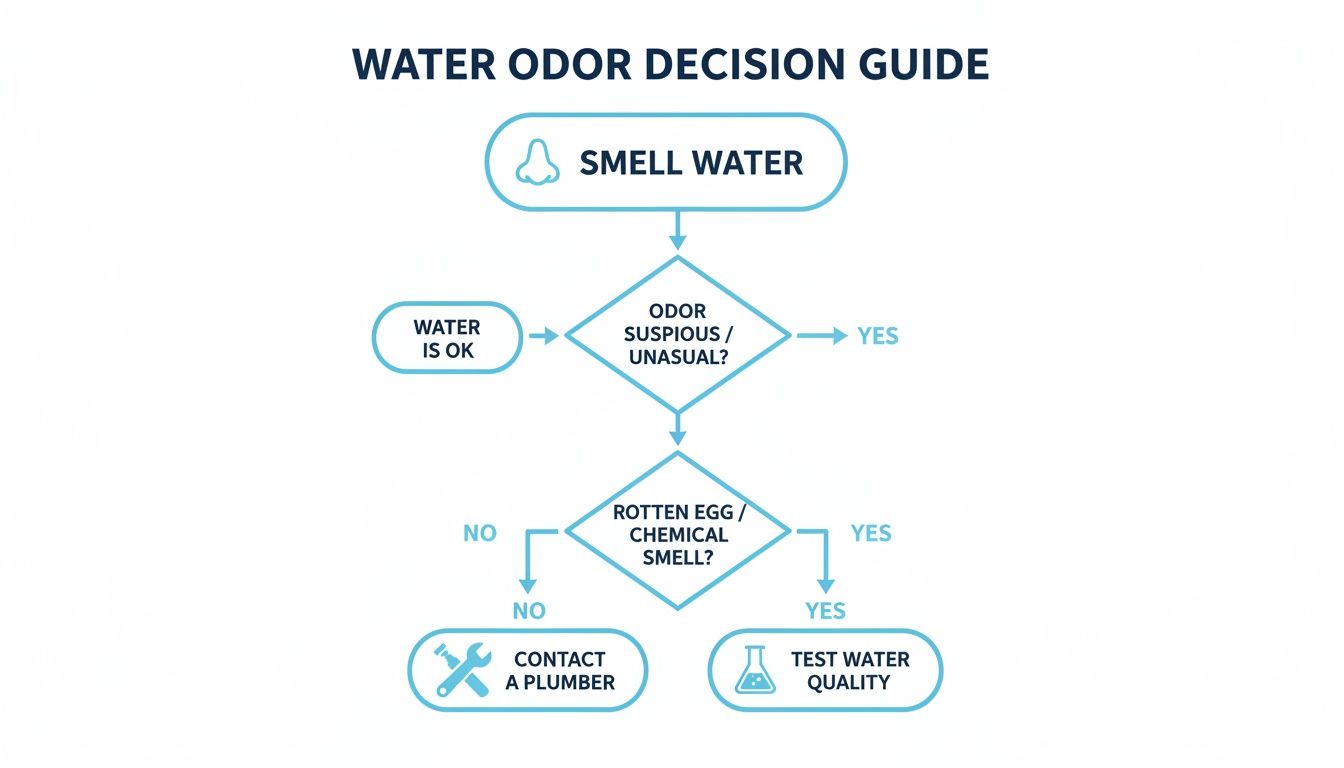
As you can see, the process is pretty logical. It starts with a basic sniff test and moves you toward professional help if the first few steps don’t clear things up.
Test 1: Check Your Hot Water First
This is the most important test and often gives you an immediate answer. In most homes, the primary suspect is the hot water heater, which can be a perfect incubator for those sulfur-reducing bacteria.
Actionable Insight: Go to the faucet closest to your water heater. Turn on only the hot water and let it run for a minute. Fill a glass, then take it to another room—away from the sink drain—before you give it a sniff.
If the hot water in that glass has the distinct rotten egg smell, but your cold water doesn't, you've almost certainly found your culprit.
Practical Example: A homeowner notices a sulfur smell only when taking a morning shower. Their kitchen cold water is fine. This is a classic sign of sulfur-reducing bacteria reacting with the anode rod inside the water heater. This is, by far, the most common cause of a sulfur smell in homes on municipal water.
This reaction is especially common with magnesium or aluminum anode rods. They're designed to prevent the tank from corroding, but they also happen to provide a food source for these smelly bacteria.
Test 2: Isolate the Problem to One Faucet
What if both your hot and cold water smell? The next step is to figure out if the issue is everywhere or just in one spot. Sometimes, the problem isn’t your water at all, but a nasty buildup of gunk in a specific sink's P-trap or drain.
Here’s your action plan:
- Run Cold Water: Go to a sink where you notice the smell. Let the cold water run for about 30 seconds.
- Fill and Sniff: Fill a clean glass with that cold water.
- Step Away: Now, walk into a different room, far from the drain, and smell the water in the glass.
If the water in the glass is odorless, but you can smell it when you're standing right at the sink, the problem is almost certainly in that specific drain. All sorts of organic stuff like hair and soap scum can get trapped, rot, and create a smell that mimics a sulfur issue. Repeat this test at a few different faucets around the house to be sure.
Test 3: Confirm a Whole-House Issue
Okay, so you've done the first two tests, and the rotten egg smell is coming from both the hot and cold water at every single faucet. If that's the case, the source is most likely your main water supply.
This is a very common scenario for homes with a private well, where hydrogen sulfide gas is already dissolved in the groundwater before it even enters your pipes.
For city water users, this is far less common, but it can happen during main line repairs or other system disruptions. If you're on city water and notice this, a quick call to a neighbor to see if they have the same problem is a great idea.
When the issue is confirmed to be in your main water supply, the only truly effective long-term solution is a whole-house water treatment system designed specifically to remove hydrogen sulfide.
Quick Fixes to Get Rid of That Smell Right Now
So you’ve figured out where that awful rotten egg smell is coming from. Great. But now you need it gone—yesterday. While you're figuring out a permanent solution, you don't have to live with the stench. A few temporary fixes can bring immediate relief and make your home feel normal again.
Think of these as the first-aid kit for your plumbing. They’re designed to tackle the immediate symptoms by clearing out the existing bacteria and gas, buying you precious time to research a proper, long-term treatment system.
Flush Your Water Heater
If all signs point to your hot water heater, giving it a good flush is your best first move. This isn't just a rinse; you're physically kicking out the sulfur-reducing bacteria and the sediment they live in. This is a standard piece of home maintenance that you can do yourself.
Here’s your action plan:
- Kill the Power: Safety first. Head to your circuit breaker and shut off the power to an electric heater. For a gas heater, turn the control knob to "Pilot."
- Stop the Water: Find the cold water inlet valve that feeds the tank and close it.
- Drain the Tank: Hook up a garden hose to the drain valve at the tank's bottom. Run the other end to a floor drain or safely outside. Open the drain valve, then go turn on a hot water faucet somewhere in the house—this lets air in and helps the tank drain completely.
- Rinse and Repeat: With the drain still open, turn the cold water supply on for a few short bursts. This will stir up any stubborn sediment at the bottom and flush it out.
Once the water coming out of the hose runs clear, you're good to go. Close the drain valve, let the tank refill, and then turn the power or gas back on. This simple procedure can often get rid of the smell for weeks, sometimes even months.
Heads Up: The water inside that tank is scalding hot. Always check your manufacturer’s instructions and be careful. Wear gloves and make sure that drain hose is pointed somewhere safe.
Shock Your Well with Chlorine
For those of you on a well system, if the sulfur smell is everywhere (hot and cold water), shock chlorination is like hitting a giant reset button. The process involves introducing a high concentration of chlorine—basically, plain, unscented household bleach—into your well.
This is a more intensive job than flushing a water heater, but it’s incredibly effective. The chlorine zaps the sulfur-reducing bacteria and other contaminants in the well itself, the pump, and every pipe in your house. After letting the chlorine do its thing, you'll flush the entire system until the water is clear and the chlorine smell is gone. It gives you a clean slate, though the smell might creep back if the bacteria have a persistent source down in the well.
Get a Faucet-Mounted Carbon Filter
Need a fix for your drinking water right now while you ponder bigger options? A simple faucet-mounted carbon filter is your best friend. These little gadgets are cheap, easy to install, and attach right to your kitchen or bathroom sink.
The activated carbon inside is excellent at adsorbing hydrogen sulfide gas, which means it strips that nasty rotten egg smell and taste from your water right at the tap. It won't help your shower or washing machine, but it gives you instant access to clean, odor-free water for drinking and cooking. If you want to explore more comprehensive options, you can learn how to purify tap water for your entire home. For now, a faucet filter is the perfect stop-gap measure.
Choosing The Right Long-Term Water Treatment Solution
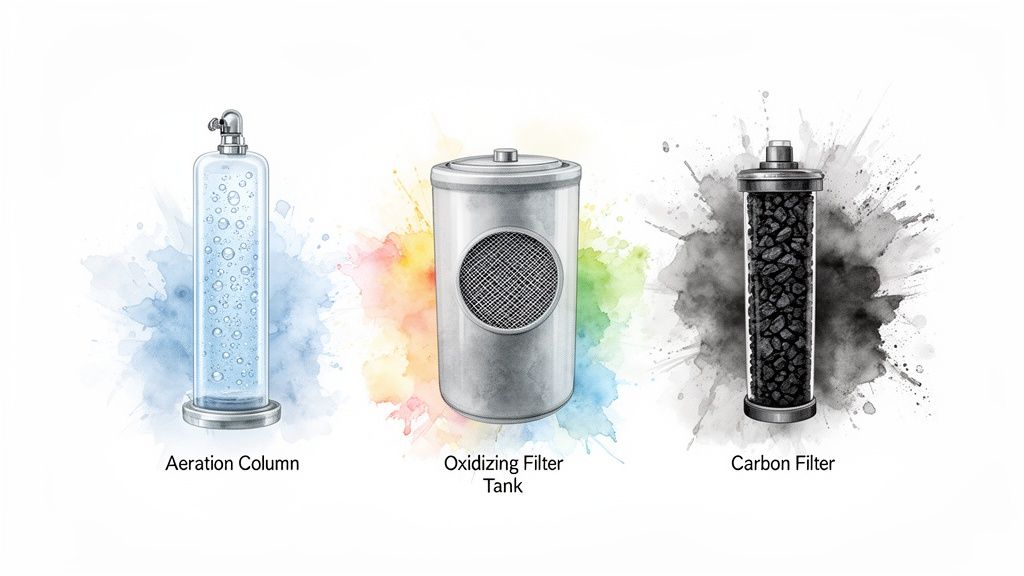
While flushing your water heater or shocking your well can provide some much-needed relief, these are just temporary fixes. If you're tired of battling that rotten egg smell every time you turn on a faucet, it's time to think about a permanent, whole-house solution.
A long-term treatment system gets installed right where the water line enters your home, treating every drop of water before it ever reaches your taps, showers, or appliances. This is how you truly get rid of the problem for good. The key is picking the right technology for your specific situation, which mostly depends on how much hydrogen sulfide you're dealing with.
Aeration Systems
Think of aeration as simply giving your water a chance to "breathe." These systems work by injecting air into the water, which introduces oxygen. The oxygen reacts with the dissolved hydrogen sulfide gas, forcing it to change from a gas into tiny, solid particles of sulfur.
Once the H₂S has been converted into a solid, it's easy to remove. The water then passes through a filter that catches these particles, leaving you with clean, fresh-smelling water. It’s a completely chemical-free process that works wonders for mild to moderate sulfur issues.
Oxidizing Filters
Oxidizing filters are the real workhorses of sulfur removal. These systems look like a standard water softener tank but are filled with a special media, like manganese greensand, designed to create a powerful oxidizing reaction.
As water flows through this media, hydrogen sulfide is instantly converted and trapped. The best part? These systems are incredibly low-maintenance. They automatically clean and "regenerate" themselves by backwashing the trapped sulfur particles down the drain, so you can pretty much set it and forget it.
Actionable Insight: Oxidizing filters are a top choice for well owners because they're multi-talented. Beyond just tackling H₂S, they are fantastic at removing iron and manganese—two other common minerals in well water that are notorious for causing ugly reddish-brown and black stains on fixtures and laundry.
Activated Carbon Filtration
You’re probably familiar with activated carbon from pitcher filters, but on a whole-house scale, they can also tackle that rotten egg smell. The carbon’s incredibly porous surface acts like a sponge, trapping and holding onto the H₂S molecules as water passes through.
This method is fantastic for very low levels of hydrogen sulfide, typically anything below 1 part per million (ppm). The downside is that once the carbon "sponge" is full, the filter cartridge or media bed has to be replaced. For this reason, it’s often used as a final polishing filter after a primary system or for homes with just a faint, occasional odor.
Chlorine Injection Systems
When you're dealing with a serious sulfur problem or have confirmed sulfur-reducing bacteria in your well, you need to bring in the heavy artillery. That's where a chlorine injection system comes in.
This setup injects a carefully controlled amount of chlorine into your water, which immediately neutralizes even the highest levels of H₂S and kills any bacteria present. The water then sits in a holding tank to give the chlorine time to work before passing through a large carbon filter to remove any leftover chlorine taste or smell. It's a multi-step approach, but it’s the most powerful and reliable solution for the toughest water quality challenges.
Comparing Long-Term Hydrogen Sulfide Treatment Systems
To help you decide which path is right for your home, here’s a quick overview of the most effective long-term treatment options. This table breaks down how they work, what they're best for, and what to expect in terms of maintenance and cost.
| Treatment Method | How It Works | Best For | Maintenance Level | Relative Cost |
|---|---|---|---|---|
| Aeration System | Injects air (oxygen) to convert H₂S gas into solid sulfur particles, which are then filtered out. | Mild to moderate H₂S levels (up to 10 ppm). Chemical-free solution. | Low to Moderate | $$ |
| Oxidizing Filter | Uses a catalytic media (like manganese greensand) to oxidize and trap H₂S, iron, and manganese. | Moderate to high H₂S levels (up to 15 ppm). Also removes iron. | Low (automatic backwashing) | $$$ |
| Activated Carbon | Adsorbs H₂S molecules onto its porous surface, trapping bad odors and tastes. | Very low H₂S levels (below 1 ppm). Good for "polishing" water. | Moderate (media/filter replacement) | $ |
| Chlorine Injection | Injects chlorine to oxidize H₂S and kill bacteria, followed by a carbon filter to remove chlorine. | Very high H₂S levels (15+ ppm) and/or bacterial contamination. | Moderate (refilling chlorine solution) | $$$$ |
Ultimately, the right system is the one that permanently solves your odor problem without creating a new headache. For a deeper dive into whole-house solutions that tackle multiple issues at once, check out our guide on the best water filtration system for a whole house.
Knowing When to Call a Water Treatment Professional
While a DIY fix like flushing your water heater can sometimes knock out that rotten egg smell, it's often just a temporary patch. Think of it as putting a band-aid on a much bigger issue. The smartest, and often most cost-effective, move is knowing when to hang up your own toolbelt and call in a professional. Recognizing that you've moved beyond a simple weekend project is the key to protecting your plumbing, your appliances, and your family's health.
If you’ve already tried the quick fixes and the sulfur smell comes creeping back, that’s your first big clue. It's a clear sign the source of the problem is persistent, whether it's a constant stream of hydrogen sulfide from your well or a stubborn bacterial colony that a simple flush just can't kill.
Beyond The Smell: Signs You Need An Expert
That awful odor is the most obvious red flag, but it's rarely the only one. Other symptoms can pop up that should tell you it's time for a professional diagnosis. Ignoring them can lead to some pretty serious and expensive problems down the line.
Keep an eye out for these other warning signs:
- Staining on Fixtures: Seeing ugly yellow, black, or reddish-brown stains on your sinks, tubs, and toilets? This is a classic sign that you're not just dealing with H₂S gas—you probably have high levels of iron or manganese as well, which need their own specific type of filtration.
- Corrosion on Pipes and Appliances: Hydrogen sulfide is notoriously corrosive. If you're seeing premature rust or decay on copper pipes, plumbing fixtures, or even the metal parts inside your dishwasher and washing machine, the gas is actively eating away at your home.
- Concerns About Water Safety: If anyone in your house has had unexplained stomach troubles, or if you just have a nagging feeling that something isn't right with your water, professional testing is the only real way to get answers and peace of mind.
A true water treatment expert doesn't just make an educated guess. They come prepared with the right tools and knowledge to scientifically diagnose the problem.
Practical Example: An expert can measure the exact concentration of hydrogen sulfide in your water, typically in parts per million (ppm). Knowing you have 8 ppm of H₂S, for instance, immediately tells them an activated carbon filter won't work and that an aeration or oxidizing system is the correct solution. This data is absolutely crucial for choosing the right system.
The Value Of A Professional Consultation
Bringing in a pro isn't just about paying someone to install a filter; it's an investment in getting the right solution put in correctly. A good specialist will perform a complete evaluation of your home's unique situation, looking at your family's water usage, the plumbing's flow rate, and the specific cocktail of contaminants in your water.
This comprehensive approach saves you from two common mistakes: either overpaying for an overpowered system you don't need or, even worse, wasting money on an undersized unit that can't solve the problem.
They’ll walk you through the best water treatment systems for your specific situation, explaining the pros and cons of technologies like aeration or oxidation. By understanding your home's unique water chemistry, they can pinpoint a solution that will give you clean, odor-free water for years. At the end of the day, a professional consultation breaks the frustrating cycle of recurring smells and expensive appliance repairs.
Frequently Asked Questions About Sulfur Smells In Water
Even after figuring out where that rotten egg smell is coming from, it's normal to have a few more questions. Here are clear answers to some of the most common ones we hear from homeowners.
Can I Still Drink The Water If It Smells?
Generally, yes. That rotten egg odor is caused by hydrogen sulfide gas, and your nose is incredibly sensitive to it. You can actually smell it at concentrations as low as 0.5 parts per million (ppm), which is well below the level considered harmful.
But think of the smell as a red flag. The same conditions that let sulfur-reducing bacteria grow can also be a welcoming environment for other, nastier bacteria. Actionable Insight: The smartest move is to get your water professionally tested. It’s the only way to rule out other contaminants and get real peace of mind.
Will Boiling The Water Remove The Smell?
Boiling can temporarily reduce the smell, but it’s definitely not a permanent solution. Heating the water helps the hydrogen sulfide gas escape more quickly, so it can work in a pinch if you're boiling a small amount for cooking.
Keep in Mind: Boiling does absolutely nothing to fix the underlying issue. Whether the source is your well or the water heater, the smell will be right back as soon as new water flows into your pipes. It's a band-aid, not a cure.
How Can I Get Rid Of The Smell In My Water Heater For Good?
If you've traced the smell back to your water heater, you have two excellent, long-term options. First, you can have a plumber swap out the standard magnesium anode rod for an aluminum-zinc alloy one. These are specifically designed to minimize the reaction that feeds the sulfur bacteria, often eliminating the odor entirely.
Your other choice is to upgrade to a powered anode rod. This type of rod uses a tiny electrical current to stop corrosion, creating an environment where those smelly bacteria simply can't thrive. Either of these is a much better fix than flushing the tank over and over again.
Does A Water Softener Help With The Rotten Egg Smell?
That's a common misconception, but a standard water softener is not effective against hydrogen sulfide gas. A softener’s job is to remove hardness minerals like calcium and magnesium. In fact, the resin beads inside the softener can get gummed up by sulfur and iron bacteria, which can make the smell even worse over time.
If your water is both hard and smells like sulfur, you’ll need two different systems to tackle each problem correctly.
At Praz Pure Water, Inc., we believe everyone deserves water that’s fresh and clean, not foul-smelling. If you're done putting up with that rotten egg odor, our experts can provide a professional water analysis and recommend the perfect filtration system for your Los Angeles home. Visit us online to schedule your free consultation at https://prazpurewater.com and get started.