
When you turn on a tap and get hit with that unmistakable rotten egg smell, your first thought might be that something is seriously wrong with your water. It's an alarming odor, but in most cases, it's not a sign of anything dangerous. The smell is usually caused by hydrogen sulfide gas, a very common and solvable problem. This guide will give you clear, actionable steps to find the source and fix it for good.
What's Causing That Rotten Egg Smell in Your Water?
That unpleasant smell is a chemical signal, pointing to a specific issue somewhere in your plumbing, water heater, or even the water source itself. Finding the root cause is the first step to getting your water back to smelling fresh and clean.
The culprit is a colorless gas called hydrogen sulfide (H2S). Sometimes it’s naturally present in groundwater, but more often, it's produced by tiny organisms: sulfur-reducing bacteria.
Where Is the Smell Coming from?
These bacteria are not harmful to you, but they do have a stinky side effect. They feed on naturally occurring sulfates (minerals) in the water and release hydrogen sulfide gas as waste. This can happen in a few key places:
- Your Water Heater: This is the most common source of sulfur smell, especially if it only affects your hot water. Inside most water heaters is a part called an anode rod, typically made of magnesium. It’s there to prevent the tank from rusting. The downside is that this rod can react with sulfates in the water, creating a perfect food source for these bacteria.
- A Private Well: For homes with a well, the bacteria can flourish deep underground where oxygen levels are low. The well casing or the surrounding aquifer can become a breeding ground.
- Your Drains: Sometimes, the problem isn't your water at all. If the smell only comes from one sink, it's likely just buildup. Hair, soap scum, and other gunk can get trapped in the U-shaped pipe (the P-trap) under the sink, creating a breeding ground for bacteria that produce a similar foul odor.
Actionable Insight: The sulfur smell is a symptom that bacteria are active in your water system. Identifying whether the smell comes from hot water, cold water, or just a single drain is the most critical first step to solving the problem.
And you're not alone in dealing with this. Up to 15% of private wells in the U.S. test positive for H2S, affecting millions of homes. Here in Los Angeles, where our groundwater can supply about 50% of the city's water during dry spells, sulfur smell complaints spike during droughts. In fact, the LA Department of Water and Power recorded over 12,000 resident complaints about a 'rotten egg smell' in 2022 alone—a 25% jump from 2019. This is part of a much larger global issue; you can learn more about how water sources are impacted by reading up on water pollution around the world.
How to Pinpoint the Source of the Sulfur Smell
Before you can fix the issue, you have to play detective. The single most important step is figuring out exactly where that rotten egg smell is coming from. Getting this right from the start will save you time, money, and headaches. This isn't about complicated science; it's a simple process of elimination anyone can do.
Let's start with the biggest clue. When you notice the smell, ask yourself one simple question: is it coming from the hot water, the cold water, or both?
The Hot vs. Cold Water Test
This is your first and most crucial diagnostic. Go to any sink, run only the hot water for a minute, and take a sniff. Then, turn it off completely and run only the cold water.
- Smell in Hot Water Only: This is a huge giveaway. If the sulfur smell is limited to your hot water, the problem is almost certainly brewing inside your water heater. The magnesium anode rod is the likely offender, reacting with sulfates in the water to create a food source for sulfur-reducing bacteria.
- Smell in Both Hot and Cold Water: If both taps reek of sulfur, the issue is bigger than just your water heater. This tells you the hydrogen sulfide gas is already in the water before it gets to your heater, pointing to a problem with your main water supply or well.
This simple fork-in-the-road approach helps you focus your efforts right away. The flowchart below breaks down this first diagnostic step perfectly.
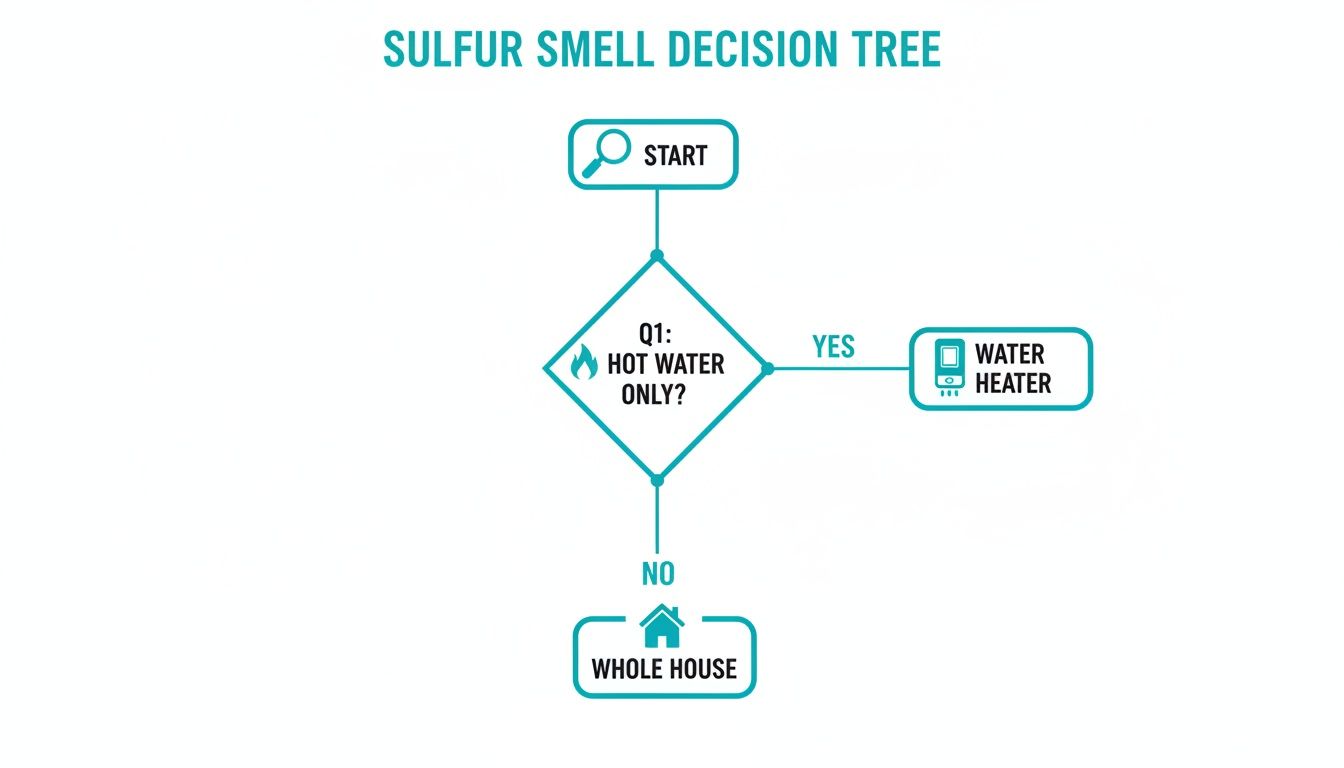
As you can see, isolating the problem to either the hot water side or your entire system is the fastest way to figure out what to do next.
Is It the Water or the Drain?
Here's another possibility: what if the smell is faint or seems to vanish after the water has run for a few seconds? You might be blaming the water when the real culprit is your drain. It’s common for bacteria to build up in the P-trap (that U-shaped pipe under the sink), where they feast on gunk like soap scum and hair, releasing a similar foul odor.
Here’s a quick, actionable test to be sure:
- Grab a clean glass and fill it with water from the faucet in question.
- Walk away from the sink into another room. This is key—you need to get away from the drain.
- After about 30 seconds, smell the water in the glass.
If the water in the glass smells fine, you've got a drain issue. If the water still has a distinct sulfur smell, the problem is with your water supply.
Practical Example: A client in Pasadena called, worried about a sulfur smell at their cafe's main prep sink. We walked them through this test over the phone. The water in the glass was odor-free. The problem was just a buildup of organic gunk in that heavily-used drain—a simple cleaning job, not a major water quality crisis. This simple action saved them from the cost of an unnecessary service call.
Checking All Your Faucets and Fixtures
If you've confirmed the smell is in both hot and cold water, the next step is to see if it's coming from every single faucet or just one or two. Walk through your house—check the kitchen, all the bathrooms, the utility sink, and even the outdoor spigot.
If the smell is isolated to a rarely used faucet (like in a guest bathroom), the problem could be localized bacteria in that specific fixture. If every tap smells, however, it's a clear sign of a whole-house problem. For homeowners on a private well, this almost always points to an issue with the well itself and may warrant looking into potential issues with your septic tank, as a failing system can sometimes contaminate local groundwater. By methodically working through these checks, you can confidently zero in on the source.
Practical DIY Fixes You Can Try Today
Now that you’ve done the detective work, you can often tackle the issue yourself without calling a pro. Many common causes for sulfur-smelling water have straightforward DIY fixes. Let's walk through a few of the most effective methods.
Flushing Your Water Heater
If your investigation pointed a finger at the hot water, your water heater is the prime suspect. Over time, sediment and bacteria can settle at the bottom of the tank, creating a breeding ground for hydrogen sulfide gas. A good tank flush is often all it takes to clear it out.
Here's an actionable breakdown:
- Safety First: Cut the power to the heater at the breaker (for electric) or turn the gas valve to "off" (for gas). Then, shut off the cold water supply valve to the tank.
- Drain It Out: Hook a garden hose to the drain valve at the bottom of the heater and run the other end outside. Open the drain valve and a hot water tap somewhere in your house to let air in and help the tank drain.
- Flush and Clear: Once the tank is empty, briefly open the cold water supply in short bursts to stir up any remaining gunk and flush it out. You’ll probably see discolored water—that’s a good sign you’re getting the junk out.
When the water from the hose runs clear, you can close the drain, refill the tank, and restore power.
Swapping Out the Anode Rod
While working on the water heater, consider another incredibly effective fix: replacing the anode rod. Most heaters come with a standard magnesium anode rod which can react with sulfates in the water, feeding the bacteria that create the sulfur odor.
Actionable Insight: By replacing the standard magnesium rod with a zinc-aluminum alloy anode rod, you stop the chemical reaction that feeds sulfur-producing bacteria. Zinc actively disrupts the bacteria's metabolic process, halting hydrogen sulfide production at its source. This simple upgrade protects your tank and prevents the smell from returning.
Cleaning a Smelly P-Trap
If your detective work led you to a single sink drain, the culprit is almost certainly the P-trap. Luckily, cleaning it is simple.
First, place a bucket under the pipe to catch any spills. Then, unscrew the two slip nuts holding the U-bend in place (you can usually do this by hand). Pull the trap off and clean it with a brush and hot, soapy water.
For an extra punch, pour a mix of baking soda and vinegar down the drain, let it fizz for 15 minutes, then flush with hot water. This is a great way to break down any leftover grime without harsh chemicals.
Knowing these basic maintenance tasks is a key part of managing your home's water quality. For those looking to dive deeper, our guide on how to purify tap water provides more comprehensive strategies for ensuring your water is clean and fresh.
When It's Time to Call in the Pros for a Permanent Fix
DIY fixes are great, but if you’ve flushed your hot water tank and the rotten egg smell still comes back, you’re dealing with a systemic issue. This is the point where you stop spending time and money on temporary patches. When the smell is in both your hot and cold water or it just refuses to leave, it’s a clear sign you need a permanent, professional solution.
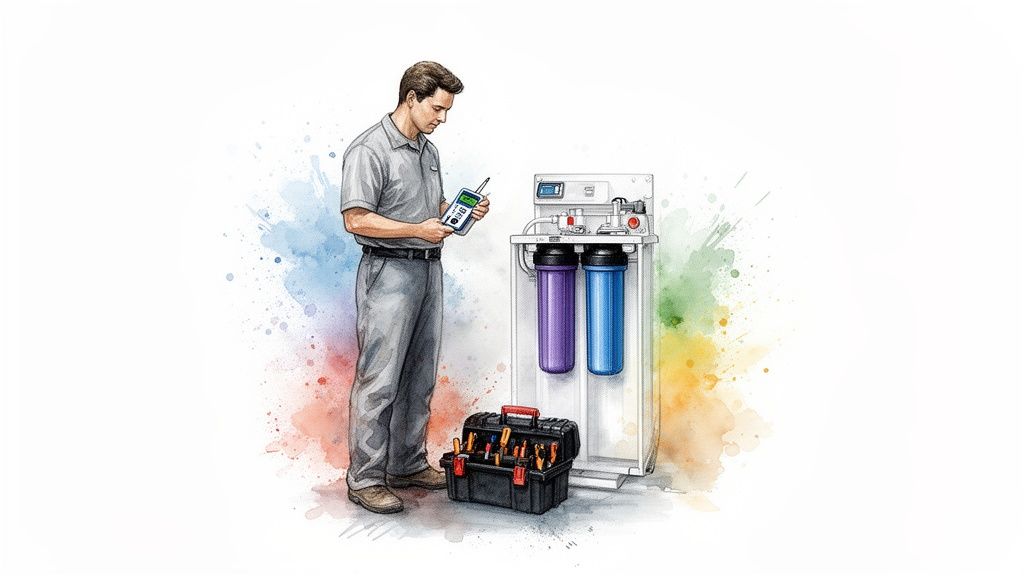
Constantly fighting a widespread hydrogen sulfide problem is frustrating. More than that, it means you're living with water that smells and tastes foul. For persistent issues like a sulfur smell, bringing in a professional plumbing service is the next logical step. These businesses often use tools like plumbing virtual receptionist services to manage their calls, ensuring they can respond quickly when homeowners like you need help.
The Most Important First Step: A Professional Water Test
Before any reputable water specialist recommends a solution, they'll insist on a comprehensive water test. Guesswork has no place in water treatment. A professional analysis provides a complete chemical blueprint of your water, which is critical for choosing the right equipment.
A detailed test will measure several key factors:
- Hydrogen Sulfide (H2S) Levels: We need to know the exact concentration to determine the size and type of system required.
- Iron and Manganese: These minerals are frequent partners with sulfur and can clog certain filters.
- Sulfate Levels: High sulfates can be a food source for the bacteria that produce H2S.
- pH and Total Dissolved Solids (TDS): Your water's overall chemistry impacts how well different filtration methods will work.
Without this data, you're just flying blind. The water test is the most important investment you can make to solve the problem for good.
Decoding the Tech: Long-Term Filtration Solutions
Once we have your water test results, we can design a system that will permanently eliminate that rotten egg smell. These are robust, whole-home solutions that treat every drop of water coming into your house.
Value Highlight: A permanent solution doesn't just mask the sulfur smell—it physically removes the hydrogen sulfide gas or the bacteria causing it. This ensures the problem is gone for good at every tap, protecting your pipes from corrosion and giving you clean, great-tasting water.
Here are the most common and effective technologies a professional will likely recommend:
- Oxidation Systems: A real workhorse for moderate to high sulfur levels. These systems use an oxidizer—like air or chlorine—to convert the dissolved hydrogen sulfide gas into tiny solid sulfur particles that are then easily filtered out.
- Aeration Systems: If you have a serious H2S problem, aeration is often the best tool. The process vigorously mixes your water with air, which forces the dissolved H2S gas to bubble out and escape before the water ever enters your home's plumbing.
- Catalytic Carbon Filters: Unlike a standard Brita filter, catalytic carbon media creates a chemical reaction that actively transforms H2S into a form that's easily filtered out. These are fantastic for lower levels of hydrogen sulfide and have the bonus of removing other contaminants like chlorine.
Choosing the Right Water Treatment System for Your Home
Diving into the world of water treatment can feel overwhelming when all you want is to get rid of that awful rotten egg smell for good. A permanent solution means matching the right technology to what's actually in your water.
This isn't just about eliminating an odor. It’s an investment in your home and your quality of life. You're protecting your plumbing from corrosion, extending the life of your appliances, and finally getting water your family feels good about using. A whole-home system doesn't just filter water; it restores your peace of mind.
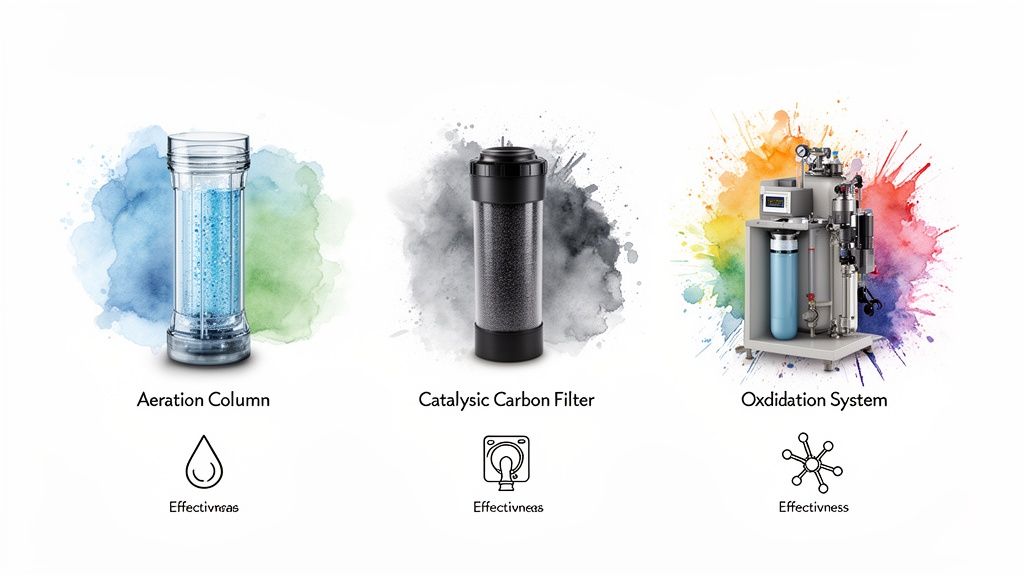
A Closer Look at Professional Sulfur Removal Systems
Once we have the results from a professional water test, we know exactly what we’re up against. With that data, we can pinpoint the perfect system for the job. Let’s walk through the most reliable options we install for Los Angeles homeowners.
Comparing Professional Sulfur Removal Systems
Here's a side-by-side look at the most effective long-term solutions for eliminating hydrogen sulfide. This clear comparison helps you understand the value and application of each system.
| Treatment System | How It Works | Best For | Maintenance Level | Estimated Cost |
|---|---|---|---|---|
| Aeration System | Injects air (oxygen) into the water, forcing H2S gas out and oxidizing it into solid particles that can be filtered. | High levels of H2S (over 6 ppm). It’s a powerful, chemical-free workhorse. | Low. Periodic checks and occasional sediment filter changes. | $3,000 – $5,500 |
| Oxidation System | Uses an oxidizing agent like chlorine to destroy H2S and kill any related bacteria. A second filter removes the oxidized particles. | Severe H2S levels, especially when iron or sulfur bacteria are also present. | Moderate. Requires refilling the chlorine solution periodically. | $2,500 – $4,500 |
| Catalytic Carbon Filter | A special carbon media accelerates the conversion of H2S into harmless sulfur particles, which are then trapped in the filter. | Low to moderate H2S (under 4 ppm) and for improving general taste and odor. | Moderate. The carbon media must be replaced every 3-5 years. | $1,500 – $2,800 |
Ultimately, the best choice balances the severity of your sulfur problem with long-term maintenance and budget.
Making a Smart Investment in Your Home
It’s true, the upfront cost of a whole-home system is a significant consideration. But it’s crucial to see it as a long-term upgrade to your property, not just an expense. In the Los Angeles area, a professionally installed sulfur removal system typically ranges from $1,500 to over $5,000.
Practical Example: We often see homeowners who chose a cheaper, undersized system online. It fails to solve the smell, requires constant maintenance, and eventually needs to be replaced entirely, costing more in the long run. Investing in the right system the first time, based on a proper water test, saves money and frustration.
If you want to dig deeper into the science, you can explore our guide on how water filtration works.
The only way to be certain you're making the right investment is to start with a professional water test. It takes the guesswork out of the equation and ensures the system you choose will deliver clean, fresh-smelling water for years to come.
Let's Clear Up Your Water in Los Angeles
Tackling a stubborn water problem can feel like a maze, but you don't have to figure it out on your own. At Praz Pure Water, we've dedicated over 20 years to mastering LA's unique water profiles, so we know exactly what it takes to get it right.
We don’t believe in guesswork. That’s why we always start with a complimentary, no-obligation water analysis right in your kitchen. This test tells us the whole story, revealing the true source of the odor—whether it's hydrogen sulfide gas, pesky iron bacteria, or something else entirely.
A Plan That’s Actually Made for Your Home
With the data from your water test, we can design a treatment system built for your specific water chemistry. We’ll walk you through the results in plain English and show you precisely how our high-quality, American-made systems will bring back that fresh, clean taste. No confusing jargon, no hidden fees—just a clear path to better water.
The Value to You: You deserve to turn on any tap in your home with complete confidence. We provide a definitive plan to get rid of that rotten egg smell for good, so you and your family can enjoy clean, great-tasting water again.
Choosing Praz Pure Water means you’re partnering with local experts committed to a lasting solution. We manage the entire process, from the initial test to a professional, no-fuss installation. It's time to say goodbye to that sulfur smell and hello to the pure, refreshing water your family deserves.
Got Questions About That Rotten Egg Smell? We've Got Answers.
When your water suddenly smells like sulfur, it’s natural to have questions. It’s an unsettling problem, but you're not alone. We hear these same concerns from homeowners all across Los Angeles, and getting straight answers is the first step to fixing the issue for good. Let's walk through some of the most common questions we get asked.
Why Does My Water Only Smell Bad in the Morning?
This is a classic tell-tale sign of a localized issue. If the smell is potent when you first turn on a faucet in the morning but then vanishes after a minute, it means hydrogen sulfide gas has built up in that specific section of pipe overnight while the water was stagnant.
Actionable Insight: Once you flush the line with fresh water, the smell goes away until the next time the water sits. This almost certainly means the problem isn't your main water supply but bacteria in that particular fixture or pipe. A simple drain cleaning is often the solution.
Is It Safe to Drink Water That Smells Like Sulfur?
From a health perspective, the low concentrations of hydrogen sulfide gas that cause the odor are typically not dangerous. The real issue is quality of life—nobody wants to drink, cook with, or shower in water that stinks.
That said, the smell can be a red flag for underlying bacteria. That's why we always recommend a professional water test. It’s the only way to know for sure what’s causing the odor and to confirm there aren't other, more harmful contaminants present.
Practical Advice: We always tell our clients to play it safe. Avoid drinking water with a strong sulfur smell until you've pinpointed and fixed the source. Your peace of mind is too important.
Will a Standard Faucet Filter Fix the Smell?
A simple carbon filter from a pitcher or faucet attachment can offer a temporary fix for a single tap. Carbon is great at absorbing odors, so it will improve the taste and smell for a short time. However, it does absolutely nothing to solve the root cause of why your water smells like sulfur. Think of it as a band-aid. If the source is your well or water heater, that small filter will get overwhelmed quickly and stop working.
How Long Does It Take to Get Rid of the Smell?
This comes down to the source of the problem and the solution you choose.
- DIY Fixes: If the issue is your water heater, flushing the tank or replacing the anode rod can bring relief in just a couple of hours.
- Professional Systems: For a whole-home problem, installing a proper treatment system like an aeration filter or a catalytic carbon tank delivers immediate results. The moment it's up and running, the sulfur smell is gone from every faucet, instantly.
Don't put up with smelly water for another day. The team at Praz Pure Water offers a complimentary in-home water analysis to get to the bottom of your sulfur problem. We'll give you a clear, no-pressure plan to bring fresh, clean water back to your Los Angeles home. Schedule your free consultation today.