
Deciding on a water softener often boils down to a trade-off: the upfront cost versus long-term savings. For most homeowners in Los Angeles, though, it’s more of an investment than a luxury. This guide provides clear, actionable insights to help you determine if it's the right choice for your home.
Is a Water Softener a Smart Investment for Your LA Home?
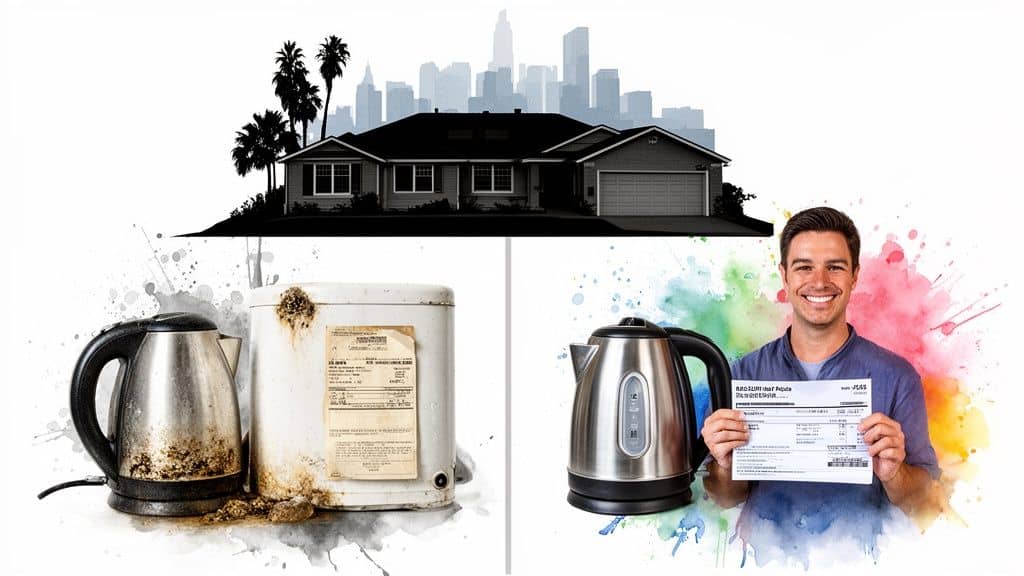
If you're constantly scrubbing chalky white residue off your faucets or wondering why your new dishwasher leaves spots on glasses, you're dealing with hard water. It’s a common issue caused by high levels of dissolved minerals—mostly calcium and magnesium—in our local water supply.
These minerals form limescale, a stubborn, chalky buildup. This limescale is the real villain, quietly damaging your home’s plumbing and every appliance that uses water.
Practical Example: Think about your water heater. As scale builds up inside, it creates a layer of mineral "insulation." This forces the unit to work much harder to heat the water, shortening its lifespan and inflating your energy bills.
The Problem with Hard Water
Hard water isn't just a minor annoyance; it carries real costs that add up. The constant battle against soap scum and mineral deposits is a clear sign that your home could benefit from treating its water at the source.
Here’s the value you gain by addressing hard water:
- Appliance Longevity: Limescale shortens the life of dishwashers, washing machines, coffee makers, and especially water heaters. Soft water protects these investments.
- Improved Cleaning Efficiency: Hard water minerals interfere with soap, preventing it from lathering. With soft water, you use far less product to get things clean.
- Brighter Laundry and Spotless Dishes: Soft water eliminates the mineral deposits that leave clothes rough and glassware cloudy.
- Clearer Plumbing: Over years, scale can build up inside pipes, restricting water flow and leading to clogs. A softener prevents this.
This isn't just a local issue. The United States Geological Survey reports that 85% of all states have hard water. This has created a massive market; the global water softener industry was valued at roughly $3.5 billion in 2024 and continues to grow. For Los Angeles residents, tackling hard water is one of the most effective ways to protect appliances and manage utility costs. You can find more details in industry reports.
Actionable Insight: Before deciding, test your home's specific water hardness level. This single piece of data is the key to calculating the financial value a softener can offer by solving your exact water quality problems.
To weigh the pros and cons for your situation, here's a quick overview of the key factors.
Water Softener Decision Matrix: A Quick Comparison
| Factor | Impact on Your Home | What This Means for You (The Value) |
|---|---|---|
| Appliance Lifespan | Prevents scale buildup in water heaters, dishwashers, and washing machines. | Fewer costly repairs and replacements, extending the value of your investments. |
| Cleaning Efficiency | Allows soaps and detergents to lather effectively, requiring less product. | Lower monthly spending on cleaning supplies and personal care items. |
| Upfront Cost | Requires an initial investment for the unit and professional installation. | A budget consideration that is offset by long-term savings. |
| Ongoing Maintenance | Salt-based systems need regular salt refills and periodic service. | A recurring task and expense to ensure the system operates efficiently. |
This table simplifies the decision. You're trading an upfront cost and minor maintenance for significant long-term protection for your home and savings in your wallet.
What You Actually Gain with Soft Water
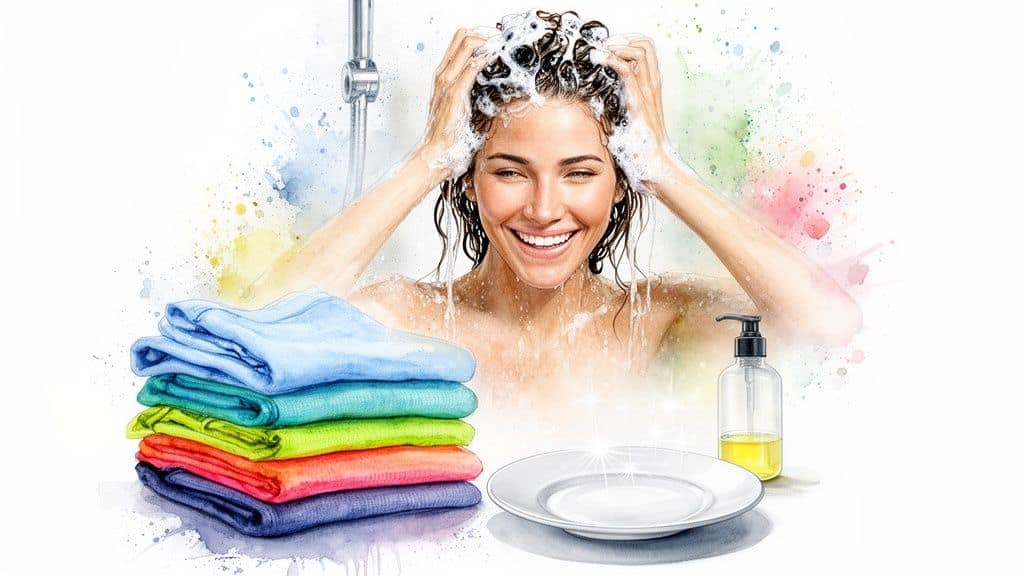
It’s one thing to discuss the problems of hard water, but the real benefit comes from experiencing the daily difference soft water makes. This isn't just about avoiding future repairs; it's about actively improving how your home functions.
One of the biggest wins is how a softener protects your appliances. The chalky limescale from hard water forces them to work harder, use more energy, and fail prematurely.
Extend Appliance Life and Boost Efficiency
Your water heater is a perfect example of this silent damage. Limescale coats the heating elements, acting like insulation. The heater has to fight this barrier, driving up its energy use. Studies show this can inflate a water heater's energy consumption by as much as 30%—a hidden tax on your utility bill.
When you install a water softener, you stop that scale from forming. It’s a simple, preventative step that can significantly extend the life of your major appliances:
- Water Heaters: Run at peak efficiency, saving you money on energy and delaying costly replacements.
- Dishwashers: Detergent works better, giving you spotless glassware without a cloudy film and protecting internal parts.
- Washing Machines: Clothes wash cleaner, feel softer, and keep their color longer. Your machine is also safe from scale-related clogs and breakdowns.
In a modern home, this isn't a luxury; it's smart asset protection that provides real value.
Save Money on Soaps and Detergents
Ever feel like you’re using a ton of soap just to get a decent lather? You can thank hard water. Calcium and magnesium react with soap to create a gunky soap scum that kills suds.
Soft water eliminates this problem. Soaps and detergents work as intended, producing a rich lather with less product. It’s common for homeowners to cut their use of laundry detergent, shampoo, and dish soap by up to 50%.
Actionable Insight: Once your softener is installed, start by using half the detergent you normally would for laundry and dishes. You’ll likely find it’s more than enough, and you'll start saving money immediately.
Enjoy Softer Skin and Shinier Hair
The difference soft water makes in your personal care is something you can feel. Hard water minerals leave an invisible film that can clog pores, aggravate dry skin conditions, and leave your skin feeling tight.
It does the same to your hair, coating each strand and leaving it dull and brittle. Soft water rinses completely clean. It leaves your skin feeling soft and genuinely clean. Your hair will be shinier and more manageable. This daily benefit is a luxury you'll quickly value.
Understanding the Costs and Commitments of Ownership
The benefits of soft water are clear, but it's important to understand the full picture of ownership. This includes the initial price, ongoing costs, maintenance, and environmental considerations.
The first step is the upfront investment, which includes the equipment and professional installation. Depending on the system and your home's size, this can range from several hundred to a few thousand dollars.
Breaking Down the Ongoing Expenses
Once the system is in, the costs don't stop. For salt-based systems—the most common type—you have recurring expenses.
The main ongoing purchase is salt. The system uses it to recharge the resin beads that remove hard minerals. How often you need a new bag depends on your water's hardness and your family's water usage.
Practical Example: A family of four in a Los Angeles neighborhood with moderately hard water (around 12 grains per gallon) might spend $10 to $20 per month on salt. Over a year, that's an extra $120 to $240 to budget for.
On top of salt, the system uses water during its regeneration cycle to flush out the captured minerals. While modern high-efficiency models are much better about this, it’s still an operational cost to consider, especially in Southern California.
Maintenance and Environmental Considerations
A water softener isn't a "set and forget" appliance. To keep it working correctly, you'll need to perform periodic maintenance. At a minimum, this means cleaning the brine tank once a year to remove any "salt bridges" or mushy buildup that can hinder performance.
There's also an environmental aspect. The salty wastewater from regeneration goes into the municipal sewer system. In areas like California that rely on reclaiming wastewater for irrigation, high sodium levels can be a problem, increasing water treatment costs. This has led some communities to regulate certain types of softeners.
Health Considerations with Sodium
Finally, let's talk about sodium. A salt-based softener works by swapping hardness minerals (calcium and magnesium) for an equal amount of sodium. The harder your water, the more sodium is added.
For most people, the amount of sodium is negligible and not a health risk. However, if someone in your household is on a strict low-sodium diet, it's something to be aware of.
- Actionable Insight: If sodium intake is a concern, there’s an excellent solution. Pair your whole-house water softener with a reverse osmosis (RO) system under your kitchen sink. The RO filter will remove the extra sodium (along with other impurities) from your drinking and cooking water. This gives you the best of both worlds: protected plumbing and pure, great-tasting water on tap.
Comparing Water Softener Technologies and Alternatives
Choosing a water treatment system isn't one-size-fits-all. The right choice depends on your goals. Are you trying to stop scale buildup completely, or do you want to prevent scale without adding sodium? Let's walk through the main technologies.
Salt-Based Ion-Exchange Softeners
When people talk about soft water, they’re almost always referring to the results from a traditional salt-based ion-exchange water softener. This is the only technology that physically removes the hard minerals that cause problems.
Water passes through a tank of resin beads that attract hardness minerals. As minerals stick to the beads, a small amount of sodium is released. The result is genuinely soft water, which provides a silky-smooth feeling, spot-free dishes, better soap lather, and appliance protection.
- Who it's for: Anyone who wants to eliminate scale completely and enjoy all the benefits of soft water.
- Practical Example: A family in a Los Angeles home with very hard water (15+ GPG) sees a cloudy film on their new dishwasher's glasses. A salt-based softener is the only solution that will physically remove the minerals causing this.
- Key trade-offs: These systems require periodic salt additions. They also use water to "recharge" the resin and add a small amount of sodium to the water.
Salt-Free Water Conditioners
If you're focused on preventing scale but want to avoid salt and sodium, a salt-free water conditioner is a great alternative. It’s important to know that these systems condition water; they don't soften it.
They use a process called Template Assisted Crystallization (TAC) that changes the structure of hardness minerals. The minerals are transformed into microscopic crystals that flow through pipes without sticking. While this effectively prevents scale inside plumbing, the minerals are still present. You won't get the "soft water" feel and may still see water spots on surfaces.
Key Takeaway: The "best" system depends on your priority. If you want to completely eliminate scale and all its effects, a salt-based softener is the proven solution. If your primary goal is scale prevention without adding sodium, a salt-free conditioner is a viable alternative.
This flowchart can help you visualize the decision points.
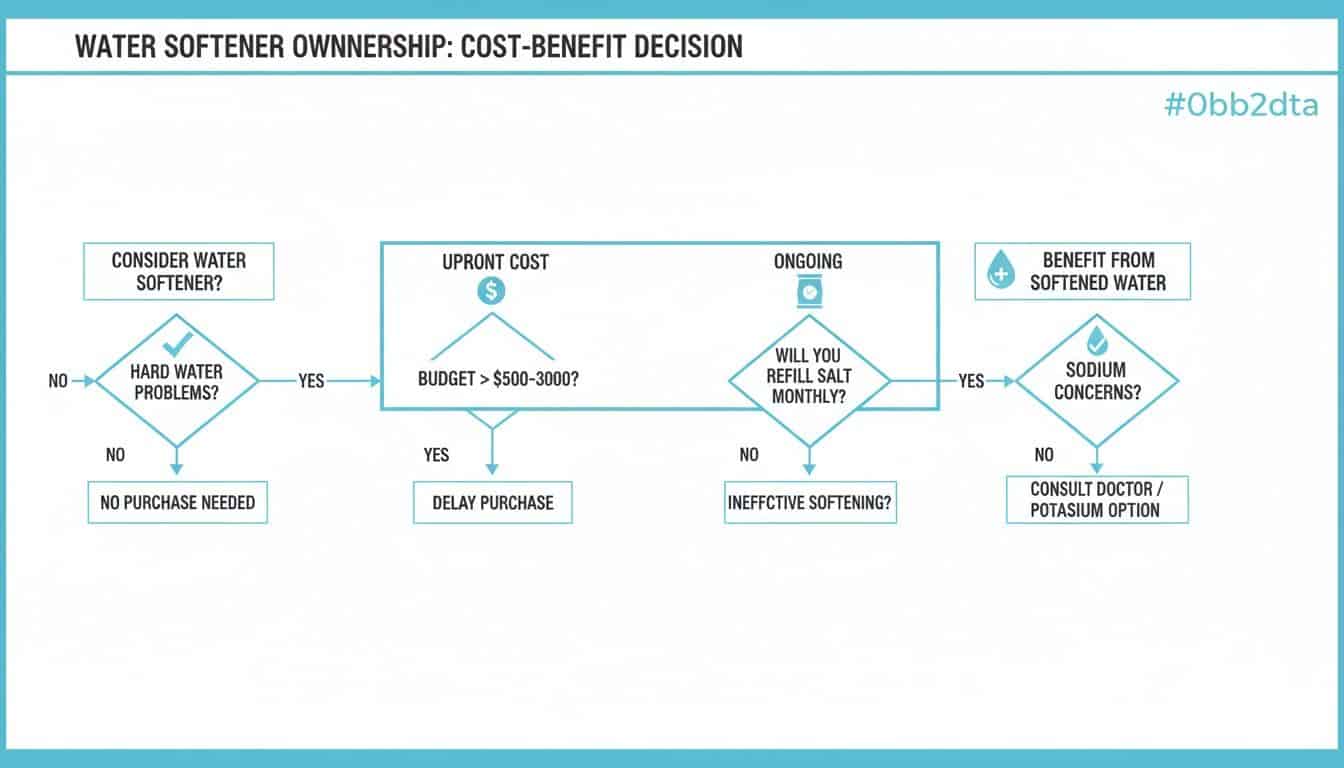
As you can see, a salt-free system offers lower maintenance, but only a salt-based unit addresses the full spectrum of hard water problems.
Smart Water Softeners
The latest evolution in water treatment is the smart water softener. These are typically salt-based systems enhanced with smart technology, giving homeowners more control and efficiency.
With a smart softener, you can monitor everything from a smartphone app, track water consumption, get low-salt alerts, and even receive leak notifications. This automation is a game-changer. The market for smart water softeners is projected to grow by $317.8 million between 2026 and 2030 due to their convenience.
- Who it's for: Tech-savvy homeowners, busy families, or anyone who values proactive home management.
- Actionable Insight: If you travel or want a "set it and forget it" system, a smart softener's remote monitoring and leak detection provides peace of mind. It protects you from potential water damage and ensures your system runs at peak efficiency.
Beyond these systems, you might also explore various water filtration methods if you have other concerns, like improving taste or removing specific contaminants.
Calculating Your Return on Investment
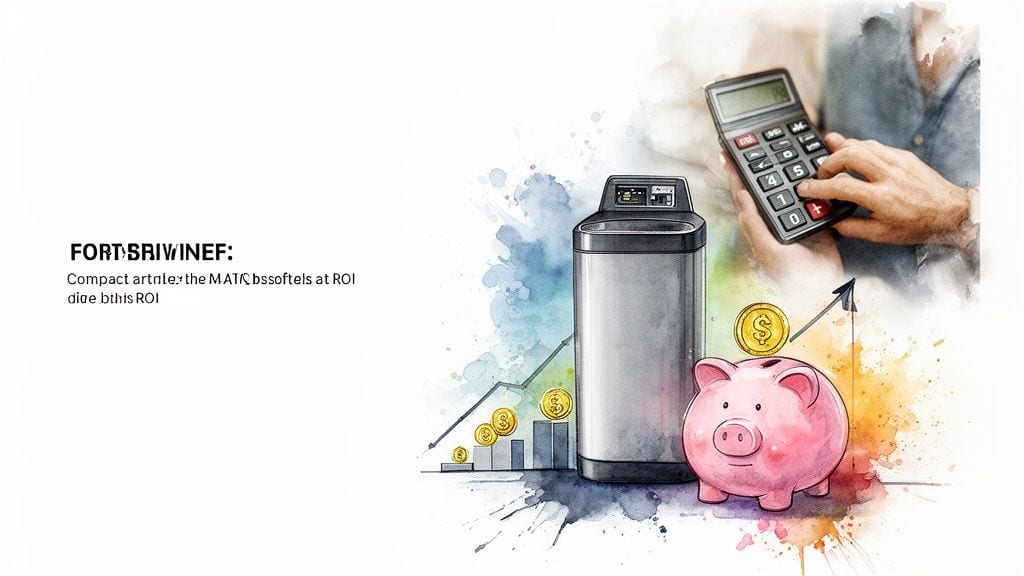
It’s easy to focus on the initial price of a water softener, but it’s better to view it as a home investment. The real question is: when does it start paying you back?
To figure this out, add up the total cost of ownership—the unit, installation, and ongoing costs like salt. This is your initial investment.
Now, calculate the savings. A water softener actively puts money back in your pocket in several key ways.
Quantifying Your Savings
The biggest financial value comes from protecting your appliances. Hard water is brutal on anything that uses hot water, leading to early failure. A softener can easily extend their lifespan, saving you from costly replacements.
You'll also immediately notice a difference in your use of soaps and detergents. Soft water lets them clean effectively, meaning you can cut usage by as much as 50%.
Finally, your water heater will run more efficiently—up to 30% more, in some cases—without a crust of mineral scale. That translates directly to a lower monthly energy bill and is a key part of overall smart home savings.
An Example ROI for a Los Angeles Family
Let's use a practical example. Imagine a family of four in a Los Angeles home with moderately hard water (15 GPG).
- Appliance Savings: Avoiding one premature water heater replacement over a decade averages out to $150 per year in savings.
- Detergent Savings: Cutting soap and detergent use in half could easily save around $250 per year.
- Energy Savings: A 25% boost in water heater efficiency could trim their energy bill by about $100 per year.
Total Annual Savings: $500
If a quality system costs around $2,500 for the unit and installation, the payback period is just five years. From year six onward, that system generates $500 in pure savings annually. This clear financial benefit is why demand for water softeners is growing worldwide, as confirmed by these market growth projections.
When you see how quickly the savings add up, you'll start seeing a water softener not as a cost, but as a smart investment in your home.
Your Decision Checklist for Choosing the Right System
Let's cut through the noise and figure out which water treatment system is right for you. It boils down to answering a few straightforward questions. This is your game plan to find a system that provides real value.
1. Test Your Water Hardness
First, you must know what you're dealing with. Before buying a system, get your water tested. The most important number is its hardness level, measured in Grains Per Gallon (GPG). This data point is the foundation for your decision.
- Practical Example: A home in Los Angeles with 7 GPG has moderately hard water and might do great with a smaller system. A home with 18 GPG has very hard water and will need a more powerful solution. A professional water test gives you the exact number needed to make a smart choice.
2. Define Your Primary Goals
What problem are you trying to solve? Your answer will point you to the right technology.
- Goal A: Appliance Protection & "Soft Water" Feel: If you want to stop scale, protect your plumbing, and get that classic silky-smooth water, a traditional salt-based softener is your best option. It provides total scale removal.
- Goal B: Scale Prevention Without Salt: If your main goal is to stop scale buildup inside pipes and your water heater without dealing with salt or sodium, a salt-free conditioner is what you’re looking for.
3. Evaluate Your Budget and Maintenance Level
A smart investment balances today's cost with tomorrow's effort. Consider both the upfront price and the time and money you're willing to spend on maintenance.
Actionable Insight: A salt-based system typically costs less upfront but has the recurring cost of salt. A salt-free conditioner has a higher initial price but has virtually zero ongoing costs. There's no wrong answer—it's about which financial approach fits your life better.
4. Compare and Select the Right Technology
With your water data, goals, and budget in mind, the final choice becomes clearer.
- Traditional Salt-Based System: The go-to choice for complete scale elimination and all the benefits of truly soft water.
- Salt-Free Conditioner: The perfect solution for homeowners who prioritize low maintenance and want effective scale prevention without adding salt.
- Smart Softener: A fantastic upgrade for those who love tech, convenience, and automated alerts.
Following these steps ensures you match a specific solution to your needs. For a personalized recommendation, review our guide on choosing a whole house water softener system. This simple framework will help you find a system that provides tangible value for years.
Frequently Asked Questions About Water Softeners
Even after reviewing the pros and cons, a few questions often remain. Let's clear up the most common ones.
What Is a Water Softener Versus a Water Filter?
It's easy to confuse these, but they do completely different jobs. A water softener has one mission: to remove the minerals (calcium and magnesium) that cause destructive scale buildup. Think of it as protecting your home's plumbing and appliances.
A water filter is about improving the quality of the water you use and drink. It removes things like chlorine, sediment, lead, or pesticides that affect taste, smell, and safety. They serve separate but complementary roles.
Practical Takeaway: A softener keeps your water heater from being ruined by limescale. A carbon filter removes the "swimming pool" smell from your tap water. Many homeowners use both to get complete water quality.
Will a Water Softener Make My Drinking Water Salty?
This is the biggest myth. When a water softener works correctly, it adds a tiny, untraceable amount of sodium. The amount is so small it's almost always impossible to taste. If you ever notice a salty taste, it's usually a sign something needs adjusting. You can learn more about why your water might taste salty with a water softener and how to fix it.
That said, if you're on a strict low-sodium diet or want the purest drinking water, there's an easy solution. We often recommend pairing a whole-house softener with a reverse osmosis (RO) system at the kitchen sink. The RO system removes that small amount of added sodium and other impurities.
How Do I Know What Size Water Softener I Need?
Correct sizing is critical for efficiency. It's not one-size-fits-all. To determine the right size, you need two key pieces of information:
- Your home's specific water hardness level (GPG).
- Your household's average daily water consumption.
If the unit is too small, it will regenerate too often, wasting salt and water. If it's too big, it will be inefficient. The only way to be certain is to have a professional test your water and assess your usage.
Ready to figure out the perfect water solution for your Los Angeles home? The experts at Praz Pure Water, Inc. are here to provide a detailed water assessment and a recommendation that makes sense for you. Contact us today to get started!