
A whole house water filter offers more than just better-tasting water; it provides peace of mind. Imagine every faucet in your home delivering safer, cleaner water. This single upgrade protects your plumbing and appliances from hard water damage, helps soothe your skin and hair by removing harsh chlorine, and ensures every drop entering your home is purified. It's a comprehensive solution for a healthier, more efficient home.
What a Whole House Water Filter Can Do for You
Imagine turning on any tap in your home—the kitchen sink, the shower, the bathroom faucet—and getting purified, great-tasting water every single time. That’s the reality a whole-house water filter delivers. Unlike a simple pitcher that only handles a small amount of drinking water, this system connects directly to your home's main water line.
It acts as a gatekeeper, cleaning all the water before it runs through your pipes. For homeowners in Los Angeles, this is a game-changer. It tackles everything from the distinct chlorine taste of city water to the unseen damage caused by hard water minerals.
A Comprehensive Upgrade for Your Home
By treating water at the source, a whole-house system offers a level of protection that individual, point-of-use filters just can't compete with. Think of it this way: a faucet filter is like having a security guard at one door. A whole-house system is like having a full security detail around the entire property.
This "perimeter defense" approach brings major advantages:
- Consistent Quality Everywhere: The water you shower with becomes just as clean and pure as the water you drink.
- Appliance Protection: Your washing machine, dishwasher, and water heater are shielded from the sediment and scale that can shorten their lifespan.
- Healthier Living: You reduce exposure to contaminants not just from drinking, but also from what you absorb through your skin or inhale as steam in a hot shower.
Actionable Insight: The next time you shower, notice if you smell chlorine. That's a sign that your skin and lungs are being exposed to it. Filtering your home's water eliminates this exposure from every tap. You can learn more about how water filtration works to remove everything from sediment and heavy metals to chemicals like chlorine.
A whole house water filter is more than a convenience—it's an investment in your home’s infrastructure and your family's well-being. It transforms your relationship with water, making every interaction cleaner and safer.
In this guide, we'll break down the tangible benefits of a whole-house filter. You'll see how this one upgrade can lead to healthier skin, appliances that last longer, and significant long-term savings.
Improve Your Family's Health and Wellness
While better-tasting drinking water is an obvious perk, the true health benefits of a whole house water filter extend to every tap in your home. From cooking and bathing to washing your hands, you constantly interact with your home's water. A point-of-entry system filters out a wide range of contaminants like sediment, heavy metals, and chemicals like chlorine right as the water enters your house, before they can reach you.
Softer Skin and Healthier Hair
Do you or your family struggle with dry, itchy skin or brittle hair? The culprit might not be your soap or shampoo—it could be the water you shower in every day. Chlorine, a common disinfectant in city water, is known for stripping the natural, protective oils from your skin and hair.
A whole-house filter removes these harsh irritants at the source, and the change is often noticeable almost immediately.
- Less Dryness: Skin feels softer and more hydrated, providing relief for those with sensitive conditions.
- Healthier Hair: Hair can regain its natural silkiness and become more manageable without the daily chemical exposure.
- Reduced Irritation: Many people find that post-shower redness and itchiness simply disappear.
Practical Example: A family in Los Angeles installed a whole-house filter and noticed their child's eczema flare-ups became far less frequent. Simply removing chlorine and other irritants from their bathwater created a gentle, everyday health victory.
Creating a Healthier Home Environment
The benefits of removing chlorine don’t stop at your skin. When you take a hot shower, chlorine can vaporize, and you can inhale it. By filtering it out first, you’re not just taking a cleaner shower—you’re breathing cleaner air in your bathroom and reducing potential respiratory irritation.
This is why point-of-entry systems are so effective; they treat 100% of your home's water. It's a comprehensive solution that protects your family from contaminants like chlorine, which some studies have linked to 20-30% higher rates of eczema in children.
Of course, clean water is just one part of a truly healthy home. Taking a similar whole-house approach to your air quality can make a huge difference, too. You can learn more by Finding the Best Whole House Air Purifiers for a Healthier Home.
Actionable Insight: Pay attention to how your skin feels after your next shower. If it's tight and dry, your water could be the problem. A whole-house filter is a direct solution to improve skin and hair health daily.
Protect Your Plumbing And Expensive Appliances
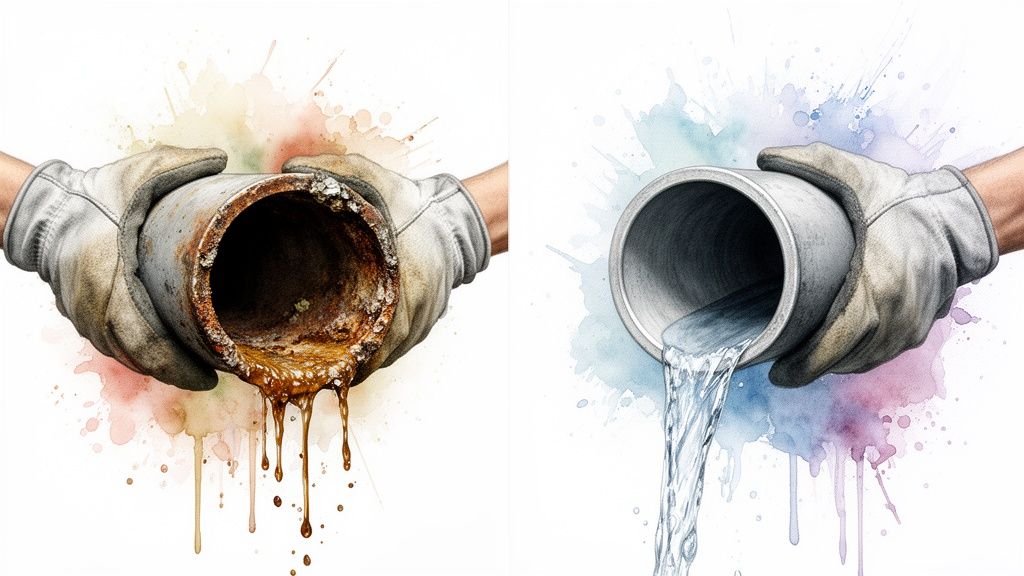
Think of hard water flowing into your home like cholesterol for your plumbing. Over time, dissolved minerals like calcium and magnesium silently build up inside your pipes, forming a tough, rocky scale. This buildup slowly chokes off water flow, putting a huge strain on your entire system.
One of the most powerful benefits of a whole-house water filter is its ability to protect your expensive investments from this unseen damage. By capturing these minerals right where the water enters your home, a filter acts as a 24/7 guard for your home’s circulatory system.
The Hidden Costs Of Hard Water
When your pipes and appliances are clogged with scale, everything has to work harder. Your water heater uses more energy to heat water through that insulating layer of rock. Your dishwasher struggles to get dishes clean, and your washing machine’s internal parts wear out far too soon.
This strain leads directly to bigger utility bills and surprise breakdowns that can set you back thousands. Filtering your water provides immediate relief to these essential systems. If you're wrestling with this common problem, you can learn more in our guide on how to get rid of hard water.
The secret is out, and it's why the whole-house water filter market is projected to grow by 5.5% annually between 2025 and 2033. Builders are even starting to include these systems as standard, knowing they can extend appliance life by 30-50%. For Los Angeles homeowners dealing with notoriously hard water, that's a huge deal—especially when scale can drive up energy bills by as much as 20%.
Hard Water vs. Filtered Water: The Impact on Your Home
To see just how much of a difference filtration makes, let's look at a side-by-side comparison of how hard water and filtered water affect key areas of your home.
| Area of Impact | Effect of Untreated Hard Water | Benefit of Whole House Filtration |
|---|---|---|
| Pipes & Plumbing | Gradual buildup of mineral scale, leading to clogs, low pressure, and potential pipe damage. | Prevents scale accumulation, maintaining clear pipes and strong, consistent water pressure. |
| Water Heater | Scale forms on the heating element, forcing it to work harder and increasing energy bills. | Keeps the heating element clean, allowing it to operate at peak efficiency and save energy. |
| Dishwasher | Leaves spots and film on glassware; soap scum clogs spray arms, reducing cleaning power. | Delivers spot-free dishes and allows the dishwasher to run smoothly and effectively. |
| Washing Machine | Minerals cause stiff, dull laundry and can damage internal components over time. | Results in softer, brighter clothes and protects the machine from premature wear and tear. |
This table makes it clear: the effects of hard water add up, costing you money and creating headaches across the board. Installing a whole-house filter is a proactive solution that safeguards your entire home.
Practical Example: A homeowner was replacing his water heater every few years because of severe scale buildup. Fed up with the recurring expense, he invested in a whole-house filtration system. The result? His next water heater ran perfectly for over a decade without a single issue, saving him thousands in replacement costs.
Filtration stops being a luxury and becomes a smart financial strategy. It’s not just another bill; it’s an investment that pays you back by preventing those costly, unexpected repair calls.
By stopping scale before it ever has a chance to form, you ensure your appliances run the way they were designed to. You'll save money every month and dramatically extend their lifespan—a foundational benefit that delivers both financial security and true peace of mind.
Finally, Water That Tastes and Smells Great
Let's be honest, one of the first things you'll notice—and love—about a whole-house water filter is the massive upgrade in how your water tastes and smells. Ever get that faint "public pool" scent from your tap? That's chlorine, the disinfectant used to treat our municipal water.
While chlorine is vital for keeping our water safe on its journey to our homes, it definitely leaves its mark. It can make your morning coffee taste a little off, flatten the flavors in a homemade soup, and turn your ice cubes cloudy. It’s a subtle but constant reminder that you're not getting the best-tasting water you could be.
Making Everyday Life More Refreshing
A whole-house filter changes the game entirely. It works as a gatekeeper for your entire home, stripping out chlorine and other funky-tasting impurities right where the water line enters your property. This isn't just about one "drinking water" tap; it means every faucet, from the kitchen to the bathroom, delivers genuinely pure water.
Suddenly, your daily routines get a major boost:
- Better-Tasting Drinks: Your coffee and tea will be richer and more flavorful, without any chemical undertones.
- Superior Cooking: Imagine making pasta or soups where the only flavors you taste are the ones you put in.
- Crystal-Clear Ice: Say goodbye to cloudy, odor-trapping ice cubes. Your drinks will look and taste cleaner.
Practical Example: Think about a local coffee shop that installs a high-quality filtration system. They instantly notice their espresso is less bitter and their tea is brighter—and customers taste the difference. You can bring that same standard of quality into your own kitchen for every meal and drink.
Of course, other factors can sometimes influence your water's taste. For instance, if you've ever wondered why your water has a salty flavor after being softened, we have a resource that dives into that. You can learn more in our guide explaining why water tastes salty with a water softener.
At the end of the day, when your water is crisp, clean, and refreshing, everyone in the family is more likely to drink more of it. That’s perhaps the best benefit of all—turning a basic necessity into something you genuinely enjoy.
Unlock Significant Long-Term Cost Savings
Let's be honest, a whole-house water filter is an investment, not a small purchase. But it's one of those rare home upgrades that starts paying you back almost immediately. When you look past the initial price tag, you'll see it’s less of an expense and more of a smart financial move that saves you money in ways you might not expect.
The most obvious win? You can finally stop buying bottled water. Imagine having pure, great-tasting water from every single tap in your house. The weekly trips to lug home cases of plastic bottles are over. This alone can save a family hundreds of dollars a year, not to mention the positive impact on the environment.
This is the core reason for the savings: the dramatic improvement in your water quality.
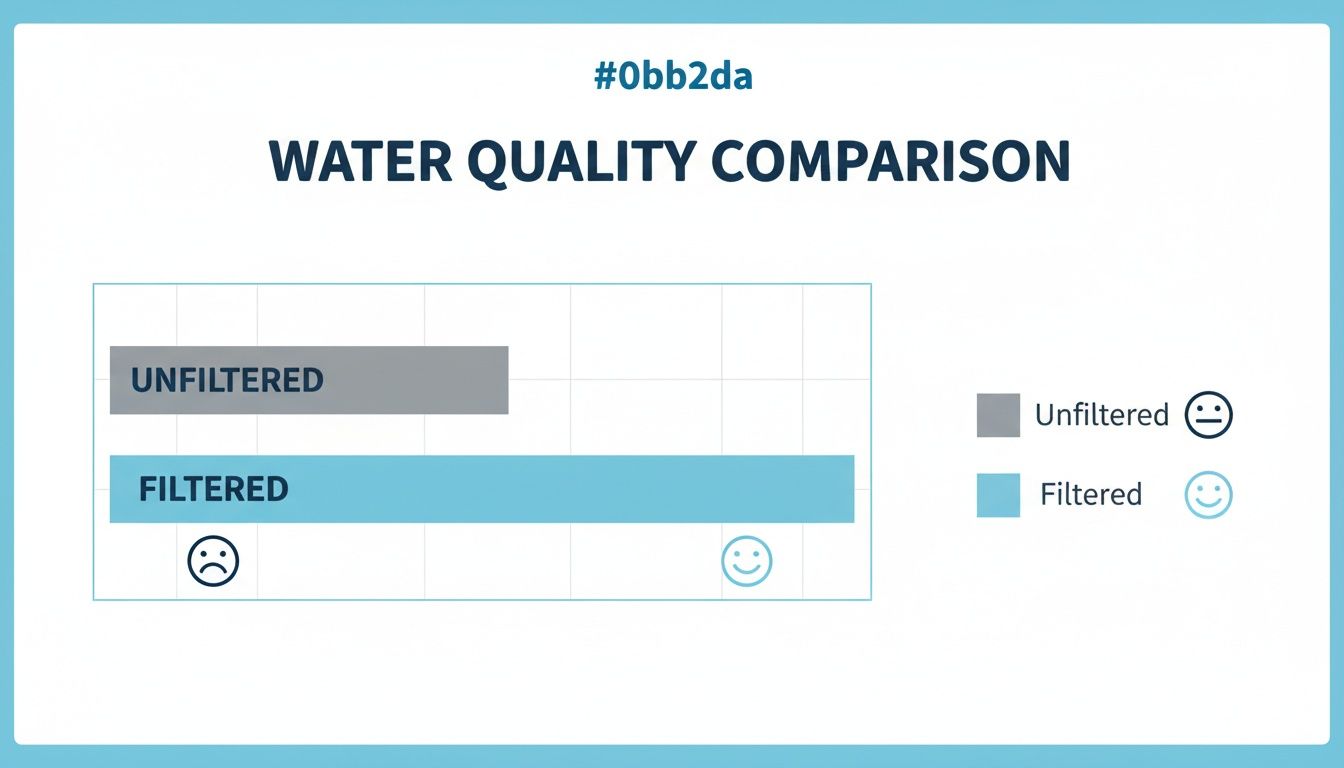
As you can see, filtration gets rid of the very things that secretly drive up your household expenses, from wrecking your appliances to making you use more soap.
Calculating Your Return on Investment
The savings snowball from there. Softened, filtered water is amazing with soaps and detergents. You’ll find you need way less shampoo, laundry detergent, and dish soap to get a rich lather and a proper clean. That’s a direct reduction in your monthly grocery bill.
Even better, by stopping mineral scale buildup before it starts, your appliances can finally run the way they were designed to. Your water heater, dishwasher, and washing machine won't have to fight against crusty buildup, which means they use less energy. This translates directly into lower utility bills and helps you sidestep those dreaded (and expensive) emergency calls to the plumber.
Actionable Insight: For one week, track how much you spend on bottled water, and look at how much soap and detergent you use. A whole-house filter reduces these costs directly, offering a clear return on your investment.
There’s also a huge environmental payoff. Every day in the U.S., we throw away about 60 million plastic water bottles. A home with a filtration system can slash its contribution to that waste by 90%. With solid warranties and our proactive support, many of these systems pay for themselves in under two years through all these combined savings. It’s a financially sound decision for both families and businesses.
You can learn more about the water filter market and its environmental impact on Technavio.com.
How to Choose the Right Filtration System
Not all water filters are created equal, and simply picking one off the shelf is a surefire way to be disappointed. To really tap into all the benefits we've been talking about, you have to match the system to your home's unique needs.
Think of it like getting a prescription. You wouldn't just grab a random bottle of pills; you need a doctor to diagnose the specific problem first. The exact same logic applies to your water. That’s why the first, and most important, step is always a professional water assessment. This isn’t a sales tactic—it's an essential diagnostic tool.
Understanding Your Home's Water Profile
A water assessment is like getting a detailed lab report for your plumbing. It tells you precisely what’s in your water, answering the critical questions that will point you toward the right solution.
- What contaminants are we dealing with? An assessment will pinpoint specific culprits like high chlorine levels, sediment, or heavy metals common in Los Angeles water.
- Just how hard is your water? It measures the exact mineral concentration, telling you definitively whether you need a dedicated water softener.
- How much water does your family use? Your household size and daily habits determine the system capacity required to keep water pressure strong.
Without this data, you’re just guessing. A system built for mild water issues will be completely overwhelmed by LA's notoriously hard water, and an unnecessarily powerful system is just money down the drain.
Actionable Insight: The single most important step you can take is to schedule a professional water test. This data-driven approach ensures you invest in a system that solves your specific water problems effectively.
Key Terms to Know
Once you have your water report in hand, you can start shopping with confidence. You’ll probably see terms like multi-stage filtration. This just means the water passes through several different types of filter media—like a sediment filter followed by a carbon block—to tackle a wider range of contaminants.
Carbon filters, for instance, are the heroes when it comes to getting rid of that swimming-pool taste and smell caused by chlorine. They adsorb the chlorine molecules, leaving your water crisp and clean.
While we're focused on water here, this diagnostic-first approach applies to other home systems, too. You can see similar logic in these considerations for selecting a whole-house air purification system. No matter what, starting with a professional evaluation is the only way to guarantee your investment gives you the clean, pure water your family deserves.
Common Questions About Whole House Water Filters
It’s completely normal to have a few questions before you commit to a whole-house water filter. Even when the benefits are clear, you want to know what you’re really getting into. Let's tackle some of the most common things homeowners ask us about.
One of the biggest worries we hear is about the upkeep. The good news is that modern systems are built to be pretty hands-off. The most common task you’ll ever have to do is swap out a filter cartridge, which is a simple job that keeps your system working perfectly and your water fresh.
How Much Maintenance Do These Systems Require?
Honestly, the maintenance is surprisingly light, but it is crucial for keeping the system effective. For most setups, you're just looking at a filter change every 3 to 12 months. The exact schedule really depends on how much water your family uses and the quality of the water coming into your Los Angeles home.
Some of the more advanced systems even have self-cleaning features or use filter media that can last for years before needing a professional to service it. When we handle an installation, we make sure you have a clear, simple maintenance plan for your specific unit so you always know what to do and when.
Actionable Insight: When choosing a system, ask about the filter replacement schedule and cost. This helps you understand the long-term commitment and budget accordingly. A few minutes of your time, a couple of times a year, is all it takes to protect every drop of water in your home.
Will a Filter Lower My Water Pressure?
This is a big one, and the answer is no—you should not see any significant drop in water pressure. That is, as long as the system is sized correctly for your home's plumbing and your family’s daily water needs. This is exactly why getting a professional assessment before you buy is so important.
When pressure problems do pop up, it’s almost always for one of two reasons that are easy to avoid:
- The system is too small for your home's flow rate.
- The filter is clogged because it hasn't been changed on schedule.
With the right-sized unit and basic maintenance, you'll keep that strong, steady flow you're used to from every shower and faucet.
Filter vs. Water Softener: What Is the Difference?
This is a fantastic and very common question. Think of it this way: a water filter is like a sieve, designed to catch and remove a wide variety of contaminants. Its job is purification—pulling out things like chlorine, sediment, pesticides, and other chemicals that make your water taste and smell bad.
A water softener, on the other hand, has a very specific mission: it removes the hard minerals—mainly calcium and magnesium—that create that crusty, destructive scale buildup in your pipes and on your appliances.
For many homeowners here in Los Angeles, the ultimate solution is a combo system that both filters and softens the water. This gives you the best of both worlds: pure, clean water that also protects your home from scale.
Ready to experience the benefits of pure, clean water in every room of your home? The experts at Praz Pure Water, Inc. can provide a personalized water assessment and recommend the perfect system for your needs. Contact us today to get started!