
Opening your dishwasher to find a cloudy, chalky film on your "clean" dishes is frustrating. The good news is that the cause is almost always one of two things: hard water minerals or undissolved detergent. Both are completely fixable.
This guide provides clear, actionable steps to diagnose the problem and get your glassware sparkling again. By the end, you'll know exactly what to do for immediate results and how to prevent the issue from ever coming back.
Your Quick Guide to Spotless Dishes
That frustrating white film is one of the most common dishwasher complaints. In fact, over 85% of homes in the U.S. have some level of hard water, the number one culprit behind this residue.
Let's use a practical example: If you live in a place with notoriously hard water, like Los Angeles, you're constantly fighting mineral buildup. The high concentration of minerals—mostly calcium and magnesium—gets left behind after the hot drying cycle, creating that stubborn film. You can read an in-depth look at how water quality impacts appliances for more detail.
But before blaming your water, remember it’s not the only possibility. Sometimes, the solution is much simpler and cheaper. Using too much detergent, or a powder that doesn't dissolve properly, can create a nearly identical-looking film. Your first actionable step is to tell the two apart.
Identifying the White Residue on Your Dishes
This simple table will help you diagnose the problem in seconds. Follow these steps to get a clear answer.
| Symptom | Likely Cause | Quick Test (Actionable Step) |
|---|---|---|
| Film is chalky and rough; won't easily rub off. | Hard Water Scale | Soak a cloudy glass in white vinegar for 5 minutes. If the film disappears, you have hard water. |
| Film feels soapy or slippery; can be wiped away with your finger. | Undissolved Detergent | Rub the film between your fingers. A slick, soapy feel points directly to detergent. |
Once you've run this quick test, you'll know exactly what you're up against and can jump to the right solution below, saving you time and guesswork.
Diagnosing the Residue
To make it even clearer, this flowchart breaks down the diagnostic process. It's a great visual shortcut to help you determine whether you're fighting mineral scale or just a soapy mess.
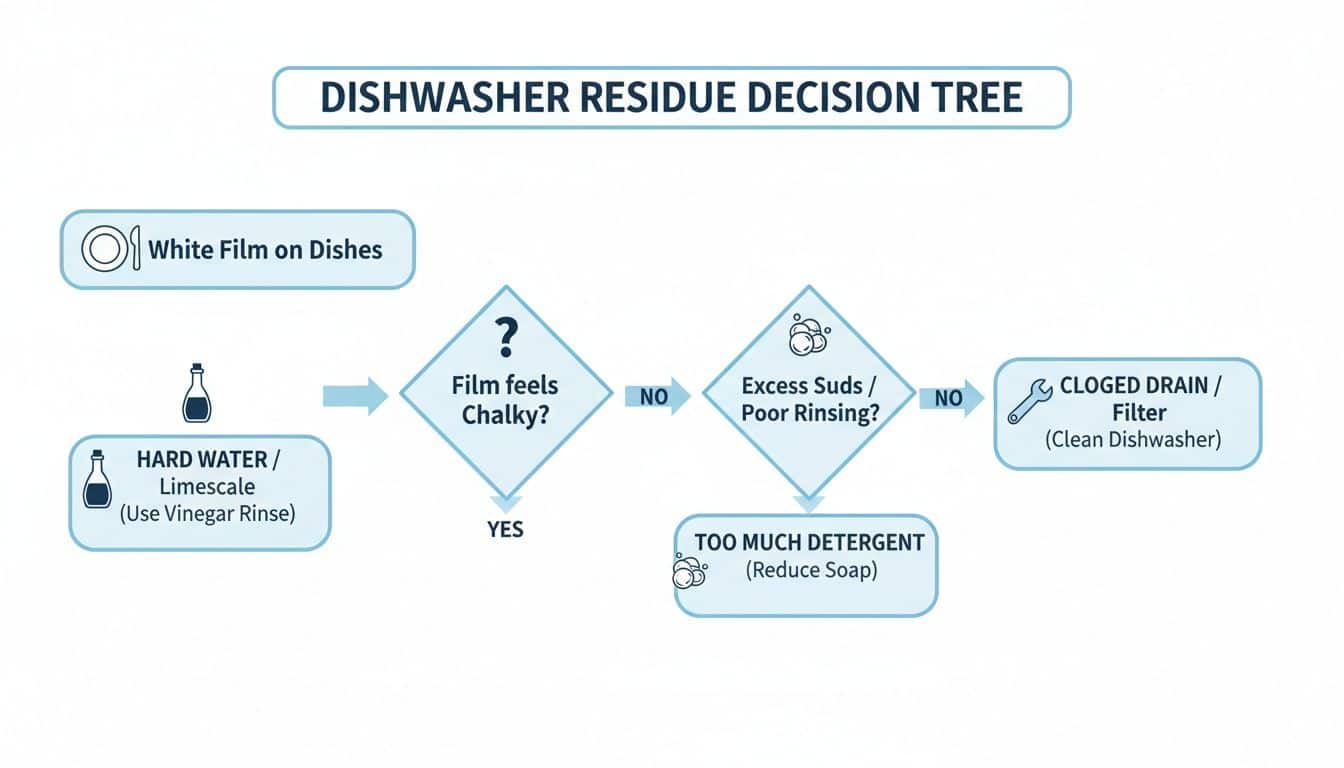
The feel of the residue is your most reliable clue. If it’s chalky and difficult to wipe away, you have a classic case of hard water deposits. On the other hand, if the film feels slippery and a bit soapy, the problem is almost certainly your detergent.
Knowing the difference is everything. The fix for hard water is completely different from fixing a detergent issue, so a correct diagnosis saves you time, money, and a lot of frustration.
Cause #1: Hard Water Minerals
If you ran the vinegar test and the white film vanished, congratulations—you've pinpointed the number one culprit: hard water.
So what is hard water? Here's a practical example: Imagine washing your car with slightly salty water. Even after it dries, you're left with a crusty layer of salt, right? Hard water acts in a similar way. It's loaded with dissolved minerals, primarily calcium and magnesium. When your dishwasher hits its high-heat drying cycle, the water evaporates, but those rock-hard minerals are left behind. They get baked onto your glasses and plates, leaving that frustrating chalky film.
This film is more than just a cosmetic problem. It's a warning sign of a bigger issue brewing inside your machine, one that can lead to costly repairs.
The Hidden Damage Limescale Does to Your Dishwasher
The same chalky residue on your dishes is also building up on the parts of your dishwasher you can't see. This buildup is called limescale, and it slowly but surely coats your dishwasher's heating element, chokes the tiny holes in the spray arms, and narrows the internal hoses.
Actionable Insight: Think of limescale as forcing your dishwasher to work overtime, every single cycle. This leads to poor performance, a higher chance of breakdowns, and can drastically shorten the life of your appliance. What starts as a simple annoyance can quickly turn into a thousand-dollar replacement.
This damage happens gradually. First, you notice the cloudy film. A few months later, caked-on food isn't coming off anymore—a classic sign the spray arms are clogged. The final stage is often a failed heating element, so caked with scale that it can no longer heat water effectively.
For a deeper look into dealing with this stubborn buildup, understanding the techniques for removing hard water stains from all sorts of surfaces can be incredibly helpful.
It's Not Just Your Dishwasher
If you have hard water, the dishwasher is probably just the most obvious battleground. You're likely fighting this war on multiple fronts. Does this sound familiar?
- Practical Example: You notice a stubborn white crust on your shower doors and faucets that's impossible to scrub off (soap scum).
- Practical Example: Your towels come out of the dryer feeling stiff and scratchy, more like sandpaper than soft cotton.
- Practical Example: Your skin feels tight and your hair looks dull right after a shower, because minerals interfere with soap and shampoo.
All these issues trace back to the same root cause: the mineral content of your water. While cleaning your dishwasher regularly will help manage the symptoms, the only way to truly stop the problem for good is to treat the water itself.
If you're ready to explore a permanent solution for your entire home, our guide on how to get rid of hard water is the perfect next step.
Cause #2: Undissolved Detergent
It’s easy to blame hard water, but sometimes the problem is what you’re putting in the dishwasher—the detergent. If the white film feels slippery or soapy, you're dealing with a detergent issue, not mineral scale.
Modern, high-efficiency dishwashers are fantastic for saving water. The trade-off is they create a delicate balance with your detergent. Use even a little too much, and the machine's shorter, water-saving rinse cycles just can't wash it all away. What’s left behind is that frustrating powdery film.
The Problem with Using Too Much Soap
We’ve all thought an extra dash of soap will get things extra clean. In a modern dishwasher, the opposite is often true. Piling in too much powder or using an oversized pod can easily overwhelm your machine's low-water design, creating a sudsy mess that clings to every surface.
This is a surprisingly common mistake. A 2022 survey revealed that 45% of U.S. consumers admitted to regularly overdosing their dishwasher detergent by 20-50%. This small error causes noticeable residue in 70% of modern low-water-use models, which need precise dosing to rinse cleanly. You can discover more insights about detergent use in modern dishwashers from onlinehsa.com.
Actionable Insight: Measure your detergent carefully. Start with the amount recommended on the box. If you still see a film, try cutting back by a small amount. The goal is to find the sweet spot where your dishes get sparkling clean with no leftover soap. For example, if the fill line is for "hard water," try filling it only halfway.
Why Eco-Friendly Detergents Can Sometimes Cause Film
Switching to a phosphate-free, "green" detergent is a great move for the environment. However, these formulas can sometimes struggle, especially in homes with hard water. For years, phosphates were the workhorse ingredient that neutralized hard water minerals, stopping them from settling on your dishes.
Without phosphates, many eco-friendly detergents can't combat those minerals as effectively. This can cause the minerals and the soap to team up, forming a milky residue.
But don't switch back just yet. A simple addition to your routine provides a powerful, actionable solution.
- Bring in a Rinse Aid: Think of a rinse aid as a squeegee for your dishes. It works by breaking the surface tension of water, causing it to "sheet" off in one smooth layer instead of beading up into droplets that dry into spots.
- How It Helps: By ensuring water drains away completely during the final rinse, the rinse aid takes any leftover detergent and loose minerals right along with it. This provides a spot-free, brilliant shine, even if you're using a phosphate-free detergent in a hard water area.
Your Action Plan for a Cleaner Dishwasher
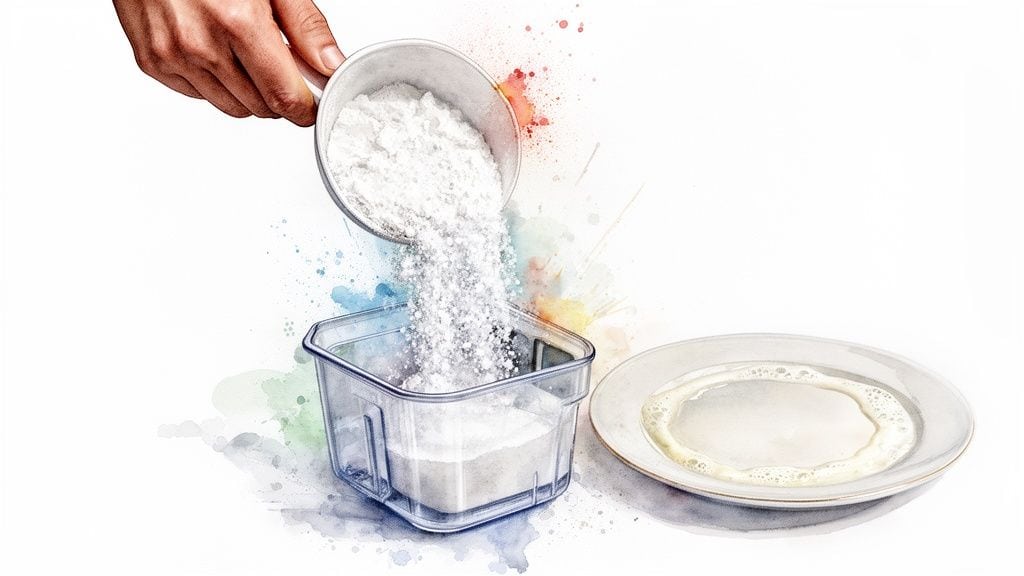
Alright, you’ve figured out what’s causing that white film. Now, let’s get rid of it for good. This is your immediate action plan to cut through existing gunk, whether it’s chalky hard water scale or soapy detergent residue.
Think of this as hitting the reset button. We're going to use two simple household staples—white vinegar and baking soda—to completely dissolve mineral deposits and leave your machine smelling fresh. It's a quick, satisfying process that delivers immediate value by restoring your dishwasher's performance.
Step 1: Prep the Dishwasher
First, give your cleaning agents a clear path to work their magic. A little prep ensures they can reach every nook and cranny.
Empty Everything Out: Pull out all the dishes, racks, and the silverware basket. You want a completely empty interior.
Clean That Filter: Find the cylindrical filter at the bottom of your machine, twist, and pull it out. Rinse it under hot water to remove trapped food. A clogged filter is a primary cause of dirty dishes.
Check the Spray Arms: Look at the small holes on the spray arms. If they look plugged, use a toothpick or small wire to gently poke them clean. This is key to restoring full water pressure.
Step 2: Run a Vinegar Cycle to Bust Through Minerals
White vinegar is a champion descaler. Its acetic acid is perfect for dissolving the calcium and magnesium deposits left by hard water.
- The Action: Place a dishwasher-safe bowl filled with two cups of white vinegar on the top rack of the empty dishwasher.
- The Value: Run a full cycle on the hottest setting. The hot water and vinegar will circulate everywhere, dissolving the limescale coating the heating element, walls, and spray arms.
This one step is your most powerful weapon against the chalky film from hard water. It's a deep clean that restores performance without harsh chemicals.
Step 3: Deodorize and Brighten with Baking Soda
After the vinegar cycle, baking soda will neutralize any lingering smells and scrub away remaining residue.
- The Action: Sprinkle one cup of baking soda evenly across the bottom of the dishwasher tub.
- The Value: Run another short cycle on a hot setting. The baking soda will leave your dishwasher smelling fantastic and looking noticeably brighter inside.
A consistent routine is everything for long-term success. Our guide to cleaning the inside of your dishwasher has more tips, but the monthly checklist below is your key to preventing future problems.
Your Step-by-Step Dishwasher Cleaning Routine
Here is a simple monthly checklist to keep your dishwasher in peak condition and prevent that annoying residue from ever coming back.
| Step | Action | Benefit (Value) |
|---|---|---|
| 1. Filter Check | Remove and rinse the filter under hot water. | Prevents food debris from redepositing on clean dishes. |
| 2. Spray Arm Inspection | Use a toothpick to clear any clogged spray arm jets. | Ensures powerful water flow for a thorough clean. |
| 3. Gasket Wipe-Down | Wipe the rubber door seal with a damp, soapy cloth. | Removes grime and prevents mold or mildew growth. |
| 4. Vinegar Rinse | Run an empty cycle with 2 cups of white vinegar on the top rack. | Dissolves mineral scale and sanitizes the interior. |
| 5. Baking Soda Refresh | Follow with a short, hot cycle with 1 cup of baking soda. | Deodorizes the machine and removes any lingering odors. |
Making this quick routine a monthly habit is the best long-term strategy. It takes less than five minutes of active work and saves you the headache of re-washing cloudy glasses ever again.
Long-Term Strategies for Crystal-Clear Dishes
Deep cleaning is a great reset, but the real goal is to prevent white residue from ever returning. This is all about prevention, and it just takes a few small tweaks to your routine.
Your most important habit is to always use a high-quality rinse aid. Think of it as your secret weapon against spots. Its job is to make water "wetter," allowing it to slide off dishes in a single sheet instead of beading up and leaving behind chalky mineral spots.
How you load the machine also makes a huge difference. Cramming dishes in too tightly blocks the water jets, trapping residue. Actionable Tip: Simply leave a little breathing room between items, and you’ll see a major improvement. For example, avoid nesting bowls together and ensure plates aren't touching.
Optimize Your Settings and Detergent
Your settings and detergent are a huge piece of the puzzle, especially with hard water. The problem worsened after 2010 when phosphates were banned from dishwasher detergents. Without them, even the best detergents struggle to combat hard water minerals.
Modern detergents can lose 20-30% of their cleaning power when dealing with calcium and magnesium. This is a primary reason why cloudy glasses are a persistent issue in an estimated 65% of homes with hard water. For a deeper dive, you can learn about appliance performance with modern detergents on geappliances.com.
To get ahead of this, implement these two simple, actionable habits:
Select Hotter Wash Cycles: Use the "heavy" or "pots and pans" setting. Hotter water dissolves detergent more effectively and helps break down mineral deposits so they wash away completely.
Run Hot Water First: Before starting the dishwasher, turn on the hot water at your kitchen sink and let it run until it’s hot. This ensures your dishwasher starts with hot water from the get-go, boosting its cleaning power immediately.
These small, consistent actions will help you manage the symptoms of hard water. It's also helpful to understand how water filtration works if you're curious about more permanent solutions.
The Ultimate Solution: A Whole-Home Water Softener
If you’ve tried everything—scrubbing the filter, switching detergents, using rinse aid—but that chalky film still clings to your dishes, it's time to solve the problem at its source. When temporary fixes aren't cutting it, you need a permanent solution.
For any home with hard water, the most effective and permanent answer is a whole-home water softener. This isn't just another cleaning hack; it's a fundamental upgrade that stops mineral residue before it ever has a chance to form, delivering immense value by protecting your entire home.
Think of it like this: a water softener is installed where the main water line enters your house. It uses a process called ion exchange to actively grab and remove the "hard" minerals—calcium and magnesium—that cause all the problems.
The result is soft water flowing to every faucet and appliance. The water filling your dishwasher is already free of the minerals that would otherwise bake onto your glassware. Your dishes come out sparkling, cycle after cycle, with no extra effort.
More Than Just Spotless Dishes
Fixing cloudy dishes is what gets people looking into water softeners, but the benefits ripple out through your entire home. It’s an investment that protects your property and makes daily life better.
The real value of a water softener isn't just what you see on your glasses. It's about preventing the hidden, costly damage that mineral scale quietly causes inside your pipes and appliances. It’s an investment in your home's long-term health.
Here’s the value you can expect:
- Longer Appliance Life: By eliminating limescale, a softener protects the heating elements in your dishwasher, water heater, and washing machine, helping them run efficiently and last for years longer.
- Reduced Soap and Detergent Use: Soft water allows soaps to lather properly. Most people find they can cut back on detergents, soaps, and shampoos by up to 50%, which adds up to real savings.
- Softer Skin and Hair: If you deal with dry skin or brittle hair, hard water is often to blame. Soft water rinses away completely, leaving your skin and hair feeling genuinely clean and soft.
For those living in areas with particularly hard water, like much of Los Angeles, a whole-house water softener system is the smartest, most permanent way to put these frustrating issues to rest for good.
Your Top Questions About Dishwasher Residue, Answered
Even after covering the causes and fixes, a few questions tend to pop up. Here are clear, concise answers to the most common ones.
Is the White Residue on My Dishes Harmful to Eat?
The short answer is no, it is not harmful. If the white film is from hard water, it’s just harmless mineral buildup—mostly calcium and magnesium, the same stuff found in bottled mineral water.
If the film is leftover soap, you should rewash those dishes. Actionable Step: Use the vinegar test we covered earlier. If a drop of vinegar dissolves the film, it's minerals. If it feels slick and soapy, it’s undissolved detergent.
Which Detergent Type Works Best for Hard Water?
Your choice of detergent really matters. For hard water, choose high-quality pods or powders with built-in water softening agents. Look for detergents specifically labeled "for hard water" or those containing citric acid.
Avoid cheap bargain powders, as they often don't dissolve well and can leave their own residue.
Practical Example: Think of it this way—using a premium detergent is like using a great car wash soap on a car that's caked in mud. It helps, but it doesn't solve the underlying issue. A water softener stops the "mud" from ever hitting your car in the first place.
Is a Water Softener a Good Financial Investment?
Yes, absolutely. A water softener is an upfront purchase that pays you back over time. Here's how you'll see the savings (the value):
- Longer Appliance Life: You'll avoid costly repairs and premature replacements for your dishwasher, water heater, and washing machine by preventing scale buildup.
- Lower Supply Costs: Soft water requires up to 50% less detergent, soap, and shampoo, directly reducing your household expenses.
- Better Energy Efficiency: Clean heating elements in your appliances heat water faster and use less energy, lowering your monthly utility bills.
At Praz Pure Water, Inc., we specialize in permanent solutions to hard water for homes and businesses across Los Angeles. If you're tired of temporary fixes and ready for consistently clean dishes, explore our customized water softener and filtration systems at https://prazpurewater.com.