
You turn on the tap, fill a glass, and… it's cloudy. That milky, murky appearance can be a little alarming, but most of the time, it's completely harmless.
The culprit is usually just tiny air bubbles squeezed into the water as it travels through pressurized pipes. This is the most common reason for cloudy water, and thankfully, the easiest to diagnose. Think of it like pouring a fizzy drink—the cloudiness is just gas escaping. Understanding this simple fact is the first step toward gaining peace of mind about the water you drink every day.
Your First Question: Is My Cloudy Water Safe?

It's natural to feel uneasy when your water doesn't look perfectly clear. But in the vast majority of cases, the cloudiness is a visual quirk, not a sign of harmful contaminants.
Before diving into less common causes, let's get you some immediate peace of mind with a simple test you can do right now. This quick check will almost certainly confirm the issue is just harmless air.
The Simple Glass Test
Ready? This will take less than a minute.
- Fill a clear glass with the cloudy water from your tap.
- Set it on a flat surface, like your kitchen counter.
- Watch it for a couple of minutes.
You're looking for how it clears. If you see the water clearing from the bottom of the glass upwards, the mystery is solved. You've just got entrained air.
When you see that bottom-up clearing, you can rest assured your water is perfectly safe to drink. The tiny, pressurized air bubbles are simply rising to the top and escaping, just like the fizz in a soft drink. This is especially common when the water is cold (cold water holds more dissolved gas) or after the city has done work on the water mains, which can introduce extra air into the lines.
Actionable Takeaway: If your cloudy water clears on its own from the bottom up within a few minutes, it's just harmless aeration. The water is safe to consume, and no further action is needed.
This easy test puts the power in your hands, letting you diagnose the most common cause of cloudy water without any special tools. If the cloudiness doesn't go away, or if you see particles settling at the bottom of the glass, something else might be going on. For anyone wanting to take their water quality to the next level, understanding how to purify tap water is a great next step toward achieving the cleanest water for your home.
The Most Common (and Harmless) Culprit: Air Bubbles
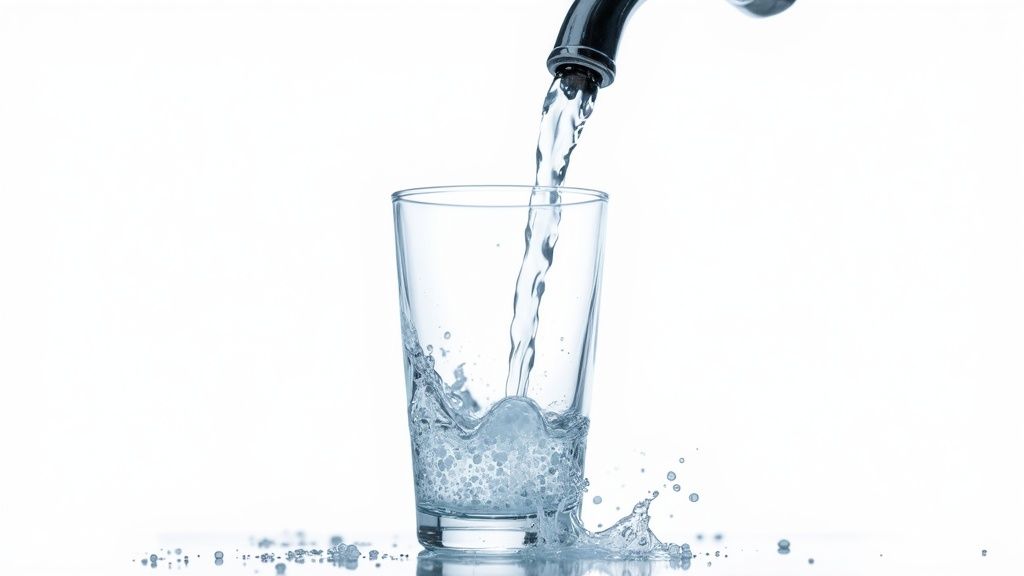
So, you did the glass test and watched the cloudiness magically disappear from the bottom up. What you witnessed is the number one cause of milky-looking tap water: entrained air. It’s a straightforward way of saying your water is temporarily full of tiny, harmless air bubbles.
The science is similar to opening a bottle of soda. Water traveling through the city’s mains is under pressure, which allows it to hold more dissolved air—especially when the water is cold. The moment you turn on your tap, you release that pressure. The dissolved air escapes, forming millions of microscopic bubbles that create a cloudy, hazy look. It’s a physical reaction, not a chemical one, and it's completely safe.
So, Why Is My Water Suddenly Bubbly?
This doesn't happen all the time, right? There are usually specific reasons why you're seeing more air in your water today.
Here are a few practical examples:
- Cold Weather: This is a big one. During winter, water in city pipes is frigid. Colder water can hold much more dissolved air. When that icy water enters the relatively warm pipes in your home, the air rushes out of solution as bubbles.
- Municipal Work: Ever see the city flushing a fire hydrant or working on a water main down the street? That process can force a ton of air into the water lines. It might make the water cloudy for your whole neighborhood, but it usually clears up in a day or two.
- Recent Plumbing Jobs: If a plumber just finished a repair, it’s almost guaranteed that some air got trapped in your pipes. You can usually fix this by running your faucets for a few minutes to push the air out.
Your Actionable Insight: Next time you see cloudy water, play detective. Is it freezing outside? Did you see a utility crew nearby? A little context can provide instant peace of mind that it’s just air.
The bottom line is that this type of cloudiness is temporary and poses no health risk. The water is fine; it just needs a minute for the bubbles to escape. Once they do, you're left with crystal-clear water that’s perfectly safe to drink.
But what if the cloudiness doesn't go away? That’s our cue to investigate other potential causes.
When Hard Water Minerals Create Cloudiness
If your glass of water stays cloudy for more than a few minutes, you can rule out air bubbles. A lingering, milky haze is a classic sign of hard water—water with a high concentration of dissolved minerals like calcium and magnesium.
Unlike air that rises and escapes, these minerals are dissolved in the water. They stay suspended, giving your water a consistent cloudy look. It's like trying to dissolve a spoonful of sugar in a glass of iced tea that's already saturated; the extra sugar swirls around, making it look murky.
Connecting Cloudiness to Other Hard Water Signs
That cloudy glass is rarely an isolated issue. It's usually one symptom of a bigger problem, and you've likely seen other clues around your home.
Do any of these practical examples sound familiar?
- Stubborn White Film: You notice a chalky residue, known as limescale, building up on your faucets, showerheads, and glass shower doors. This is the most obvious sign of hard water.
- Spotted Glassware: Dishes and glasses emerge from the dishwasher covered in a cloudy film or white spots, no matter how much rinse aid you use.
- Reduced Soap Lather: It feels like you need more soap, shampoo, or detergent to get a decent lather. The minerals in hard water react with soap, making it less effective.
- Dull Laundry: Your clothes feel stiff and scratchy right out of the wash, and bright colors seem to fade faster.
These everyday headaches are all caused by the same minerals making your tap water look cloudy. Left unchecked, these minerals can also build up inside your pipes and appliances, restricting water flow and reducing their efficiency.
Valuable Insight: Limescale isn't just an eyesore; it's a clear indicator that the minerals causing your cloudy water are accumulating inside your home’s plumbing. This buildup can clog pipes and shorten the lifespan of your water heater and washing machine, leading to costly repairs.
If you're nodding along to these issues, it's time to tackle the root cause. For a deeper dive into solutions, check out our guide on how to get rid of hard water. It outlines how to solve the problem at its source for clearer water and a happier home.
What About Sediment and Particles in Your Pipes?
So, your cloudy water doesn't clear from the bottom up (ruling out air bubbles), and it doesn't seem to be a mineral issue. What's next? It's time to look for physical particles—actual bits of stuff floating in your water.
This is what water experts call high turbidity, a technical term for water that isn't clear because of suspended solids like sand, silt, or rust flakes. Unlike the uniform, milky haze from hard water, this kind of cloudiness might look grittier.
Here’s the real giveaway: let a glass of this water sit for a while. Instead of clearing, you’ll see the particles slowly drift down and settle at the bottom.
Where Is This Stuff Coming From?
Sediment can sneak into your water supply in a few common ways, usually from a disturbance in the city's pipes or your own.
Here are a few real-world examples:
- Nearby Construction: A water main break down the street or a heavy construction project can stir up decades of settled gunk in municipal pipes and send it flowing into your home.
- Aging Pipes: In older homes, galvanized steel pipes can corrode from the inside, flaking off tiny bits of rust into your water.
- Municipal Flushing: When your local utility flushes a fire hydrant, the high-pressure cleaning can dislodge sediment and cause temporary cloudiness for the whole neighborhood.
The scientific measure for this is Nephelometric Turbidity Units (NTU). While a little silt might be an eyesore, high turbidity is a bigger deal because it can act as a shield for pathogens, hiding them from the disinfectants your city uses. You can learn more about how international water quality benchmarks are met through turbidity management to see how different standards compare.
Actionable Insight: The sediment itself is usually harmless, but high turbidity can create a "smoke screen" that protects bacteria and other contaminants from being neutralized by chlorine. The real concern is what might be hiding behind the cloudiness.
That's why it's important not to dismiss cloudy water if you suspect sediment is the cause. Figuring out where it's coming from is the first step toward making sure your family's water is not just clear, but genuinely clean and safe.
Choosing the Right Solution for Your Cloudy Water
You've figured out why your tap water looks cloudy. Great! Now, let's connect that diagnosis to the right fix. The good news is that not every issue requires a complicated solution.
If you did the glass test and watched the cloudiness disappear from the bottom up, the culprit is just entrained air. The solution? Do nothing. Seriously. Just give it a moment, and those tiny air bubbles will work their way out, leaving you with a perfectly clear, safe glass of water.
Targeting Minerals and Sediment
If the cloudiness sticks around, it’s time for a more hands-on approach. A persistent haze usually points to dissolved minerals, while tiny particles that settle at the bottom are a giveaway for sediment.
Think about other clues. Are you seeing chalky buildup on faucets? That’s a classic sign of hard water minerals. The most effective way to tackle this is with a water softener, which removes these minerals before the water reaches your tap. This not only clears up your water but also protects your pipes and appliances from damaging scale buildup.
But what if you see actual gritty bits? That’s turbidity from sediment. For this, filtration is the answer.
This simple decision tree can help you visualize the process and confirm what you're dealing with.
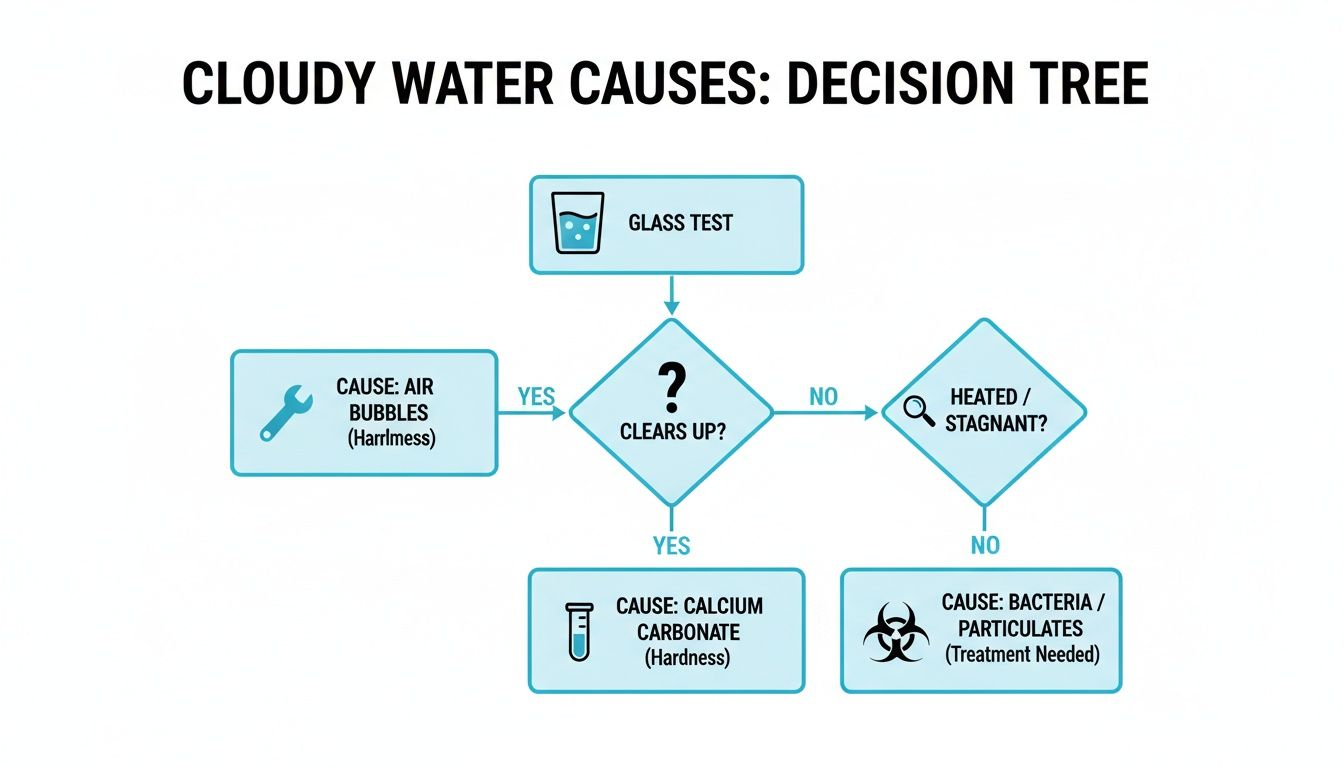
As you can see, that simple glass test is your most powerful first step.
Matching the Problem to the Right Water Treatment Solution
Choosing a water treatment system isn't one-size-fits-all. The right solution depends on the specific contaminants causing your cloudy water. This table breaks down which system tackles which problem.
| Cause of Cloudiness | Best Solution | How It Works | Best For |
|---|---|---|---|
| Dissolved Minerals (Hardness) | Water Softener | Uses ion exchange to remove calcium and magnesium ions. | Preventing limescale, protecting appliances, and creating "softer" water for bathing and cleaning. |
| Sediment, Silt, Rust | Whole-House Sediment Filter | A physical barrier that traps particulates as water passes through. | Homes with visible particles, well water users, or areas with older municipal pipes. |
| Combined Minerals & Sediment | Multi-Stage Filtration or Softener + Filter | A combination approach that first traps sediment, then removes dissolved minerals. | Comprehensive treatment for homes dealing with both hard water and turbidity issues. |
| Very Fine Particulates & More | Reverse Osmosis (RO) System | Forces water through a semipermeable membrane, removing a wide spectrum of contaminants. | Ultimate purity, especially for drinking water. Removes minerals, sediment, chemicals, and more. |
Identifying the root cause is the key to selecting a system that will give you crystal-clear water without overspending on features you don't need.
Investing in Long-Term Clarity
Getting to the bottom of your cloudy water is about more than just appearances—it's about protecting your home and your health. The global market for water monitoring systems is expected to hit $12.1 billion by 2030 as we all invest more in ensuring our water is safe.
Choosing the right system can feel overwhelming, but it's a worthwhile investment. Even looking at the best water filters for restaurants and commercial kitchens can offer insights into what high-quality filtration looks like.
A professional consultation is the surest way to get it right. By testing your water, an expert can pinpoint the exact cause of the cloudiness and recommend a system tailored to your home. It’s the best way to guarantee clear, safe, and great-tasting water for years to come.
When It’s Time to Call in the Pros
Most of the time, cloudy water is nothing to worry about. But you should always trust your gut. If something seems wrong with your water, it’s worth a closer look.
While simple home tests can handle common culprits, some signs are clear red flags. These tell you it's time to pick up the phone and call an expert. Letting a persistent water quality issue slide can lead to bigger headaches, from damaged appliances to potential health concerns.
Key Red Flags to Watch For
Sometimes, cloudiness is just a symptom of something more serious. If you spot any of these issues, it's a sign to act.
-
Weird Colors: If your water is cloudy and has a tint—like brown, yellow, or green—it could indicate rust from old pipes or other contaminants.
-
Strange Smells: Your tap water should be odorless. If you smell rotten eggs, chemicals, or metal, something is wrong and needs professional attention.
-
It Just Won't Clear Up: Remember, harmless air bubbles disappear in a minute or two. If your water stays cloudy for hours or the problem lasts for more than a day, it’s not just air.
Actionable Takeaway: A quick way to narrow down the problem's source is to ask your neighbors if they're seeing the same thing. If their water is clear, the issue is almost certainly inside your home's plumbing.
If the cloudiness won’t go away or comes with any of these warning signs, knowing how to find a good plumber or a water specialist is your next step. They have the tools to run precise tests and pinpoint the exact cause, ensuring the problem is fixed right.
Still Have Questions About Cloudy Tap Water?
We get it. Even after a few tests, some situations can be confusing. Let's tackle a few of the most common questions we hear from homeowners.
"Why is my hot water cloudy but the cold is perfectly clear?"
This is a frequent call, and the good news is, it's almost always harmless. Your hot water heater acts like a big kettle. As it heats the water, it also holds dissolved gases.
When you turn on the hot tap, the pressure drops, and warm water can't hold gas as easily as cold water. Those tiny bubbles escape at once, making the water look milky. Practical example: Just let it sit for a minute—if it clears from the bottom up, you've just witnessed a bit of harmless physics in action.
"Will a water filter solve my cloudy water issues?"
The answer depends on what's making it cloudy. A filter can be a lifesaver for some problems but will do nothing for others.
- Got Sediment? If your water has visible bits of dirt or rust, then yes. A good sediment filter will trap those particles.
- Hard Water Minerals? If your cloudiness is from dissolved minerals (the cause of limescale), a standard filter won't work. For this, you need a water softener.
- Just Air Bubbles? If it’s just air, then you can save your money. No filter is needed because the problem solves itself in about a minute.
Actionable Takeaway: Don't buy a solution before you've diagnosed the problem. The simple glass test is your best first step—it will help you avoid spending money on equipment you don't need.
"My whole neighborhood has cloudy water. Should I panic?"
When you and your neighbors see the same thing, it’s a sure bet the issue is with the city's system, not your plumbing. This often happens after the municipal water department does routine work.
Real-world example: Flushing a fire hydrant or repairing a water main can stir up sediment or force extra air into the lines. While it looks alarming, it's usually temporary and harmless. For peace of mind, check your local water utility’s website for alerts or give them a call.
Ready to get to the bottom of your water issues and enjoy pure, clear water from every tap? The team at Praz Pure Water, Inc. has spent over 20 years designing custom filtration and softening systems for homes and businesses across Los Angeles. Schedule your free water assessment today and let us create a plan for the crystal-clear water you deserve.