
You're probably here because your shower glass won't stay clear, your dishes come out spotted, and your skin feels dry no matter what soap you buy. In Los Angeles, that's usually not a random plumbing annoyance. It's a water quality problem that keeps showing up in every room that uses water.
A search for a water softener dealer near me is a smart first move. However, a common mistake often occurs. Consumers frequently pick the closest dealer, compare one price to another, and assume the equipment is basically interchangeable. It isn't. A water softener has to match your water, your plumbing, your daily use, and your long-term maintenance reality.
That's the difference between buying a box and fixing a problem. If you choose well, you protect fixtures, reduce scale, improve washing performance, and stop chasing symptoms with more cleaning products. If you choose poorly, you get a system that regenerates at the wrong frequency, misses the actual issue, or leaves you needing filtration the dealer never discussed.
Your Search for a Water Softener Dealer Starts Here
Los Angeles homeowners usually start this search after hard water becomes visible. White buildup around faucets. A rough ring on the shower door. Laundry that feels stiff. Glassware that never looks fully clean. Business owners see it too, especially in kitchens, restrooms, and equipment that depends on consistent water quality.
The right response isn't “Which dealer can install something fastest?” It's “Which dealer will diagnose the water correctly and recommend the right setup?” That's the standard you should use.
What a good local dealer actually does
A real dealer doesn't just sell a tank. They test water, size equipment, review plumbing conditions, and explain what the system will and won't solve. That matters because softening is only one part of water treatment.
Practical rule: If a dealer wants to quote equipment before testing your water and asking about your usage, keep looking.
There's a reason local dealer support became central to this category. The first household ion-exchange water softener was developed in 1953, and hard water remains widespread. The U.S. Geological Survey figure cited on Culligan's historical overview says about 85% of U.S. homes have hard water. That's why nearby dealers evolved into diagnostic and service partners, not simple product sellers.
Start with these priorities
Before you call anyone, decide what outcome matters most:
- Scale control: You want to stop mineral buildup in pipes, fixtures, and appliances.
- Cleaning performance: You're tired of soap not rinsing well and dishes staying cloudy.
- Drinking water quality: You may also want better taste, odor control, or purified water at the sink.
- Ongoing support: You want a dealer who can handle service, salt planning, and future adjustments.
That last point's importance is often underestimated. Softening is not a one-time transaction. It's an installed plumbing system that has to keep working consistently in practice.
Understanding LA's Hard Water Problem
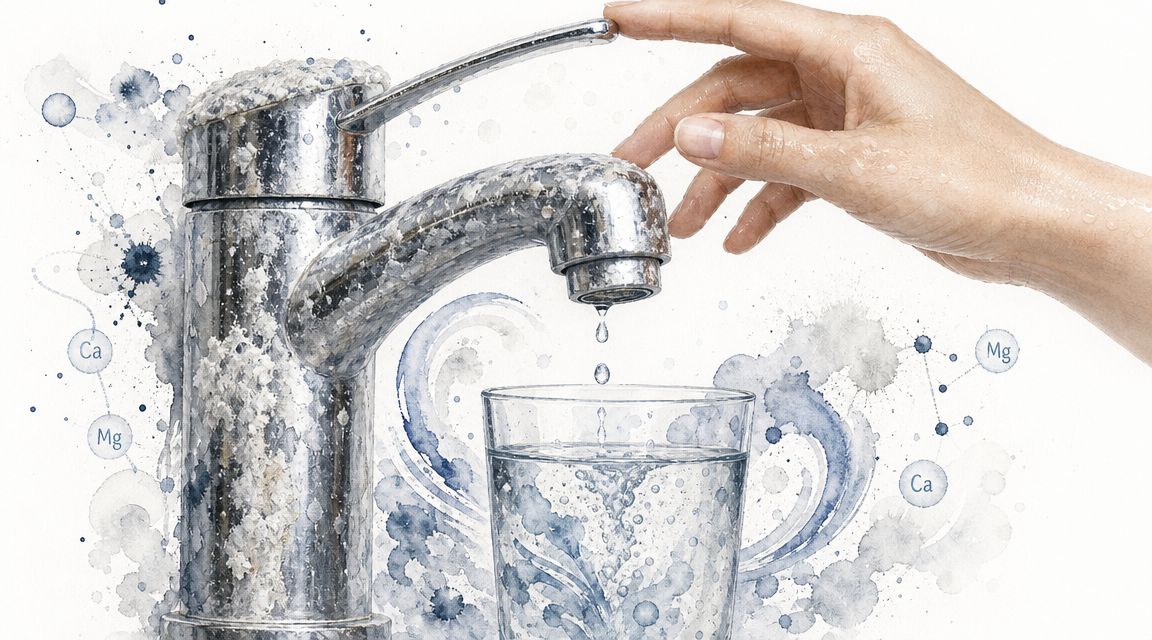
Hard water means your water carries a higher mineral load, especially calcium and magnesium. Those minerals aren't just a chemistry detail. They're the reason scale forms on fixtures, inside pipes, and on heating elements.
For homes and businesses with hard water, the key engineering target is removing the calcium and magnesium ions that cause scale. Those minerals are directly tied to film on dishes, stiff laundry, dry skin, and pipe clogging, as explained in Jarboe's water softening overview.
What hard water looks like in daily life
You don't need a lab report to suspect hard water. Most LA households notice a pattern.
- On fixtures: White crust around faucets and showerheads
- On glass and dishes: Cloudy spotting and a chalky film
- On fabrics: Towels that feel rough instead of soft
- On skin and hair: A dry, coated feeling after bathing
- In plumbing: Reduced flow when scale builds inside lines and fixtures
If you want a more complete breakdown of the symptoms and practical fixes, this guide on how to get rid of hard water is useful.
Why the problem gets expensive
Scale doesn't stay where you can see it. It also builds where you can't. Water heaters, dishwashers, ice machines, and internal plumbing all pay the price when minerals keep accumulating.
A softener dealer worth hiring should ask about three things before recommending equipment:
| Decision factor | Why it matters |
|---|---|
| Hardness level | Determines how aggressive the softening job needs to be |
| Expected daily gallons | Helps size resin capacity and regeneration behavior |
| Whole-home vs point-of-use treatment | Decides whether you need broad scale protection or targeted treatment |
That's the difference between a system that controls scale for years and one that becomes an expensive compromise. In LA, where people often have more than one water complaint at the same time, it's especially important to separate hard water symptoms from taste, odor, and drinking water concerns.
Hard water isn't only a comfort issue. It's a plumbing and appliance issue that gets worse when nobody sizes the solution correctly.
Why Professional Dealers Outperform Big Box Stores
A shelf unit from a big box store can look cheaper. It rarely looks cheaper after installation mistakes, weak sizing, or poor fit with the home's actual water conditions.
A water softener isn't like buying a microwave. It connects to your plumbing, needs proper placement, and has to match the water demand of the property. That's why the dealer channel stayed strong in this industry instead of disappearing into retail aisles.
Local water treatment is built around consultation
Dealer networks aren't a side note. They're a core part of how water softening is sold and supported. Advanced Water Softening notes that EcoWater says it has over 250 dealers across North America, while RainSoft says it works with more than 300 dealers in 20 countries. That scale tells you something important. “Near me” isn't just a convenience phrase. It reflects how these systems are selected, installed, and maintained.
That local model makes sense because water treatment is site-specific. A house with severe hardness and chlorine concerns doesn't need the same setup as a small office that mainly wants better drinking water and scale control in breakroom equipment.
What big box stores usually miss
Most retail environments don't provide a true needs assessment. They sell standard configurations and leave the rest to the buyer or installer. That approach creates predictable problems:
- Wrong sizing: The unit may be too small for the property's water demand
- Wrong scope: You may buy a softener when you also need filtration
- Weak install planning: Drain access, bypass setup, and placement may be treated as afterthoughts
- Limited service path: When performance drifts, there's often no real support relationship
A specialized dealer can also look at bundled treatment, which is common in the market. Softener, whole-home filtration, reverse osmosis, and bottleless cooler options are often considered together because households and businesses rarely have only one water issue.
A practical example
Say you own a restaurant in LA and search for a water softener dealer near me. A big box unit might address some hardness. It won't necessarily account for kitchen demand, staff usage patterns, or whether you also need better water quality for drinking, cooking, or equipment protection.
For a homeowner, the same logic applies on a smaller scale. If your glasses are spotted, your shower is crusting up, and your tap water tastes off, buying a softener alone may fix only part of the problem.
The Consultation Process Demystified
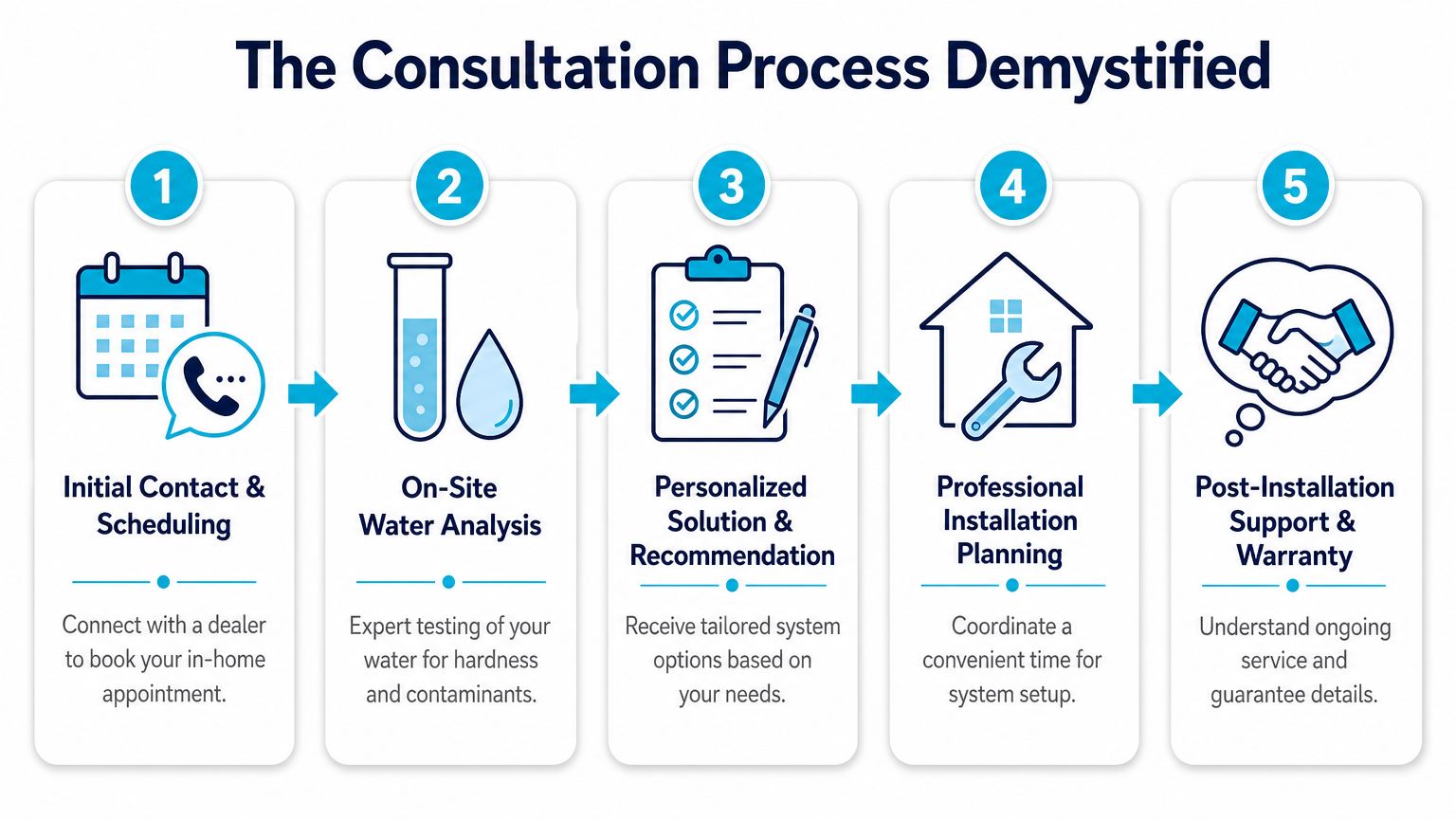
A proper consultation should feel organized, not mysterious and not pushy. If the dealer does this well, you'll understand what's in your water, what the equipment options are, and why one setup makes more sense than another.
Start by expecting a process, not a sales script.
Step one and step two
The first conversation should be simple. You explain the symptoms, the property type, and whether the issue is home-wide or focused on drinking water, bathing, appliances, or business operations.
Then comes the on-site water analysis. This part is not optional. A technically sound dealer should perform a water test and hardness or sodium demand calculation before sizing equipment, because undersized softeners regenerate too often and oversized units waste resources, as noted by Puronics' dealer locator guidance.
If a dealer skips testing and jumps to a standard model recommendation, they're guessing with your plumbing.
A helpful way to understand the broader treatment side is this overview of how water filtration works, especially if you're deciding between softening and filtration.
What the dealer should ask you
A strong consultation includes questions that sound practical, not technical for the sake of sounding impressive.
How many people use the property daily?
A family home, office, restaurant, and multi-unit building all create different water demand patterns.Where do you notice the problem most?
Spots on dishes, scale on fixtures, dry skin, poor-tasting water, and appliance concerns point to different solution mixes.What kind of maintenance do you want to handle?
Some people are fine managing salt and routine checks. Others want an ongoing service relationship.What does your plumbing layout allow?
Placement, access, drain routing, and integration all matter.
Here's a good visual summary of the process many homeowners expect but don't often see explained clearly:
What a final recommendation should include
The proposal shouldn't be vague. It should tell you what equipment is recommended, what issue each component solves, how installation will work, and what ongoing care looks like.
A dealer who works this way is easier to trust because they've tied the recommendation to evidence and usage. A dealer who talks only about discounts, monthly deals, or “our most popular unit” usually hasn't done the hard part.
For example, one local option in Los Angeles is Praz Pure Water, Inc., which offers softeners, reverse osmosis systems, bottleless coolers, and bundled treatment plans based on water quality, usage, and budget. That kind of consultative model is what you should compare every dealer against.
Selecting the Right Water Treatment System for Your Needs
Many people search for a water softener dealer near me when they don't need a softener alone. They need a plan. That plan may include softening, filtration, purified drinking water, or a combination.
The core mistake is assuming one piece of equipment does every job. It doesn't.
What each system actually does
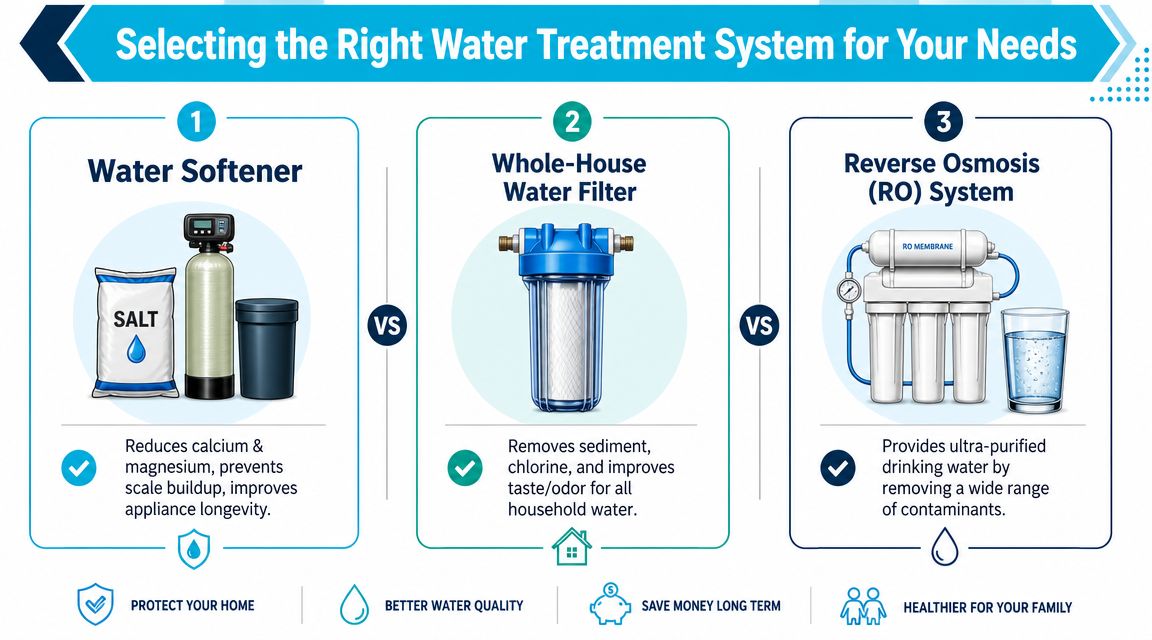
A water softener handles hardness minerals. A whole-house filter targets issues like sediment, chlorine, and taste or odor problems across the home. A reverse osmosis system is usually the right tool when you want highly purified drinking water at a specific tap.
That distinction matters. Culligan Wichita's product guidance makes the point clearly: softening mainly addresses calcium and magnesium, while concerns like taste, odor, chlorine, and other contaminants often require separate filtration or reverse osmosis.
A simple comparison
| System | Best for | Not designed to do |
|---|---|---|
| Water softener | Scale prevention, softer water, protecting plumbing and appliances | Full drinking water purification |
| Whole-house water filter | Chlorine reduction, sediment control, better taste and odor across the property | Removing hardness minerals by itself |
| Reverse osmosis system | Purified water for drinking and cooking | Whole-home scale protection |
Think of it this way. A softener protects the house. An RO system protects the water you drink. A whole-house filter improves overall water quality before it reaches showers, sinks, and appliances.
Real-world setups that make sense
For a typical LA home, the most practical setup is often:
- Softener for scale control
- Whole-house filtration for chlorine, sediment, or odor concerns
- RO at the kitchen sink for drinking water
For a business, the mix changes by use case. An office may care most about bottleless drinking water and breakroom quality. A restaurant may need both scale control and better water for food service. A property manager may prioritize equipment longevity and easier maintenance.
If you're comparing integrated home options, this page on a whole-house water softener system gives a useful reference point for how these systems fit into broader treatment design.
If you're also reviewing plumbing-side considerations before installation, this guide to drain and water filter plumbing solutions is worth a look. It's helpful for understanding how filtration equipment ties into real plumbing work rather than existing as a standalone appliance.
The nearest dealer isn't automatically the right dealer. The right dealer identifies whether you need softening, filtration, RO, or a combination.
Crucial Questions to Ask Your Potential Dealer
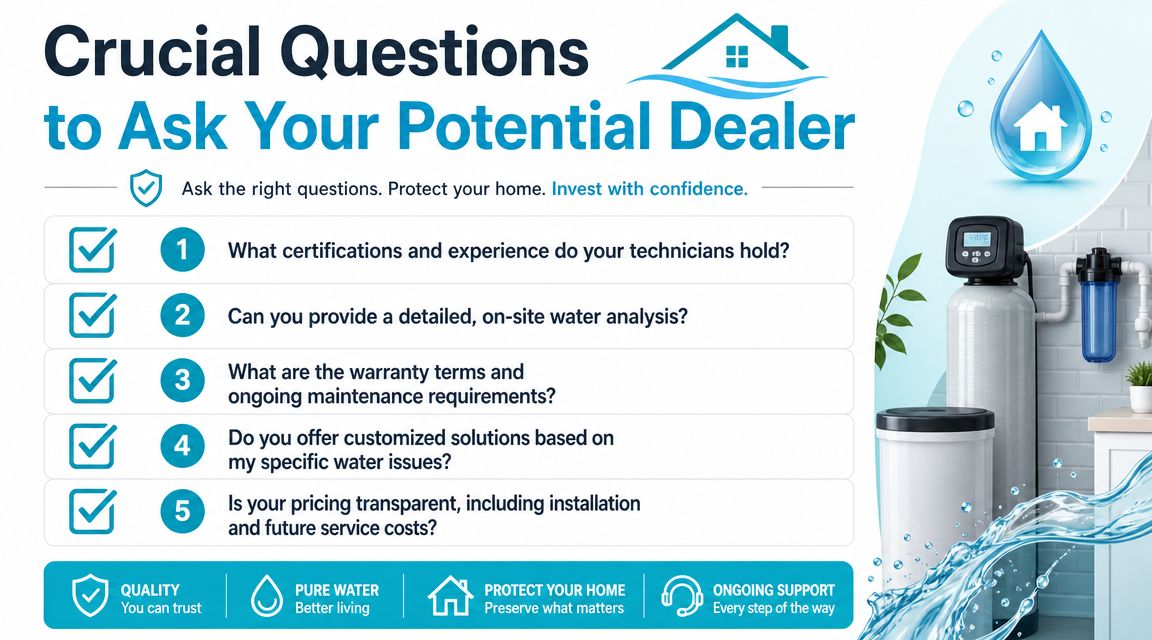
Most buyers can regain control. Ask better questions and weak dealers reveal themselves fast.
You don't need to sound technical. You need to sound specific.
Questions about diagnosis and equipment
Don't start with price. Start with how they decide what to install.
What did your water test show?
If they can't explain the result in plain English, that's a problem.How did you size this system for my property?
You want to hear about household or business use, demand patterns, and system fit.What exactly will this equipment solve, and what won't it solve?
This question is excellent because honest dealers will admit a softener doesn't replace filtration or RO when those are needed.What are the warranty terms on the main components?
Ask for specifics, not general reassurance.
Questions about installation
Installation quality matters as much as equipment quality.
Ask these directly:
Who performs the install?
Employees and subcontractors aren't the same thing. You should know who is entering your home or facility.Where will the system go?
Placement affects service access, appearance, and future maintenance.What preparation is needed before install day?
Good dealers can tell you this without hand-waving.How do you protect the property during the work?
A professional answer sounds organized. A weak answer sounds casual.
A polished sales presentation means nothing if the install plan is sloppy.
Questions about long-term cost and support
A water treatment system doesn't end at installation. Ask what ownership looks like after the first week.
- What maintenance does this system need?
- Who handles service if performance changes?
- What recurring supplies or service visits should I expect?
- Do you offer purchase, rental, or financing options?
- How quickly can you respond if there's a service issue?
A dealer who gets irritated by these questions is telling you something. A good one answers them clearly because long-term service is part of the job.
A practical way to compare dealers
Use a simple scorecard after each consultation.
| Category | What to look for |
|---|---|
| Testing quality | They tested first and explained the results clearly |
| Recommendation quality | They matched the solution to your actual water issues |
| Transparency | Pricing, warranty, maintenance, and install scope were clear |
| Service confidence | They sounded prepared for support after installation |
This checklist matters because dealer discovery is easy. Decision quality is where most buyers struggle. The best local result on a map isn't automatically the best long-term fit for your home or business.
The Long-Term Value of Pure Water in Los Angeles
You notice the long-term value of water treatment in the places you stop having problems. Fewer scale stains on fixtures. Better soap performance. Less buildup inside plumbing and water-using equipment. A property that runs cleaner and more predictably.
In Los Angeles, that matters because water treatment is rarely a one-time cosmetic upgrade. It affects maintenance costs, appliance life, cleaning time, and daily water use across the property. A well-chosen system can prevent years of avoidable wear. A poorly chosen one leaves you paying for equipment that never fully solved the problem.
That is the point of choosing the right dealer, not just the closest one.
The stronger decision is the dealer who looks at the full water picture, explains what your property needs, and sets up a system you can live with for years. That may be a softener. It may be filtration, reverse osmosis, or a combined setup. The right answer depends on your water conditions, your plumbing, and how the building uses water day to day.
In my view, the best LA buyers focus on outcome, not speed. They want water that protects the home or business, service that stays available after installation, and a system sized correctly from the start. That approach saves money, avoids repeat work, and leads to better results over time.
If you're in Los Angeles and want a clear answer instead of a sales runaround, contact Praz Pure Water, Inc. for a free, no-obligation water analysis and consultation. They serve homes and businesses across the area and can help you determine whether you need a softener, filtration, reverse osmosis, or a combined system built around your actual water conditions.